When gliding in the Alps, you’ll benefit from strong, predictable thermal currents and stable wind channels, making for longer, smoother flights. In contrast, the Pyrenees offer more variable weather with sporadic thermals and unpredictable winds, requiring adaptability and quick decision-making. The Alps’ consistent conditions suit experienced gliders seeking reliable lift, while the Pyrenees challenge you with their dynamic environment. If you want to explore what influences these differences further, keep going to uncover more details.
Key Takeaways
- The Alps feature strong, consistent thermal currents from intense solar heating, enabling extended, smoother gliding experiences.
- Wind patterns in the Alps are complex but generally favorable, channeling winds up valleys and ridges for better lift.
- The Pyrenees have weaker, more sporadic thermal activity, resulting in shorter and more variable flight durations.
- Wind conditions in the Pyrenees are highly variable and influenced by proximity to the Atlantic and Mediterranean, affecting flight stability.
- Overall, the Alps offer more predictable and powerful meteorological conditions for soaring compared to the more dynamic Pyrenees.
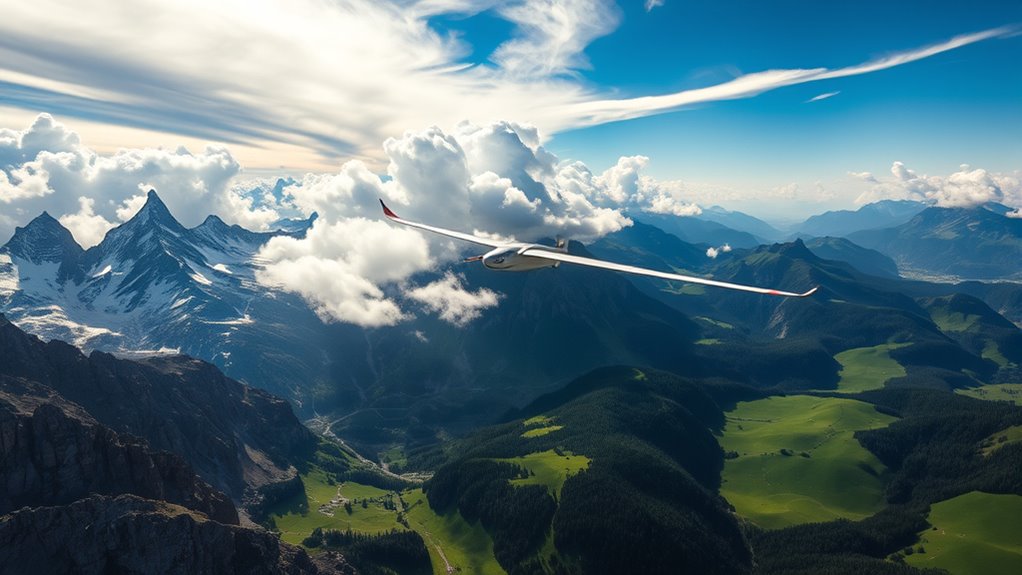
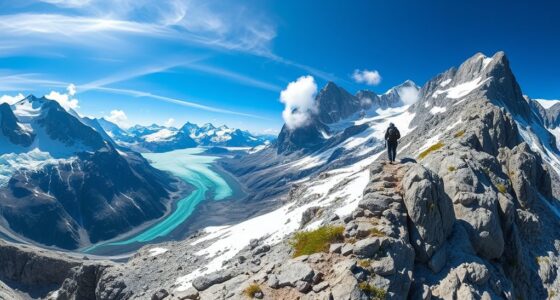
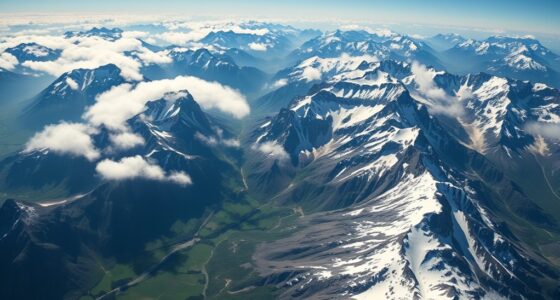
Ever wondered which mountain range offers the ultimate gliding experience—the majestic Alps or the rugged Pyrenees? When you take to the skies, understanding the meteorology of each region can make all the difference in your flight. The Alps are renowned for their powerful thermal currents that develop due to the intense solar heating of their steep slopes. As the sun warms the mountain surfaces, warm air rises quickly, creating strong thermals that you can ride for long distances. These thermal currents tend to form consistently during sunny days, especially in spring and summer, giving you predictable lift and extended glide times. Plus, the wind patterns around the Alps are complex but favorable for soaring. The prevalent westerlies and the mountain’s orientation often channel winds up valleys and ridges, creating lift zones that glide pilots love. These wind patterns can change rapidly with weather fronts, so you need to stay alert, but when harnessed correctly, they *considerably* enhance your flying experience.
In contrast, the Pyrenees present a different meteorological landscape. The region’s wind patterns are heavily influenced by the proximity to the Atlantic Ocean and the Mediterranean Sea, leading to variable and sometimes unpredictable conditions. The Pyrenees generate thermal currents, but they tend to be less intense and more sporadic than those in the Alps. The heat from the sun heats the slopes, but the weaker thermal activity means you might not enjoy the same sustained lift as in the Alps. Instead, you often rely on a combination of local wind systems—like the sirocco or the northerly breezes—that can either help or hinder your flight. These winds are less predictable, especially during transitional seasons, so planning your glide requires close attention to local weather reports. The mountain’s orientation affects wind flow, creating pockets of lift in some areas and turbulence in others. While this variability can be challenging, it also offers a more dynamic flying environment for pilots looking for a variety of conditions.
Ultimately, your experience depends on how well you understand these meteorological factors. The Alps provide a more consistent and powerful thermal environment, thanks to predictable wind patterns that foster longer, smoother flights. The Pyrenees, with their variable wind patterns and less intense thermals, demand a more adaptable flying style but reward pilots with a diverse and exciting landscape. Whether you seek the reliable lift of the Alps or the dynamic challenge of the Pyrenees, knowing how thermal currents and wind patterns influence your glide *ensures* you make the most of every flight.
gliding thermal current guide
As an affiliate, we earn on qualifying purchases.
As an affiliate, we earn on qualifying purchases.
Frequently Asked Questions
Which Mountain Range Has Better Thermal Activity for Gliding?
The Pyrenees offer better thermal activity for gliding due to their greater thermal variance, which creates more dynamic lift opportunities. You’ll also find wind consistency more favorable here, helping you stay stable and prolong your flight. In contrast, the Alps tend to have less thermal activity, making soaring less predictable. So, if you’re seeking ideal thermal conditions, the Pyrenees are your best bet for a thrilling glide experience.
How Do Seasonal Weather Patterns Differ Between the Alps and Pyrenees?
You’ll notice the Alps experience more consistent seasonal wind patterns, especially in spring and summer, which can boost gliding conditions. In contrast, the Pyrenees see greater precipitation variability throughout the year, leading to unpredictable thermal activity and wind shifts. These differences mean your flying experience depends on the season, with the Alps offering more reliable conditions during certain months, while the Pyrenees may surprise you with sudden weather changes.
Are There Specific Times of Year Ideal for Gliding in Each Region?
You’ll find that spring and early summer are preferable for gliding in both regions, thanks to favorable seasonal wind patterns and stable weather. During these times, regional climate variability creates consistent thermals and gentle winds, making flying safer and more enjoyable. In the Alps, late spring offers reliable conditions, while in the Pyrenees, early summer’s warmth and wind patterns provide ideal gliding experiences.
What Are the Safety Considerations Unique to Each Mountain Range?
You should watch out for altitude dangers like sudden weather changes and thin air in both ranges. In the Alps, wildlife encounters, such as birds or mountain goats, can be unpredictable, so stay alert. In the Pyrenees, rugged terrain increases the risk of collision or getting stranded. Always check local conditions, stay within safe altitude limits, and respect wildlife to guarantee a safe gliding experience in either range.
How Does Altitude Impact Gliding Performance in the Alps Versus the Pyrenees?
As you ascend, altitude variation dramatically influences gliding performance in both ranges, with the Alps reaching higher peaks than the Pyrenees. This height amplifies the effects of wind shear, making control trickier and lift more unpredictable. In the Alps, the thinner air can boost glide efficiency but demands precise handling. Meanwhile, the Pyrenees’ lower altitudes offer steadier conditions, yet still challenge you with shifting winds and sudden turbulence—keep your wits sharp.
mountain gliding equipment
As an affiliate, we earn on qualifying purchases.
As an affiliate, we earn on qualifying purchases.
Conclusion
As you navigate the skies, you’ll notice the Alps and Pyrenees are like two sides of the same coin—each with its own personality. The Alps, with their towering majesty, offer a dramatic symphony of weather, while the Pyrenees dance to a gentler tune. Understanding these contrasting meteorologies is like reading a book of nature’s secrets, revealing that even in the skies, diversity writes the most compelling stories.
gliding wind meter
As an affiliate, we earn on qualifying purchases.
As an affiliate, we earn on qualifying purchases.
paragliding safety gear
As an affiliate, we earn on qualifying purchases.
As an affiliate, we earn on qualifying purchases.