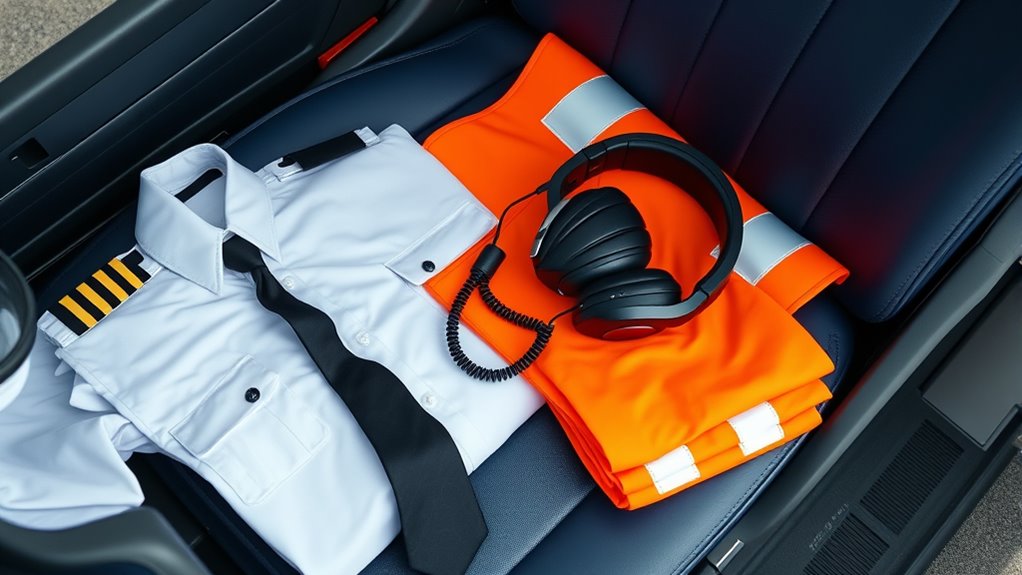
As a new pilot, it’s essential to dress in layers with moisture-wicking shirts, a flight jacket, and weather-appropriate pants to stay comfortable and adaptable. Wear sturdy, slip-resistant shoes for safety on the ground, and invest in a well-fitting headset with noise reduction to communicate clearly. Keep safety gear like fire-resistant suits, harnesses, and a first aid kit nearby. To learn more about gear and clothing essentials, keep exploring what helps guarantee a safe and smooth flight experience.
Key Takeaways
- Wear layered, weather-appropriate clothing for comfort, safety, and quick adaptation to cockpit conditions.
- Choose sturdy, slip-resistant footwear for stability and safety during ground handling and emergencies.
- Use well-fitting, noise-reducing headsets to ensure clear communication and reduce fatigue on long flights.
- Equip yourself with essential navigation tools like GPS, sectional charts, and a compass for accurate situational awareness.
- Carry safety gear such as fire-resistant suits, harnesses, life vests, and a first aid kit, and ensure regular gear inspections.
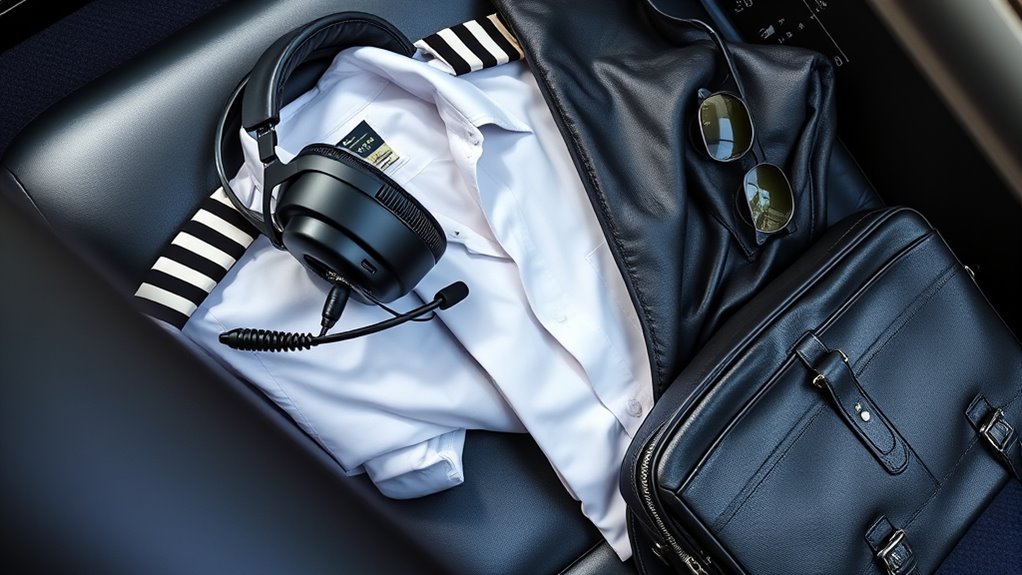
Starting your journey as a new pilot means understanding the importance of proper clothing and gear to guarantee safety and comfort. As you step into the cockpit, your attire plays a crucial role in maintaining focus and ensuring safety during every flight. Proper clothing isn’t just about comfort; it’s about being prepared for varying weather conditions, unexpected situations, and ensuring that you adhere to aviation safety standards. When selecting your gear, always prioritize items that support clear communication, easy accessibility, and durability.
Your pilot training techniques emphasize the importance of wearing layered clothing—think moisture-wicking shirts, a comfortable flight jacket, and weather-appropriate pants. These layers help you adapt quickly to temperature changes in the cockpit or during outdoor pre-flight inspections. A good pair of sturdy, slip-resistant shoes is essential for ground handling, offering stability when moving around the aircraft and during emergencies. The right footwear also ensures that you can operate rudder pedals comfortably without slipping or fatigue setting in.
A well-fitting headset is one of the most vital pieces of gear for any pilot. It not only enhances aviation safety by providing clear communication with air traffic control and fellow crew members but also reduces noise fatigue during long flights. When choosing a headset, look for comfort, noise reduction capabilities, and durability—these features help you stay alert and focused. Along with headsets, a reliable GPS device or navigation tools, such as sectional charts and a compass, are essential for pilot training techniques emphasizing navigation accuracy and situational awareness. These tools help you develop confidence in your abilities and ensure safe navigation, especially in unfamiliar environments.
Another critical aspect of clothing and gear is safety equipment. A high-quality, easily accessible fire-resistant flight suit or jacket can be invaluable in emergency situations. Safety harnesses, life vests (if flying over water), and a first aid kit should always be on board and within reach. While these are often standard in training aircraft, double-check that your gear complies with aviation safety regulations and pilot safety protocols.
Finally, don’t overlook the importance of keeping your gear clean and well-maintained. Regular inspections and maintenance of your clothing and equipment ensure they remain effective and reliable. Properly fitted and maintained gear not only enhances your safety but also boosts your confidence, letting you focus on mastering your pilot training techniques without distractions. Remember, the right clothing and gear aren’t just accessories—they’re integral to your success as a pilot and your safety during every flight.
![Bose A30 Bluetooth Aviation Headset - Lightweight Comfortable Design, Adjustable ANR and Noise Cancelling Microphone, [Dual Plug] – Black](https://m.media-amazon.com/images/I/41sTva8tf5L._SL500_.jpg)
Bose A30 Bluetooth Aviation Headset - Lightweight Comfortable Design, Adjustable ANR and Noise Cancelling Microphone, [Dual Plug] – Black
UNPARALLELED COMFORT: The Bose A30 is a full-sized circumaural aviation headset with a lightweight design and 20% lower...
As an affiliate, we earn on qualifying purchases.
Frequently Asked Questions
What Are the Best Brands for Pilot Clothing and Gear?
You should check out top aviation apparel and pilot gear brands like AOPA, Flight Outfitters, and Gatorz for high-quality clothing and accessories. These brands are known for their durability, comfort, and style, making your flying experience better. Whether you need flight jackets, sunglasses, or headsets, these companies offer trusted options that suit new pilots’ needs. Investing in reputable pilot gear brands guarantees safety and confidence in the cockpit.
How Should I Size Pilot Gear for Comfort?
Think of your pilot gear like a well-fitted glove—snug yet comfortable. To guarantee the best pilot gear fit, try on different sizes and focus on comfort considerations like mobility and pressure points. Avoid gear that’s too tight, which can restrict movement, or too loose, which can be distracting. Measure your body carefully, and consult sizing charts. Remember, comfortable gear keeps you focused on flying, not discomfort.
Are There Specific Clothing Requirements for Different Climates?
Yes, you should consider climate-specific apparel for different environments. In hot weather, wear lightweight, breathable fabrics and sun protection gear, while in cold climates, layer with thermal clothing and insulated jackets. Seasonal gear adjustments are essential to stay comfortable and safe. Always check the weather forecast before flying, and adapt your clothing accordingly to guarantee ideal comfort and safety during your flight.
What Safety Equipment Is Mandatory for New Pilots?
You need to wear essential safety equipment like a proper flight suit and head protection gear before flying. The flight suit essentials include flame-resistant material and pockets for tools, guaranteeing safety and convenience. Head protection gear, such as a helmet or cap, helps protect your head during turbulence or emergencies. Always double-check that your safety gear fits well and is in good condition to ensure maximum protection during your flight.
How Can I Budget Effectively for Pilot Clothing and Gear?
Imagine your pilot wardrobe as a well-maintained engine, essential for smooth flights. To budget effectively, compare prices online, buy quality gear on sale, and prioritize versatile pieces. Use cost-saving tips like investing in durable items to reduce replacement costs. Regular gear maintenance keeps everything in top shape, saving money long-term. Planning ahead and shopping smart help you build your gear collection without risking your budget or safety.

Lightspeed Aviation Sierra ANR Aviation Headset - Premium ANR Pilot Headset - Maximum Noise Canceling & Bluetooth Technology for Exceptional Communication
FIVE STAR COMFORT: Embark for every journey sporting maximum comfort. Our over the ear headphones are constructed for...
As an affiliate, we earn on qualifying purchases.
Conclusion
Now that you know the clothing and gear essentials, you’re practically ready to conquer the skies. Remember, having the right gear isn’t just important—it’s like having a secret weapon in your pilot toolkit. With these essentials in hand, you’ll feel confident and prepared for anything the skies throw your way. So gear up and take off—because once you’re suited up, the sky’s the limit for what you can achieve!

KA-1 General Aviation Headset for Pilots - Mono and Stereo Compatibility, Passive Noise Reduction, Noise Canceling Microphone, Gel Ear Seals, Adjustable Headband & Headset Bag
SUPERIOR AUDIO CLARITY – Featuring a premier noise reduction rating (NRR) of 24db and stereo sound output, this...
As an affiliate, we earn on qualifying purchases.

LIGHTSPEED Delta Zulu™ ANR Aviation Headset - Premium Noise Canceling Bluetooth Headset for Pilots with Built-in Carbon Monoxide Monitoring and Personalized EQ (GA Dual Plugs)
Premium Comfort: Weighing just 14.9 ounces, this noise canceling aviation headset has a low-profile and tapered performance ear...
As an affiliate, we earn on qualifying purchases.