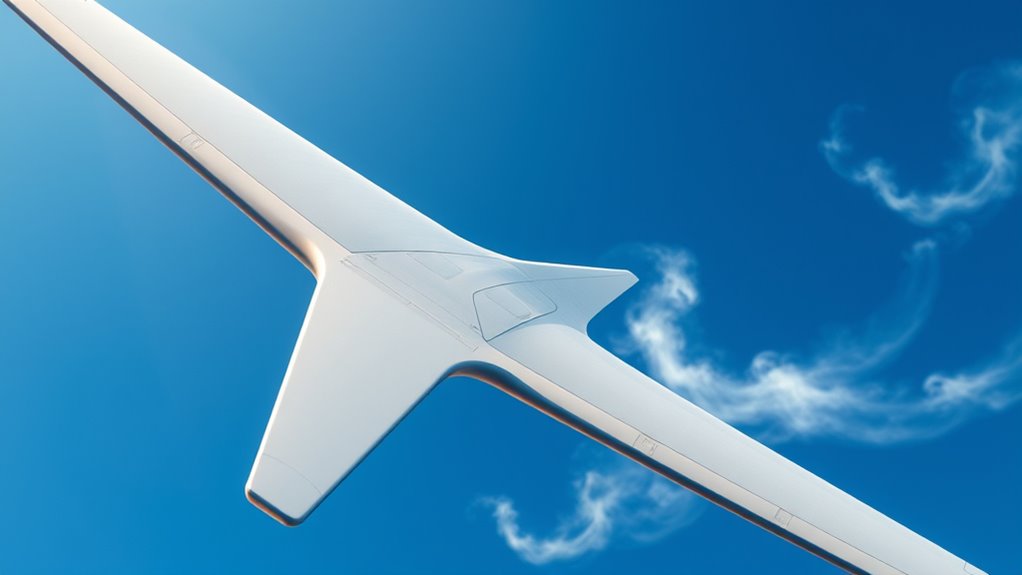

Composite materials in sailplanes give you an ideal balance of strength, flexibility, and weight reduction. They embed high-strength fibers like carbon or glass within resin, making the structure both tough and resilient while remaining lightweight. Advanced manufacturing techniques allow precise fiber placement, creating sleek, aerodynamic shells that handle aerodynamic stresses safely. This technological edge boosts your sailplane’s flight performance, safety, and responsiveness. Keep exploring to discover how these innovations continue to elevate soaring capabilities.
Key Takeaways
- Fiber-reinforced composites provide high tensile strength while remaining lightweight, enhancing sailplane performance.
- Precise manufacturing techniques, like resin infusion, improve material consistency and structural integrity.
- Composite materials enable thinner, aerodynamic shells that reduce drag and increase lift.
- The combination of strength and flexibility allows sailplanes to withstand aerodynamic stresses safely.
- Advanced composites contribute to lighter aircraft, longer flight durations, and better overall handling.
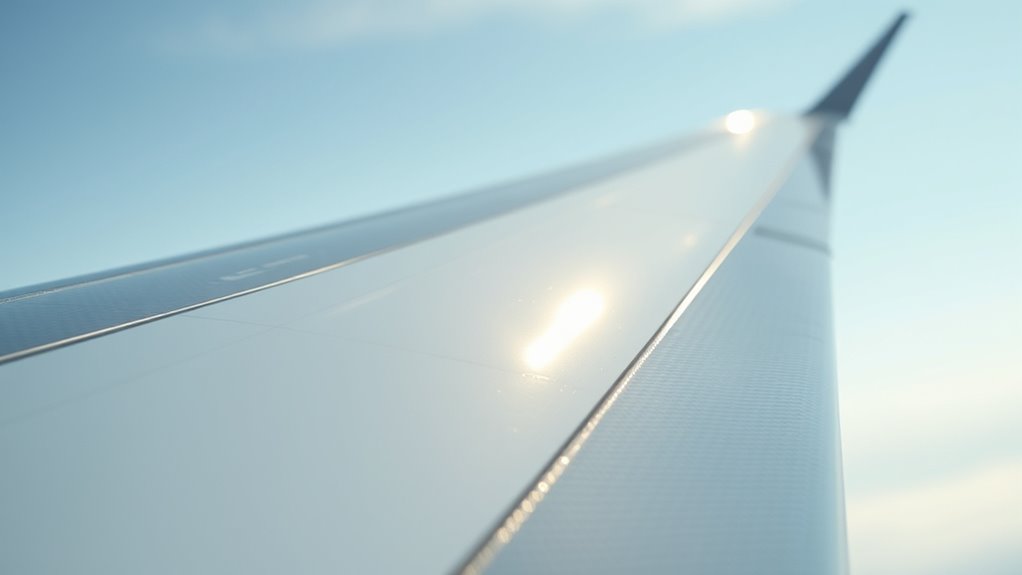
Have you ever wondered what makes modern sailplanes so lightweight and strong? The secret lies in the advanced composite materials used in their construction, specifically the way fiber reinforcement is integrated through innovative manufacturing techniques. These materials allow sailplanes to achieve the perfect balance of strength, flexibility, and weight, which is essential for maximum flight performance.
Fiber reinforcement plays an essential role in creating these lightweight structures. By embedding high-strength fibers, such as carbon or glass, within a resin matrix, manufacturers develop materials that can withstand significant loads while remaining flexible enough to absorb aerodynamic stresses. The fibers act as the primary load-bearing component, providing the necessary tensile strength, while the resin binds everything together, distributing forces evenly across the structure. This synergy results in a material that’s not only incredibly strong but also lighter than traditional metal or wood alternatives.
Fiber reinforcement with high-strength fibers provides lightweight, durable, and flexible structures for modern sailplanes.
The manufacturing techniques used to produce these composite materials are just as important as the fibers themselves. Techniques such as hand lay-up, resin infusion, and automated fiber placement enable precise control over fiber orientation and resin distribution. This precision ensures that the final product has the desired strength characteristics in specific directions, tailored to the stresses encountered during flight. For example, layers of fiber-reinforced composites can be strategically oriented to handle aerodynamic loads during turns, climbs, or dives, maximizing efficiency and safety.
Advanced manufacturing methods also reduce waste and improve consistency, which is critical for aerospace applications. Resin infusion, for instance, involves placing dry fibers into a mold and then infusing them with resin under vacuum. This process produces a high-quality, void-free composite with superior mechanical properties. Automated fiber placement, on the other hand, utilizes robotic systems to lay down fibers with pinpoint accuracy, speeding up production while maintaining uniformity and structural integrity.
All these manufacturing advancements mean that modern sailplanes can be constructed with thinner, more aerodynamic shells that still withstand the rigors of flight. The combination of fiber reinforcement and cutting-edge manufacturing techniques results in a sleek, lightweight frame that enhances lift, reduces drag, and improves overall performance. As a pilot, you benefit from a craft that’s not only easier to handle and more responsive but also capable of soaring higher and staying aloft longer, thanks to the strength and lightness of these composite materials. Additionally, understanding the manufacturing processes can help pilots appreciate the technological innovations behind modern sailplanes.
Frequently Asked Questions
How Do Composite Materials Affect Sailplane Maintenance Costs?
Using composite materials in your sailplane helps reduce maintenance costs because they offer durability improvements, meaning fewer repairs over time. They’re resistant to corrosion and damage, so you spend less on replacements and upkeep. Plus, their strength and flexibility allow for easier inspections and quicker repairs, further cutting costs. Overall, composites make your sailplane more reliable and cost-effective, ensuring you enjoy safer, longer flights with less maintenance hassle.
Are There Environmental Concerns With Composite Material Disposal?
You might face huge environmental concerns with composite disposal, like mountains of toxic waste. Recycling challenges mean these materials aren’t easy to break down, and improper disposal could release harmful chemicals into your surroundings. This creates a serious ecological problem, threatening wildlife and human health. So, yes, disposing of composite materials is a critical issue, requiring careful handling and innovative solutions to prevent environmental damage and protect future generations.
How Do Composites Compare to Metals in Impact Resistance?
You’ll find that composites generally offer better impact durability than metals, thanks to their material toughness. When struck, composites absorb energy more evenly, reducing the risk of catastrophic failure. While metals can bend or dent, composites tend to crack or delaminate, which can be repaired. Overall, composites provide excellent impact resistance combined with lightweight benefits, making them a durable choice for sailplanes.
Can Composite Materials Be Repaired Easily After Damage?
Yes, composite materials can be repaired, but it requires proper repair techniques to guarantee durability. You’ll need to assess the damage carefully, then use specialized repair methods like patching or resin infusion. This helps maintain the composite’s strength and flexibility. While repairs can be straightforward, they demand skill to restore the original composite durability, ensuring your sailplane remains safe and efficient after any damage.
What Advances Are Being Made in Composite Material Technology?
Think of composite materials evolving like a butterfly emerging from its cocoon. Advances include nanotechnology integration, making materials stronger and lighter, and bio-based composites, offering eco-friendly options. These innovations are transforming sailplanes by enhancing durability and performance while reducing environmental impact. You’ll see smarter, more sustainable designs take flight, pushing the boundaries of what’s possible in aeronautics as researchers craft materials that are both advanced and eco-conscious.
Conclusion
You see how composite materials transform sailplanes—offering strength, flexibility, and lightness. They empower you to soar higher, glide farther, and experience the thrill of flight with confidence. With every curve and contour, these materials remind you that innovation fuels your journey, resilience guides your wings, and your passion for flight elevates you. Embrace the future of soaring, where strength meets flexibility, and weight becomes unimportant—because with composites, your dreams take flight.