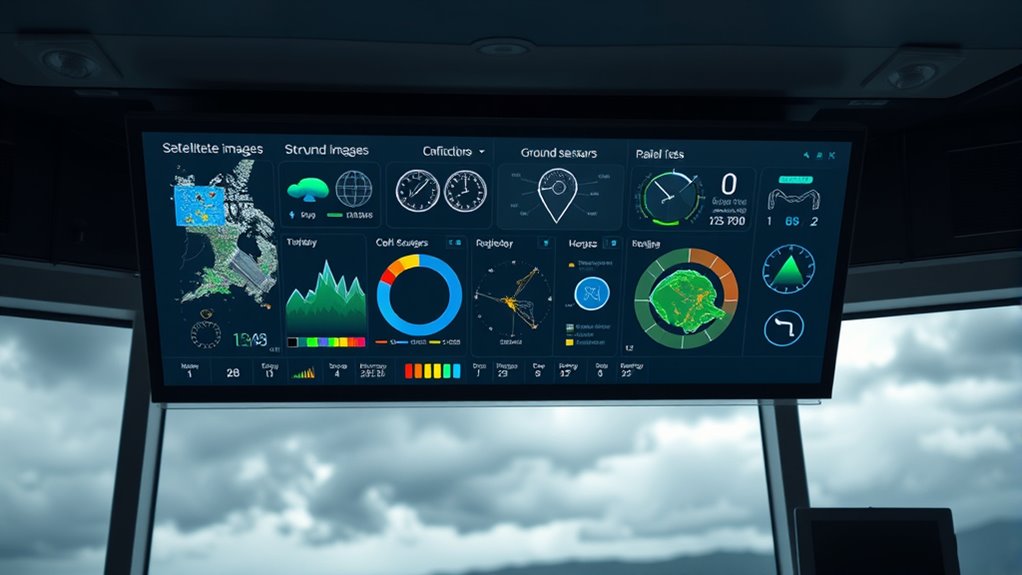

Government-operated weather services are the most reliable sources, providing accurate data through extensive networks of stations, satellites, and radar. Private providers use advanced technology and proprietary algorithms to deliver highly localized forecasts, but their data isn’t always publicly accessible. Crowdsourced platforms add real-time, hyper-local info but can vary in reliability. To understand how each source ranks and what fits your needs, keep exploring the details ahead.

Get travel and outdoor gear delivered free with Prime
- Fast, free delivery on millions of items
- Prime Video, Amazon Music and more included
- Member-only deals all year
Key Takeaways
- Government-operated weather services are the most reliable due to standardized data collection and extensive monitoring infrastructure.
- Private weather data providers offer highly localized, accurate forecasts using advanced satellite imagery and proprietary algorithms.
- Official sources generally prioritize safety and regulatory standards, ensuring high data consistency and trustworthiness.
- Crowdsourced platforms provide hyper-local, real-time data, but reliability varies based on user knowledge and equipment quality.
- Combining data from government, private, and community sources can enhance overall forecast accuracy and reliability.
As an affiliate, we earn on qualifying purchases.
Government-Operated Weather Services
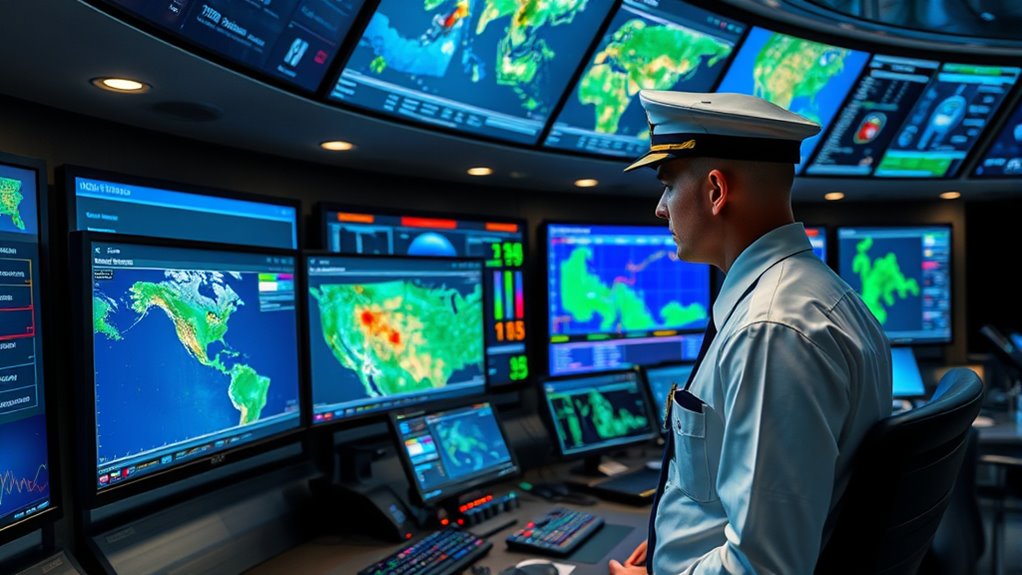
Have you ever wondered where most of the reliable weather data comes from? Government-operated weather services are the backbone of accurate forecasting. They prioritize official data accuracy, ensuring that the information they provide is trustworthy for public safety and decision-making. These agencies operate extensive networks of weather stations, satellites, and radar systems that cover wide regions, offering detailed regional coverage. Because their data collection is standardized and regulated, you can rely on their reports for precision, whether you’re planning an outdoor event or preparing for severe weather. Government agencies also update their information regularly, maintaining high standards of accuracy. Their broad regional coverage ensures that even remote areas receive reliable weather data, making them essential sources for both daily forecasts and emergency alerts. Data standardization plays a key role in maintaining the quality and consistency of information across different regions.
Private Weather Data Providers
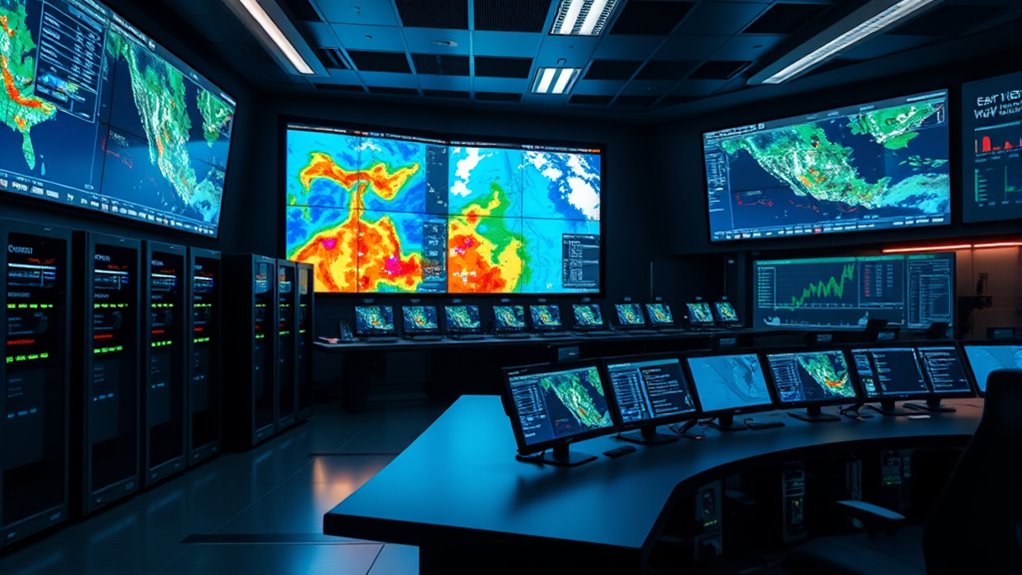
Ever wondered where many of the most innovative weather insights come from? Private weather data providers often lead the way, leveraging advanced satellite imagery to gather detailed atmospheric information. They use proprietary algorithms to analyze this data, delivering highly localized and accurate forecasts. These companies invest heavily in cutting-edge technology, which allows them to detect subtle weather patterns that standard sources might miss. Their proprietary algorithms optimize the interpretation of satellite imagery, providing insights for industries like agriculture, aviation, and shipping. Because they focus on innovation and data precision, private providers often offer more timely and specialized weather reports. While their data might not always be as publicly accessible as government sources, the reliability of their insights is frequently unmatched, making them invaluable for critical decision-making. Additionally, their ability to incorporate real-time data enhances the overall accuracy of predictions.
Crowdsourced and Community-Based Platforms
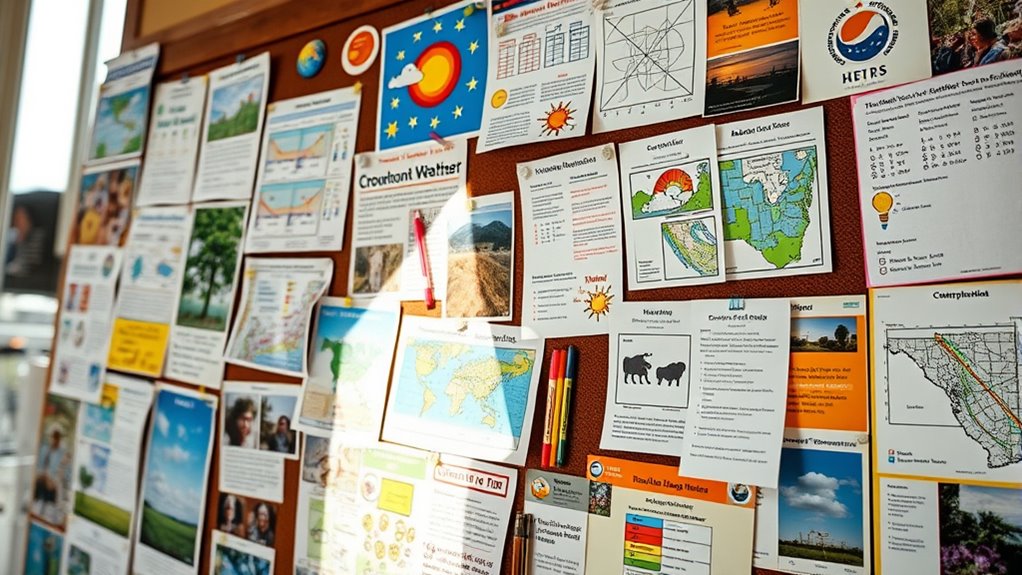
While private weather data providers rely on advanced technology and proprietary algorithms, many communities now contribute valuable insights through crowdsourced and community-based platforms. These platforms depend heavily on user reports, where individuals share real-time weather observations from their locations. The accuracy of this data, known as user accuracy, varies depending on the user’s knowledge and equipment. Despite potential inconsistencies, crowdsourced data can fill gaps in official forecasts, especially in remote or underserved areas. As a result, these platforms often provide hyper-local weather information that complements traditional sources. However, you should remain cautious, as user reports can sometimes be less reliable than professional measurements. Overall, crowdsourced and community-based platforms offer a unique, participatory approach to weather data collection, enhancing the richness and timeliness of available information. Incorporating diverse crochet styles for locs can also demonstrate how customization enhances user engagement and satisfaction.
Frequently Asked Questions
How Do Weather Data Sources Ensure Data Accuracy?
You can trust weather data sources to guarantee accuracy through a combination of satellite imaging and ground sensors. Satellite imaging provides broad, real-time observations of weather patterns from space, capturing large-scale changes. Ground sensors, placed strategically, offer precise, localized data on temperature, humidity, and wind. By integrating these technologies and continuously updating their models, weather sources improve reliability and provide you with accurate, timely forecasts.
What Are the Costs Associated With Different Weather Data Sources?
Imagine paying a fortune to access weather data that’s so accurate, it feels like you’re holding the sky in your hands. Costs vary widely—free sources might lack data privacy, risking your information, while premium subscriptions promise first-rate accuracy and data privacy but come with hefty subscription costs. You’ll need to weigh the value of reliable data against potential expenses and privacy concerns to find the best fit for your needs.
How Quickly Can Weather Data Be Updated From Each Source?
You can expect real-time updates from sources like weather satellites and radar, offering data latency of just minutes. Automated weather stations provide near-instant updates, typically within a few minutes. However, some sources like global climate models update less frequently, often hourly or daily. Your choice depends on how quickly you need the data; for real-time decision-making, prioritize sources with minimal data latency.
Are Historical Weather Data Available for All Sources?
You might think all sources hold complete historical weather data, but surprise—many have gaps! While some provide extensive archives, others suffer from historical gaps that impact data thoroughness. So, before relying on a source, check if it offers comprehensive historical records. Don’t assume all data is available; some sources leave you wishing for more, revealing that historical weather data isn’t always as complete as it seems.
How Do Weather Data Sources Handle Data Outages or Disruptions?
You should know that weather data sources handle outages through data redundancy and outage protocols. When disruptions happen, they switch to backup systems or alternative data streams to maintain accuracy and continuity. This approach minimizes gaps, ensuring you get reliable information even during technical issues. By prioritizing data redundancy and having clear outage protocols, these sources keep your weather data dependable, no matter the challenges they face.
Conclusion
When choosing weather data, trust the giants—government agencies offer unparalleled reliability, like the beating heart of meteorology itself. Private providers deliver precision, while crowdsourced platforms add valuable local insights. Remember, no source is infallible, but combining these options creates a weather forecast arsenal that’s nearly omniscient. With such a diverse array of sources, you’re equipped to navigate any forecast with confidence—more reliable than the rising sun itself.
Halloween Picks
halloween
As an affiliate, we earn on qualifying purchases.