
Mastering crosswind landings with step-by-step visuals is easier than you think. First, assess wind conditions and align your aircraft using visual cues like runway markings and environmental clues. Use the crab method to compensate for drift, then shift smoothly to a wing-low approach before touchdown. During rollout, manage cross-control with gentle inputs. With clear visuals guiding each step, you’ll gain confidence and control. Keep exploring the detailed techniques to become more comfortable handling crosswinds effectively.
Key Takeaways
- Begin with a crab approach, aligning the aircraft into the wind to counteract drift.
- Use visual cues like runway markings and horizon to monitor and adjust your heading.
- Transition from crab to wing-low or sideslip method just before landing for better control.
- Maintain smooth, coordinated control inputs during touchdown to manage crosswind and prevent side loads.
- Execute a controlled rollout with opposite rudder and aileron to keep the aircraft aligned with the runway.
Understanding Crosswind Landings
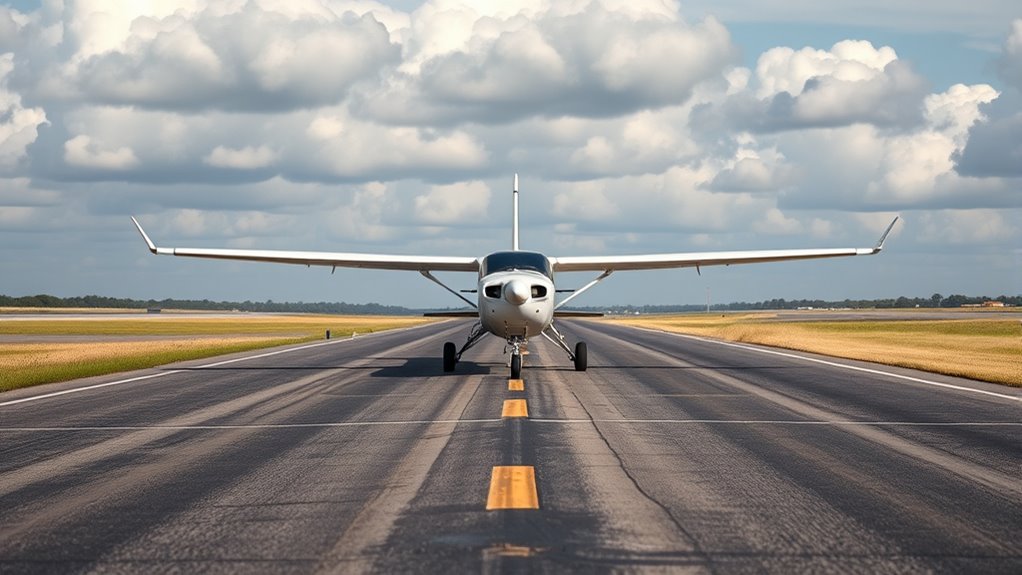
Have you ever wondered how pilots land safely when the wind blows sideways? It all comes down to understanding aircraft performance in crosswinds and how wind shear can affect landing. Crosswinds challenge your control because they push the plane off course as you approach the runway. Pilots use specific techniques like applying aileron and opposite rudder to keep the aircraft aligned. Wind shear, sudden changes in wind speed or direction, can make this even trickier. Recognizing these shifts early helps pilots adjust their approach to maintain stability. To succeed, pilots rely on their training and experience to adapt to varying wind conditions. Mastering these elements guarantees a safe, smooth touchdown despite the unpredictable nature of crosswinds and wind shear.
Preparing for the Crosswind Approach

Before you begin your crosswind approach, you need to assess the wind conditions accurately. Use techniques like checking the wind sock, ATIS reports, or in-cockpit wind indicators to get a clear picture. Then, set up your approach properly by aligning your aircraft and adjusting your descent to maintain control. Additionally, understanding wind variability can help you anticipate sudden changes and adapt your technique accordingly.
Wind Assessment Techniques
Effective wind assessment is essential for a safe crosswind approach, as it helps you determine the wind direction and speed relative to the runway. Begin by observing the windsock or flag, noting how they move, and perform turbulence analysis to identify gustiness or sudden changes. Look for signs of wind shear, such as abrupt shifts in wind speed or direction at different altitudes, which can destabilize your approach. Use visual cues like dust, leaves, or water ripples to gauge wind behavior. If possible, consult weather reports and wind shear alerts. Understanding Honda Tuning techniques can also provide insights into how different environmental factors affect vehicle handling, which parallels how pilots must adapt to changing wind conditions. Remember, accurate assessment allows you to adjust your approach and landing technique accordingly, reducing the risk of surprises and ensuring a controlled, safe touchdown despite crosswind conditions.
Proper Approach Setup
To set up properly for a crosswind approach, start by reviewing your wind assessment. Understanding wind direction and speed helps you determine the necessary aircraft performance adjustments. Visualize your approach setup with this table:
| Wind Condition | Aircraft Performance Adjustment | Pilot Training Focus |
|---|---|---|
| Moderate Crosswind | Slight crab angle, careful correction | Maintaining control during transition |
| Strong Crosswind | Significant crab, possible sideslip | Precise control inputs, crosswind techniques |
| Gusty Winds | Continuous adjustment, anticipate changes | Adaptive flying, real-time decision-making |
This mental image guides your preparations, ensuring your approach aligns with current conditions. Proper setup reduces surprises and enhances safety, reinforcing your pilot training and confidence for crosswind landings. Additionally, practicing wind assessment techniques improves your ability to adapt quickly to changing conditions.
Aligning the Aircraft With the Runway
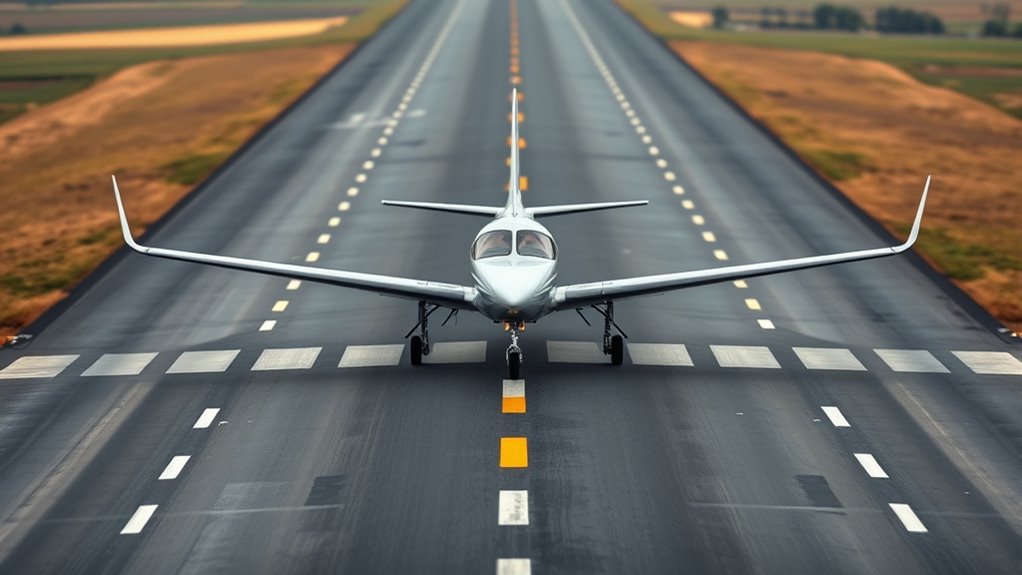
To align your aircraft with the runway, start by visualizing the wind direction to anticipate drift. Use nearby reference points, like runway markings or terrain features, to keep your heading accurate. Always focus on maintaining the correct heading to guarantee a smooth, safe touchdown. Monitoring visual cues such as horizon line and runway alignment can further improve your precision during the approach.
Visualize Wind Direction
Have you ever wondered how pilots determine the wind direction during a crosswind landing? To visualize wind, look outside the cockpit at the flags, smoke, or trees—these help you identify gusts and steady airflow. You can also observe how the wind affects the aircraft’s position relative to the runway, such as the drift during the approach. By paying attention to these visual cues, you can better align the aircraft with the runway. Visualizing wind helps you anticipate how the plane will respond as you fly in, allowing you to make precise adjustments. Recognizing gusts and steady wind gives you confidence in your corrections, making crosswind landings safer and more controlled. It’s all about reading the environment to ensure proper alignment.
Use Reference Points
How do pilots guarantee they stay aligned with the runway during a crosswind landing? They rely on visual reference points, mainly runway markings, to maintain proper alignment. As you descend, look for specific features like the runway centerline or threshold markings to keep your aircraft straight. Use these visual cues to verify your position relative to the runway’s edges. If you notice the aircraft drifting, adjust by correcting your heading while keeping your eyes on these reference points. Remember, consistent observation helps you stay on the correct glide path and lateral alignment. Visual cues are essential tools for maintaining proper alignment throughout the approach. By focusing on these visual reference points, you can confidently keep the aircraft aligned, even in challenging crosswind conditions. This simple technique improves control and ensures a safe, accurate landing.
Maintain Correct Heading
Maintaining the correct heading during a crosswind landing is essential for staying aligned with the runway. You’ll need to make subtle adjustments based on your aircraft’s weight and how much wind is pushing against you. Heavier aircraft may require more input to counteract drift, while lighter planes respond quickly. Your pilot experience plays a key role; seasoned pilots instinctively make smooth, precise corrections, keeping the aircraft pointed straight down the runway centerline. Focus on keeping the aircraft’s nose pointed toward the desired heading, using small, steady control inputs. Constantly monitor your alignment visually and with instruments, adjusting as needed. Consistent heading control ensures a safe, controlled touchdown, even in challenging crosswind conditions. Proper heading control is crucial for maintaining stability throughout the landing process.
Applying the Crabbing Technique
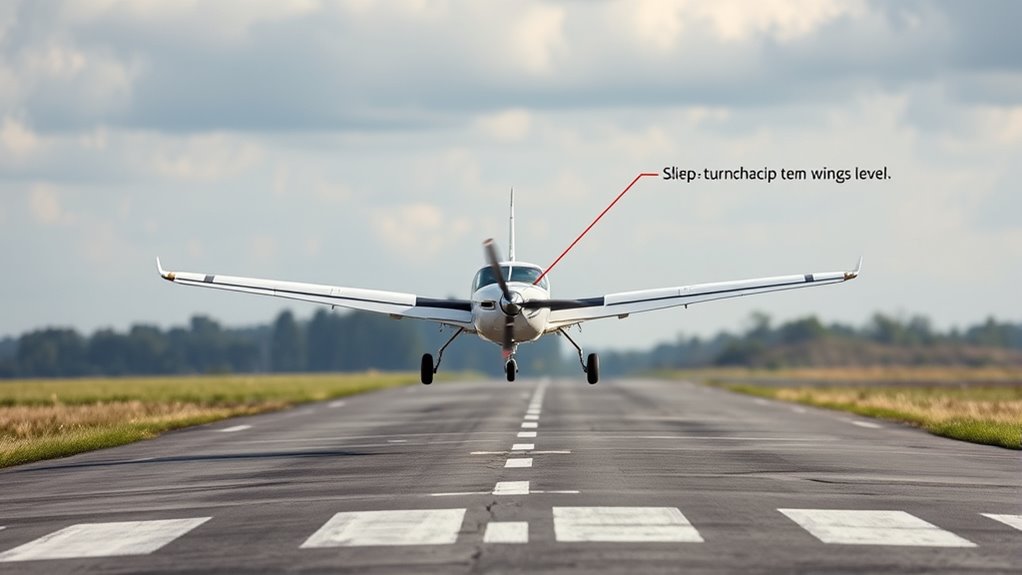
Applying the crabbing technique involves intentionally aligning your aircraft’s heading into the wind during the final approach to counteract crosswind drift. This method compensates for gust variability and wind shear, which can cause unpredictable movements. As you descend, you’ll need to adjust your heading into the wind, maintaining a crab angle that keeps your aircraft aligned with the runway centerline. Keep a close eye on the wind conditions and be ready to make small, precise adjustments. Remember, your goal is to stay on the correct flight path without drifting sideways. This technique requires steady control and awareness of changing wind patterns, especially during gusty or shifting winds, so you can respond quickly and maintain a safe, stable approach.
Transitioning to the Downwind Method

After you’ve aligned your aircraft with the runway using the crabbing technique, start preparing to shift to the downwind method as you approach the appropriate point on the approach path. Begin by reducing your crab angle gradually, maintaining your aircraft alignment with the runway centerline. Focus on making a smooth wind correction to counteract crosswind drift, ensuring your aircraft stays on the intended path. As you move over, keep your wings level and adjust your heading to align with the runway, rather than the nose of the aircraft. This shift helps you better control your approach and prepare for a stabilized descent. Properly transitioning to the downwind method ensures consistent aircraft alignment and sets the stage for a safe, controlled landing. Incorporating visualization techniques can enhance your understanding and execution of the transition process.
Using the Crab and Drift Correction

Have you ever wondered how pilots keep their aircraft aligned with the runway during a crosswind landing? They use the crab technique, which involves balancing wind correction with precise control inputs. By applying a slight angle into the wind, you offset the drift caused by crosswinds, keeping the aircraft’s nose pointed toward the runway centerline. As you approach, you’ll gradually reduce the crab and switch to a wing-low method for touchdown. Key steps include:
Pilots use the crab technique to align with runways during crosswind landings.
- Understanding wind correction angles
- Maintaining aircraft heading with the rudder
- Monitoring drift during descent
- Adjusting crab as wind conditions change
- Switching from crab to wing-low before landing
- Recognizing the importance of visual aids to better understand technique execution
Mastering the crab technique ensures a safe, aligned crosswind landing without drifting off course.
Touchdown and Cross-Control Management
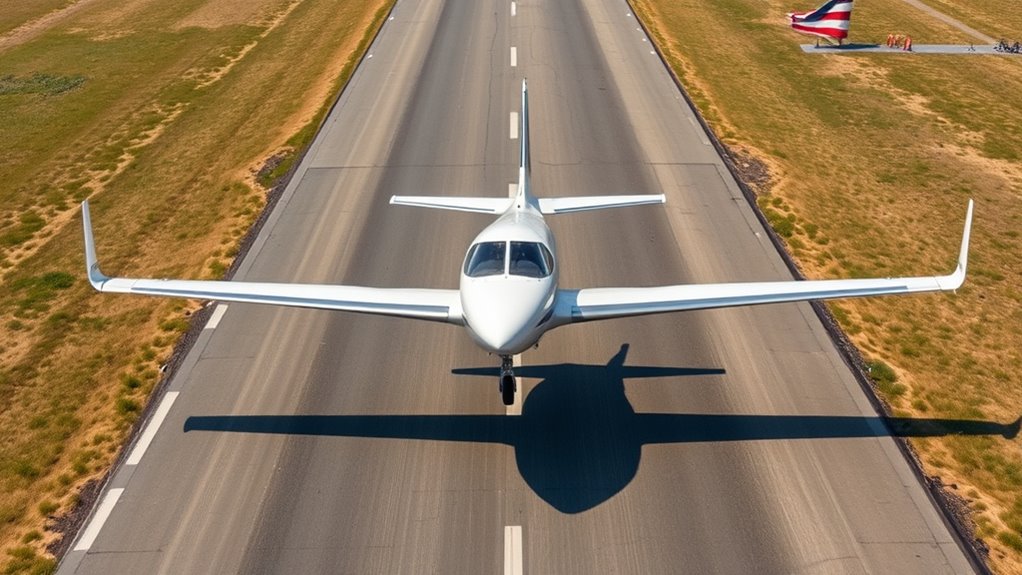
During the actual touchdown in a crosswind, managing cross-control inputs becomes vital to keep the aircraft aligned with the runway. You want to maintain aircraft stability by applying just enough opposite aileron to counteract the wind’s effect, preventing the aircraft from drifting sideways. Simultaneously, you’ll need to keep the nose wheel centered with the rudder, ensuring the fuselage remains aligned with the runway centerline. Proper control inputs reduce your workload and help avoid abrupt corrections that could destabilize the aircraft. Focusing on smooth, coordinated movements is essential to maintain a steady attitude and prevent side loads on the landing gear. This balance is key to a safe, controlled touchdown, minimizing the chances of a bounce or veer-off during the crucial moments of contact.
Executing the Rollout and Straightening
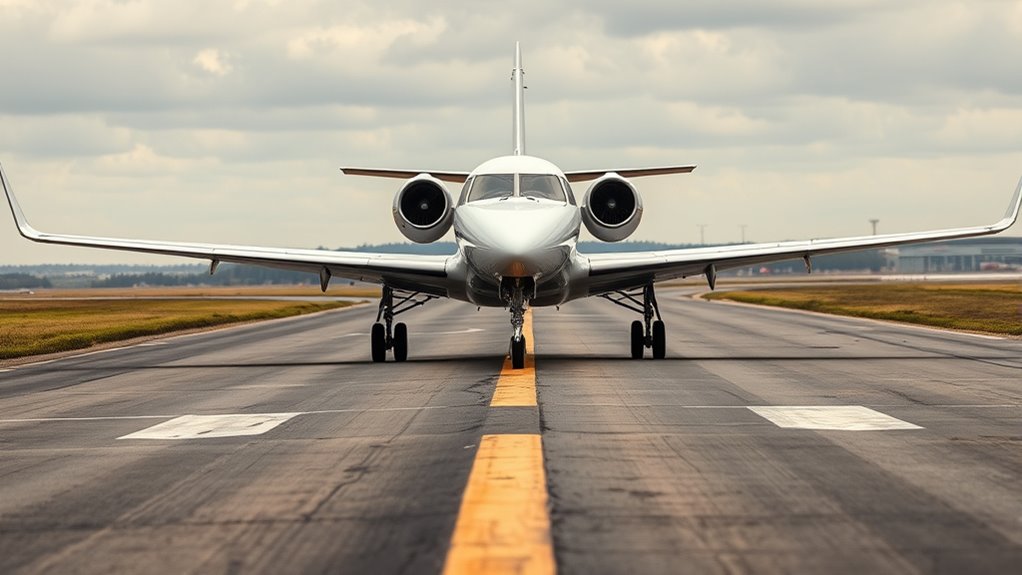
Once the aircraft makes contact with the runway, your focus shifts to executing a smooth rollout and straightening the aircraft’s path. Use the flare technique to gently lift the nose and reduce descent rate, minimizing the impact of ground effect. As you roll out, keep the aircraft aligned with the runway centerline by applying gentle rudder and aileron inputs. Maintain appropriate speed to prevent overshoot or veering off course. Watch for any drift caused by crosswind and correct promptly to keep the aircraft straight. Remember, a controlled, steady rollout helps prevent side loads on the landing gear and ensures a safe, smooth arrival. Incorporating nail styles names into your routine can reflect your personal style and enhance your overall look.
- Maintain gentle control inputs
- Use the flare technique for smooth transition
- Watch for ground effect influence
- Correct drift promptly
- Keep speed consistent during rollout
Tips for Safe and Confident Crosswind Landings

Maintaining control during crosswind landings requires focus and deliberate technique. To assure safety and confidence, manage aircraft performance by adjusting your approach and descent rate. Use proper pilot technique, such as applying ailerons into the wind and opposite rudder to maintain runway centerline. Anticipate wind shifts and stay alert throughout the landing. Here’s a quick guide:
| Tip | Explanation |
|---|---|
| Use a crab approach | Align aircraft with the wind, then transition to a slip |
| Maintain aileron input | Keep wings level with crosswind pressure |
| Apply smooth control inputs | Avoid overcorrecting, which can destabilize your approach |
| Monitor aircraft performance | Adjust power and pitch to keep descent steady |
| Practice consistently | Builds confidence and sharpens pilot technique |
Frequently Asked Questions
How Do Wind Gusts Affect Crosswind Landing Techniques?
Wind gusts can considerably impact your crosswind landing technique by causing gust variability and wind shear. As gusts change speed and direction unexpectedly, you need to stay alert and adjust your control inputs accordingly. Maintain a crab angle during approach, then smoothly shift to a sideslip if needed, to counteract the shifting wind forces. Being adaptable helps you land safely despite gusty conditions and unpredictable wind shear.
What Are Common Mistakes to Avoid During Crosswind Landings?
When it comes to crosswind landings, avoid common mistakes like neglecting crosswind techniques, overcorrecting, or failing to maintain proper aircraft alignment. You should focus on smooth control inputs, consistent crab angle, and coordinated use of ailerons and rudder. Pilot training emphasizes practicing these techniques to prevent drifting, uneven touchdown, or excessive control inputs. Staying alert and disciplined helps you execute safe, precise landings despite challenging wind conditions.
How Does Aircraft Type Influence Crosswind Landing Strategies?
Your aircraft type considerably influences your crosswind landing strategy. Smaller planes, with less aircraft stability, require gentle inputs and careful control. Larger aircraft, with robust landing gear and better stability, handle crosswinds more effectively but still need precise techniques. Always consider your aircraft’s characteristics, including weight and gear design, to adapt your approach and maintain control throughout the landing, ensuring safety and a smooth touchdown.
What Emergency Procedures Should Be Prepared for During a Crosswind Landing?
During a crosswind landing, you should be prepared for emergencies like sudden wind shifts or engine issues. Keep an emergency checklist handy, and be ready to execute abort procedures if conditions worsen or safety is compromised. You must respond swiftly, maintaining control and stability, and if needed, abort the landing to prevent accidents. Always stay alert and follow your training to handle unexpected situations confidently.
How Can Pilots Improve Confidence in Challenging Crosswind Conditions?
Think of confidence as a muscle—you strengthen it through practice. To improve your confidence in challenging crosswind conditions, focus on all-encompassing pilot training and sharpen your wind awareness. Regularly practicing crosswind landings, reviewing wind reports, and mastering correction techniques build trust in your skills. Remember, familiarity reduces fear, and with steady training, you’ll navigate even the trickiest crosswinds with calm assurance and precision.
Conclusion
Mastering crosswind landings is like steering a boat through choppy waters—you need patience, precision, and a steady hand. By following these step-by-step visuals, you’ll gain confidence and control in challenging conditions. Remember, preparation and technique are your best tools for a safe, smooth touchdown. Keep practicing, stay focused, and soon crosswind landings will feel as natural as walking along a well-marked path. Confidence in your skills will always keep you steady in any wind.