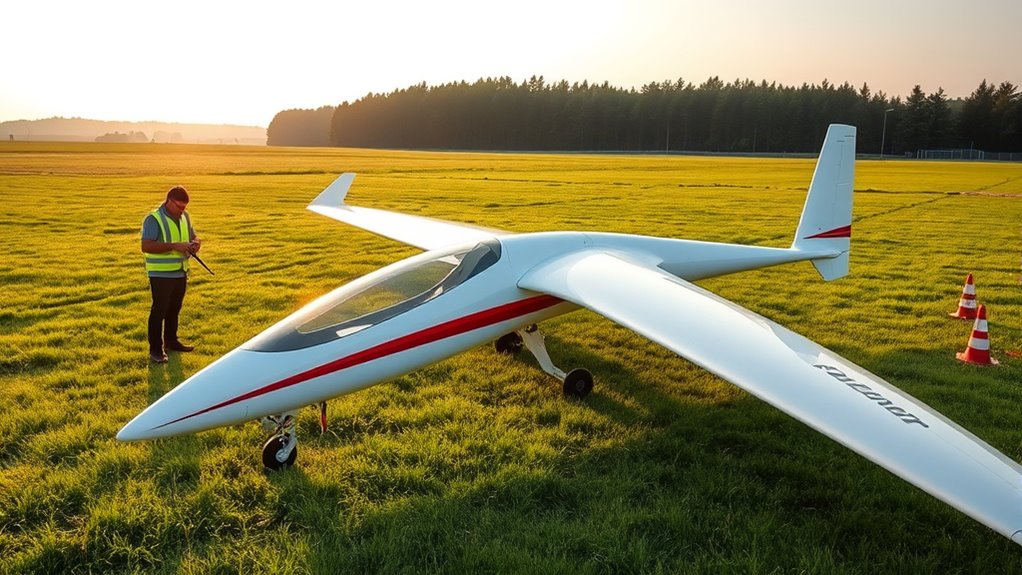

When flying a new electric glider, prioritize battery safety by inspecting for damage and avoiding overcharging. Store batteries properly and monitor voltage during flights to prevent over-discharging. Always handle batteries carefully and keep a fire extinguisher nearby. Conduct regular checks of wiring and components to catch issues early. Familiarize yourself with emergency procedures to respond quickly if problems arise. Stay proactive with safety, and you’ll minimize risks. More tips await to help you fly confidently and safely.
Key Takeaways
- Regularly inspect batteries for swelling, punctures, or corrosion before flight to prevent fire hazards.
- Use a reliable LiPo-compatible charger and avoid unattended charging to ensure safe power management.
- Monitor battery voltage and capacity during flight to prevent over-discharging and potential damage.
- Practice emergency procedures like quick power cut-off and safe landing to handle unexpected faults safely.
- Store batteries in a cool, dry place at a proper storage charge and conduct routine maintenance checks.

As electric gliders become more popular among enthusiasts, understanding their safety considerations is essential for a secure flying experience. One of the most critical aspects is proper battery management. Lithium-polymer (LiPo) batteries, commonly used in electric gliders, require careful handling to prevent accidents. Always inspect your batteries before each flight, checking for any signs of swelling, punctures,, or corrosion. Make sure they’re fully charged with a reliable charger designed for LiPo packs, and never leave them unattended while charging. Proper storage is equally important; keep batteries in a cool, dry place and at a storage charge level if you won’t be flying for a while. During flight, monitor your battery voltage and remaining capacity closely. Many modern gliders feature telemetry systems that relay this information to your transmitter, allowing you to take action before battery levels become critical. Over-discharging a battery can cause permanent damage, reduce flight time, or even lead to a fire, so always plan your flights within safe limits.
In addition to managing batteries during operation, understanding emergency procedures is crucial for safe flying. Despite your best efforts, situations can arise where quick, decisive action is necessary. If your glider suddenly loses power mid-flight, stay calm and try to regain control. Use your transmitter’s fail-safe settings to initiate a safe glide or landing if possible. Practicing emergency procedures beforehand ensures you can respond effectively when needed. For example, learn how to perform an emergency cut-off to disconnect power quickly if you suspect a fault or overheating. If a fire does occur, keep a fire extinguisher rated for electrical fires nearby, and know how to use it. Always have a plan for safe landings in case of unexpected issues, such as sudden wind gusts or equipment failure. Regular maintenance, like checking wiring, connectors, and motor mounts, reduces the risk of malfunctions that could lead to emergencies. Additionally, understanding battery management is essential to prevent failures and ensure safety during your flights.
Ultimately, safe flying with electric gliders hinges on your proactive approach to battery management and preparedness for emergencies. By staying vigilant about your batteries’ condition and practicing emergency procedures, you reduce risks considerably. Remember, investing time in understanding these safety measures not only protects your equipment but also ensures you can enjoy flying with confidence. Electric gliders offer incredible enjoyment, but that pleasure depends on your commitment to safety practices. Stay informed, plan ahead, and always prioritize safety to make your flying experience both fun and secure.
Frequently Asked Questions
How Do I Properly Dispose of Old or Damaged Batteries?
You should promptly recycle old or damaged batteries at a certified battery recycling center to prevent environmental harm. Never throw them in regular trash, as they contain hazardous waste that can leak harmful chemicals. Handle batteries carefully, avoiding punctures or damage. By recycling properly, you help reduce hazardous waste and protect the environment. Always check local regulations for specific disposal instructions and verify you’re using authorized facilities for battery recycling.
What Are the Signs of Electrical System Failure During Flight?
During flight, watch for signs of electrical system failure like battery overheating, which causes a noticeable increase in temperature or a burning smell. Wiring malfunctions may lead to flickering lights, inconsistent motor operation, or electrical sparks. If you notice these signs, immediately reduce power and land safely. Regularly inspect wiring and batteries before flight to prevent malfunctions, ensuring your glider operates smoothly and safely throughout your flight.
Can Electric Gliders Fly in All Weather Conditions Safely?
Electric gliders can’t fly safely in all weather conditions. Weather resilience varies, so you must check forecasts and plan your flight carefully. Strong winds, thunderstorms, and heavy rain pose risks, reducing control and battery life. Always consider flight planning and weather updates before takeoff. By doing so, you guarantee safer flights, avoid unexpected weather hazards, and protect your equipment during adverse conditions.
How Often Should I Conduct Maintenance Checks on My Glider?
Have you considered how essential regular checks are? You should perform maintenance on your electric glider after every 25 to 50 flight hours. Focus on battery inspection to guarantee peak performance and safety, and don’t forget motor maintenance to prevent overheating or failure. Regularly checking these components helps catch issues early, extending your glider’s lifespan and keeping you safe during flights. Wouldn’t you want peace of mind every time you take off?
Are There Specific Safety Certifications Required for Electric Gliders?
You should guarantee your electric glider meets specific safety certifications that include battery safety and certification standards. These certifications verify that the electrical systems, batteries, and overall design meet industry safety requirements. Always check for certifications like UL, CE, or other regional standards before flying. Doing so guarantees your glider complies with safety regulations, minimizes risks related to battery safety, and keeps you protected during operation.
Conclusion
As you explore electric gliders, prioritizing safety is essential. Remember, studies show that electric aircraft can be up to 30% safer due to advanced battery monitoring systems. Stay vigilant with regular maintenance, adhere to safety protocols, and stay informed about evolving technologies. By doing so, you’ll enjoy safer, more reliable flights and contribute to the future of eco-friendly aviation. Embrace safety today for a smoother, more confident glide tomorrow.