Flight computer software now integrates advanced AI tools to help you optimize routes, enhance navigation accuracy, and boost safety. These systems analyze real-time data such as weather, traffic, and aircraft performance to suggest the most efficient paths, adjust during flight, and reduce your workload. They automate route planning and modifications, ensuring smooth and safe journeys. Keep exploring how these smart systems can revolutionize your flying experience and improve operational efficiency.
Key Takeaways
- AI algorithms analyze real-time weather, traffic, and terrain data for optimal route planning and dynamic adjustments.
- Advanced software integrates sensor data to continuously optimize flight paths for fuel efficiency and time savings.
- Automated decision support systems suggest alternative routes during turbulence, adverse weather, or airspace restrictions.
- Machine learning models predict airspace congestion and recommend the most efficient routes proactively.
- AI-driven flight software reduces pilot workload by automating route optimization and real-time navigation adjustments.
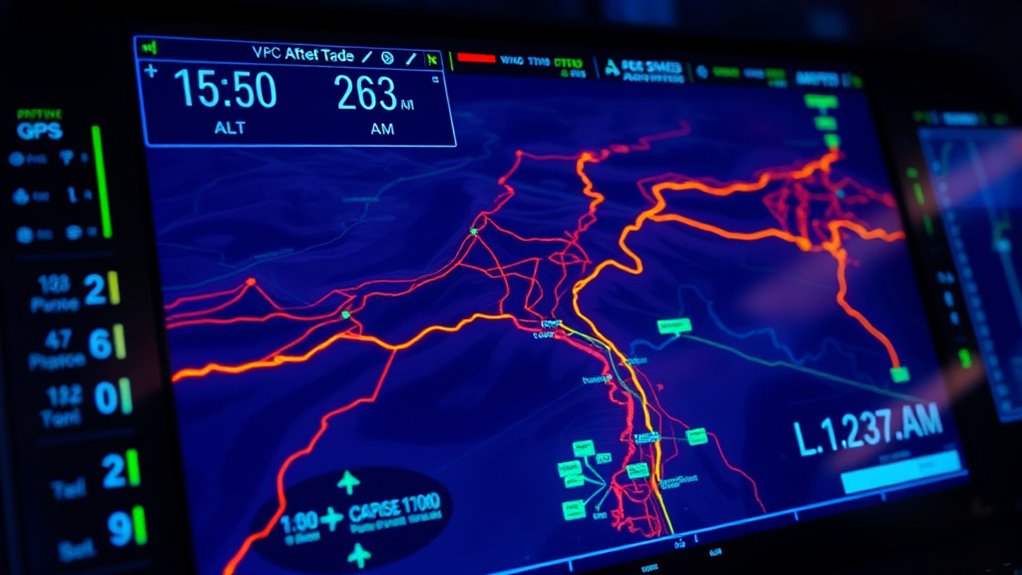
Flight computer software plays a crucial role in modern aviation by providing pilots with real-time data and automated control systems. It streamlines complex tasks, enhances safety, and maximizes flight efficiency. One of its core functions involves aircraft navigation, where the software integrates GPS, inertial measurement units, and other sensors to keep you accurately on course. This integration guarantees you can navigate precisely through busy airspace or challenging weather conditions, reducing the risk of errors. The software continuously updates your position, compares it to your planned route, and makes necessary adjustments automatically or with minimal pilot input. This real-time capability is indispensable for maintaining ideal route efficiency and avoiding hazards or restricted airspace. Additionally, flight computer software often includes automatic alert systems that notify pilots of potential issues before they become critical, further enhancing safety.
Flight computer software ensures precise navigation, real-time updates, and enhanced safety through automated adjustments and sensor integration.
Altitude management is another critical aspect handled seamlessly by flight computer software. Maintaining the correct altitude isn’t just about safety; it’s also about fuel efficiency and air traffic compliance. The software monitors your current altitude, forecasts upcoming airspace restrictions, and suggests or enforces altitude changes when needed. It considers factors like wind speed, aircraft performance, and traffic to help you choose the most efficient altitude. During climb or descent phases, the software optimizes power settings and pitch angles to ensure smooth transitions, conserving fuel and reducing passenger discomfort. It can also alert you if you deviate from assigned altitude or if weather conditions threaten stability at your current level.
Beyond navigation and altitude management, this software integrates data from weather systems, terrain databases, and traffic alerts, allowing you to make well-informed decisions quickly. For example, if a storm develops along your route, your flight computer can recommend alternative paths, adjusting your navigation and altitude to avoid turbulence or hazardous conditions. This integration simplifies complex decision-making processes, enabling you to respond swiftly and accurately.
The automation and AI-driven route optimization features of flight computer software help you plan the most efficient path from takeoff to landing. It considers variables like wind patterns, air traffic, weather, and aircraft performance to suggest the best possible route, saving fuel and time. During the flight, continuous monitoring and adjustments keep you on track and at the ideal altitude, reducing workload and increasing safety. As a pilot, you benefit from the software’s ability to handle routine calculations and adjustments, allowing you to focus more on situational awareness and decision-making.
In essence, flight computer software transforms how you operate aircraft, making navigation, altitude management, and route planning more precise, safe, and efficient. Its AI-driven capabilities are the backbone of modern aviation, ensuring you reach your destination safely and efficiently while responding adaptively to dynamic conditions.
Top picks for "flight computer software"
Open Amazon search results for this keyword.
As an affiliate, we earn on qualifying purchases.
Frequently Asked Questions
How Secure Is Flight Computer Software Against Cyber Threats?
You’re concerned about the security of flight computer software, and it’s essential to know that it faces cybersecurity vulnerabilities. However, developers implement robust data encryption to protect sensitive information and prevent unauthorized access. Regular updates and security protocols help counteract threats. While no system is completely invulnerable, these measures greatly reduce risks, guaranteeing your flight data remains secure against cyber threats. Stay vigilant and make sure your software is always up-to-date.
Can AI Tools Adapt to Sudden Weather Changes Automatically?
A stitch in time saves nine, and AI tools excel at quick responses. They can adapt to sudden weather changes through weather adaptability features, making automatic adjustments to flight plans in real time. This guarantees safer, more efficient routes, even when conditions shift unexpectedly. You benefit from continuous optimization, keeping flights on course without manual intervention. AI’s real-time responsiveness truly makes your routes smarter and safer, no matter the weather.
What Is the Cost Range for Implementing Route Optimization Software?
The cost estimate for implementing route optimization software varies widely, depending on your fleet size and features needed. You might find pricing models ranging from subscription-based plans costing a few hundred dollars per month for small fleets to enterprise solutions costing thousands annually. Consider whether the software offers tiered pricing, pay-as-you-go options, or custom quotes, so you can select a plan that best fits your operational needs and budget constraints.
How User-Friendly Are These AI Tools for Non-Technical Pilots?
You’ll find these AI tools quite user-friendly, thanks to their intuitive user interface designed for ease of use. Non-technical pilots can navigate features smoothly, often without extensive training. Clear visuals, straightforward controls, and guided prompts help you make quick adjustments and understand route suggestions easily. Overall, they’re built to support pilots of all experience levels, ensuring efficient operation without needing advanced technical skills.
Do These Software Solutions Comply With International Aviation Regulations?
Did you know over 90% of aviation software now meets international standards? These solutions are designed to guarantee regulatory compliance and uphold safety standards, so you can trust their reliability. Most AI tools for route optimization are regularly audited by aviation authorities, making sure they adhere to strict regulations. As a pilot, you benefit from innovations that prioritize safety and compliance, helping you navigate complex regulations with confidence.
Conclusion
By harnessing AI tools for route optimization, you can save up to 15% on fuel costs and reduce emissions profoundly. Imagine cutting thousands of dollars in expenses while contributing to a cleaner planet—every flight becomes smarter and more sustainable. As technology advances, your ability to make efficient, eco-friendly decisions improves dramatically. Embrace these innovations today and see how they transform your flight planning, making every journey safer, cheaper, and greener.