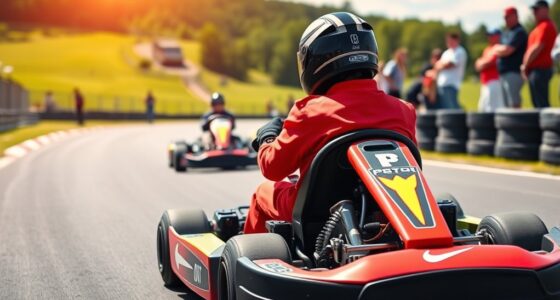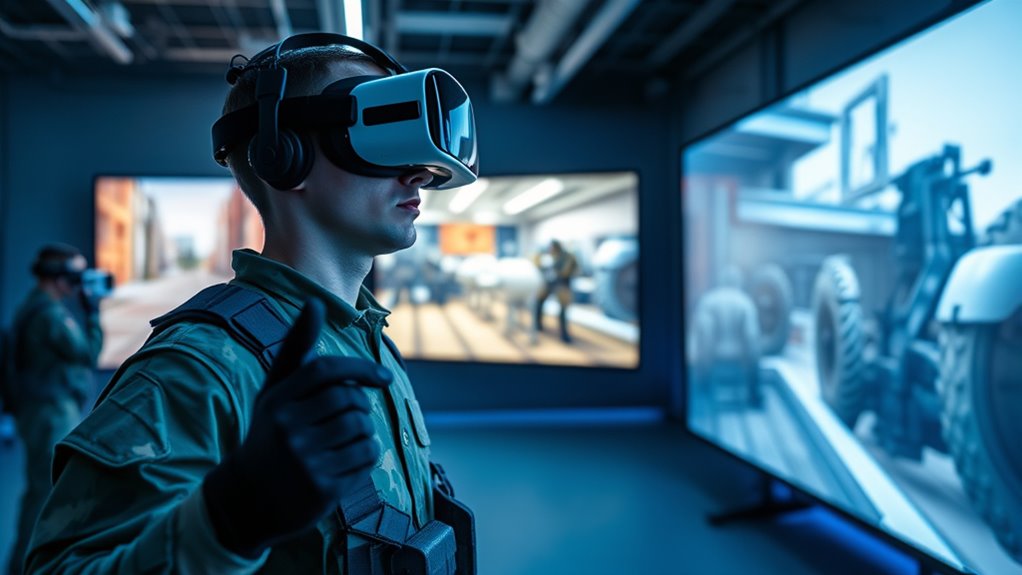
Using simulators and virtual reality for basic training lets you practice skills safely and effectively in immersive environments that mimic real-world situations. You can learn complex and potentially dangerous tasks without risk or high costs, while customizing lessons to your needs. VR keeps you engaged and improves retention, making skills transfer easier to real-world scenarios. If you want to discover how these tools are transforming training across industries, keep exploring further.
Key Takeaways
- VR simulators create immersive, risk-free environments for practicing fundamental skills across various industries.
- They allow safe training for complex or dangerous scenarios, reducing real-world hazards and costs.
- Personalization enables learners to progress at their own pace and focus on areas needing improvement.
- Simulators enhance engagement and retention, ensuring skills transfer to real-world situations effectively.
- Virtual reality offers accessible, adaptable training solutions that support remote learning and quick updates.
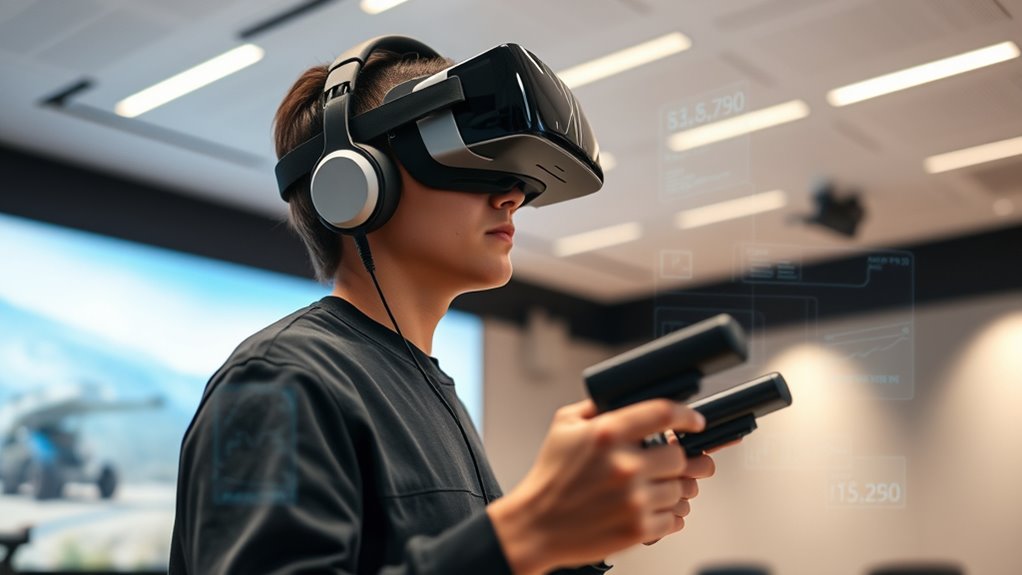
Simulators and virtual reality (VR) are transforming how we approach basic training by providing immersive, risk-free environments where learners can develop essential skills. These advanced tools leverage immersive technology to create realistic scenarios that mimic real-world conditions, allowing you to practice and refine your abilities without danger or costly resources. When you step into a VR environment, you’re fully immersed, which helps you focus completely on the task at hand, making the learning process more effective. This immersion boosts skill acquisition because you’re actively engaged, rather than passively observing or memorizing instructions.
VR training creates immersive, risk-free environments for effective skill development and real-world readiness.
With immersive technology, you can simulate complex situations that would be difficult, expensive, or unsafe to recreate in real life. For example, pilots can train in a realistic cockpit environment, responding to unexpected emergencies, or medical students can practice procedures on virtual patients. This hands-on experience accelerates learning because you get immediate feedback and can repeat scenarios as often as needed to master skills. Unlike traditional training methods, VR allows you to experiment freely, make mistakes, and learn from them without real-world consequences. This safe space encourages more confident decision-making, which translates directly into improved performance in real situations.
Another advantage of using simulators and VR for skill acquisition is the personalization they offer. Training modules can be tailored to your specific needs, focusing on areas where you need improvement. You can progress at your own pace, revisiting challenging scenarios until you feel confident. This customization ensures that your learning experience is efficient and targeted, saving time and resources. Additionally, immersive technology keeps you engaged longer, reducing boredom and increasing retention of information. Furthermore, understanding the importance of airtight coolers in preserving perishable goods highlights the value of proper environmental control, which can also be simulated in training environments for logistics and storage management.
Moreover, the flexibility of VR training means you can access it anytime and anywhere. Remote learners can participate without the need to travel, and training programs can be updated quickly to reflect new procedures or protocols. This adaptability makes VR an ideal supplement or alternative to traditional classroom-based training, especially in fast-evolving industries. As you become more comfortable with VR technology, you’ll notice that your ability to adapt to real-world challenges improves markedly. The skills you develop in immersive environments often transfer seamlessly to actual job sites, ensuring that your training is practical and applicable.
Frequently Asked Questions
How Cost-Effective Are Simulators Compared to Traditional Training Methods?
Simulators and virtual reality are more cost-effective than traditional training methods over time. A thorough investment analysis shows that, despite higher initial costs, they reduce expenses related to equipment, travel, and instructor fees. You save on materials and minimize risks during training. This cost comparison highlights how virtual training provides a scalable, efficient, and budget-friendly option, especially as technology advances and becomes more accessible.
What Safety Considerations Are Involved in Virtual Reality Training?
You should conduct a thorough risk assessment before starting VR training to identify potential hazards. Make certain equipment is well-maintained to prevent malfunctions that could cause injury. Always supervise trainees to monitor safe practices and provide clear instructions. Regularly check the VR hardware and software for updates or issues. By prioritizing safety, you reduce risks and create a secure environment for effective virtual training experiences.
How Do Simulators Adapt to Individual Learner Skill Levels?
Simulators adapt to your skill levels through adaptive learning technologies that assess your performance in real-time. They customize the difficulty and complexity of tasks to match your progress, ensuring you’re challenged without feeling overwhelmed. This skill customization helps you improve efficiently by targeting your specific needs. As you advance, the system adjusts accordingly, providing a tailored training experience that optimizes learning and builds confidence at every stage.
What Are the Limitations of Current Virtual Reality Training Technology?
You might find that current virtual reality training tech faces technological constraints like limited hardware capabilities, which can hinder realism and responsiveness. Additionally, maintaining user engagement can be challenging if simulations aren’t sufficiently immersive or interactive. These limitations affect training effectiveness, making it harder to replicate real-world scenarios fully. As a result, you may experience gaps in skill transfer, underscoring the need for ongoing technological improvements.
How Is Trainee Performance Assessed in Virtual Environments?
In the age of steampunk, you evaluate your trainee’s performance in virtual environments by analyzing performance metrics like accuracy, response time, and decision-making skills. Assessment methods include real-time monitoring, post-simulation reviews, and automated scoring systems that track specific actions. You can also gather feedback through debriefs, ensuring exhaustive insights into their progress. These tools help you identify strengths and areas needing improvement effectively.
Conclusion
Embracing simulators and virtual reality is like opening a door to a limitless training universe. You’re no longer confined by real-world risks or costs; instead, you journey through immersive worlds where mistakes become lessons, and skills sharpen with each virtual step. As you step into this new frontier, remember that these tools transform your learning experience into a dynamic adventure—making mastery not just a goal, but a vivid, engaging reality waiting to be explored.