
Flying over the Great Lakes, water bodies greatly influence thermals by shaping temperature and moisture levels. Lake breezes form as land heats faster than water, bringing cooler, humid air inland and affecting lift patterns. High humidity tends to weaken thermals and inhibit vertical growth, while dry days produce stronger thermals. By understanding how lakes modify thermal activity, you can better anticipate lift conditions and improve your soaring experience—continue exploring to learn more about mastering these water-influenced environments.
Key Takeaways
- Water bodies like the Great Lakes influence thermal formation through humidity, affecting buoyancy and lift strength.
- Lake breezes develop as land heats faster than water, altering thermal patterns and impacting soaring conditions.
- Increased humidity from lakes can suppress thermal strength by stabilizing the atmosphere and reducing vertical air movement.
- Clear, dry days over the lakes produce stronger, more predictable thermals suitable for soaring.
- Understanding water’s effects helps pilots anticipate lift zones and plan safer, more efficient flights over the Great Lakes.
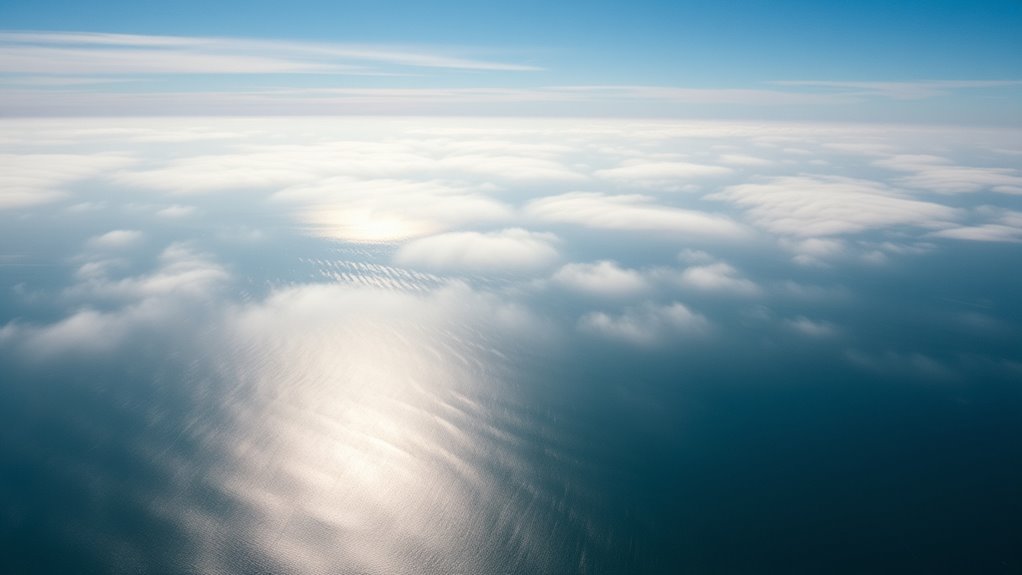
Water substantially influences the formation and strength of thermals, which are rising currents of warm air used by gliders and birds to gain altitude. When flying over the Great Lakes, you’ll notice that water bodies markedly impact these rising air currents, especially through phenomena like lake breezes and humidity influence. As the sun heats the land faster than the water, cool lake breezes develop in the afternoon, creating a dynamic environment for thermal formation. These breezes blow from the lake toward the land, pushing moist air inland and altering local thermal patterns. This shift can either strengthen or weaken thermals depending on the time of day and atmospheric conditions. Additionally, the presence of water influences the local temperature gradients, which are critical for the development of thermals.
During the day, as the sun warms the land surface, the air above it heats up, causing thermals to form and carry you upward. However, when a lake breeze kicks in, it introduces cooler, more humid air from the lake into the atmosphere. This humid influence can make thermals less intense because moist air tends to resist vertical movement, reducing the buoyancy that powers rising currents. Conversely, in some cases, the moisture can enhance thermals by increasing the temperature difference between the land and the air above, depending on the specific humidity levels and temperature gradients. You’ll find that the interaction between lake breezes and humidity can create a patchwork of thermal activity, with some areas offering strong lift and others remaining relatively calm.
Lake breezes and humidity create varied thermal lift, with some areas offering strong lift while others remain calm.
Furthermore, the humidity influence plays a critical role in the thermal dynamics over the Great Lakes. Higher humidity levels can lead to cloud formation and fog, which break up or suppress the development of strong thermals. On clear days, the dry, warm air over the land produces more robust thermals, allowing you to stay aloft longer. But when the humidity is high, the moist air tends to stabilize the atmosphere, making it harder for thermals to develop or sustain their strength. This stabilization can be especially noticeable when lake breezes carry moist air inland, creating a layer of humid air that inhibits thermal growth. As a pilot or glider enthusiast, you’ll notice these effects firsthand, as your ability to find lift varies with the weather conditions created by water’s influence over the lakes.
In essence, water’s presence over the Great Lakes shapes the thermal environment in complex ways. Lake breezes and humidity influence the strength, location, and duration of thermals, directly affecting your flight experience. Recognizing these water effects helps you better anticipate where and when to find lift, making your soaring over these vast freshwater bodies more predictable and enjoyable.
glider thermal lift gauge
As an affiliate, we earn on qualifying purchases.
As an affiliate, we earn on qualifying purchases.
Frequently Asked Questions
How Do Temperature Differences Over Water Impact Thermal Strength?
Temperature differences over water markedly impact thermal strength, as you’ll notice. When water temperature is cooler than the air above, it weakens thermals because less heat rises from the water surface. Conversely, warmer water increases thermal intensity by providing more heat, making thermals stronger. As you fly over the Great Lakes, pay attention to water temperature variations, since they directly influence the strength and lift of thermals, affecting your flying experience.
Can Water Surfaces Cause Sudden Thermal Changes During Flight?
Yes, water surfaces can cause sudden thermal changes during flight. Water surface turbulence creates unpredictable air currents, leading to abrupt shifts in thermal strength. Additionally, cloud formation dynamics over water influence thermal development, sometimes rapidly intensifying or weakening thermals. These effects can surprise pilots, so staying alert to water surface conditions and cloud patterns helps you anticipate and respond to sudden thermal changes effectively.
What Role Does Wind Over Lakes Play in Thermal Development?
Imagine wind as the brushstroke that paints your thermal picture. Wind over lakes, especially lake breezes, plays a pivotal role by creating temperature contrasts that foster thermal development. Wind shear further enhances this process by disrupting airflow, leading to rising air currents. As you fly, these elements work together, energizing thermals and helping you stay aloft longer. Embrace the wind’s artistry; it’s your invisible guide to better soaring.
Are Thermals Over Water More Stable Than Over Land?
Thermals over water tend to be more stable than over land because of thermal persistence and water surface variability. You’ll notice that water heats and cools more slowly, creating consistent thermal conditions. This stability allows thermals to develop steadily, providing smoother lift for longer periods. Over land, thermal development is more unpredictable due to rapid surface temperature changes, making thermals less stable and more variable.
How Does Humidity From Water Bodies Influence Thermal Formation?
Humidity from water bodies increases thermal formation by adding water vapor to the air, which enhances humidity variation. As water evaporates, it enriches the air with moisture, making thermals more moist and sometimes more stable. This water vapor helps create stronger, more consistent thermals, especially over lakes and oceans. So, when flying over water, you’ll notice thermals are often influenced by the humidity levels, resulting in different thermal behavior compared to land.
aviation weather meter for soaring
As an affiliate, we earn on qualifying purchases.
As an affiliate, we earn on qualifying purchases.
Conclusion
As you fly over the Great Lakes, remember that water plays a big role in shaping thermals. It’s like a double-edged sword—sometimes helping your lift, other times challenging your glide. Keep your eyes open and adapt on the fly. Don’t forget, where there’s a will, there’s a way; understanding water’s effects gives you the edge. So, embrace the skies and trust your skills—these lakes are more than just beautiful views, they’re your secret weapon.
water influence thermal prediction tools
As an affiliate, we earn on qualifying purchases.
As an affiliate, we earn on qualifying purchases.
gliding equipment for lake thermal conditions
As an affiliate, we earn on qualifying purchases.
As an affiliate, we earn on qualifying purchases.