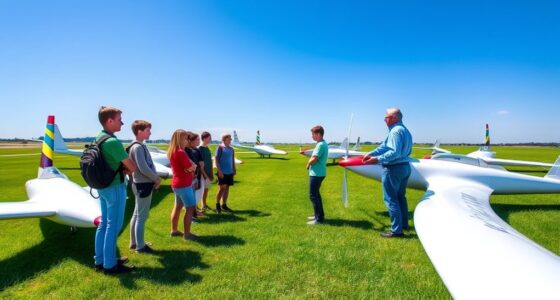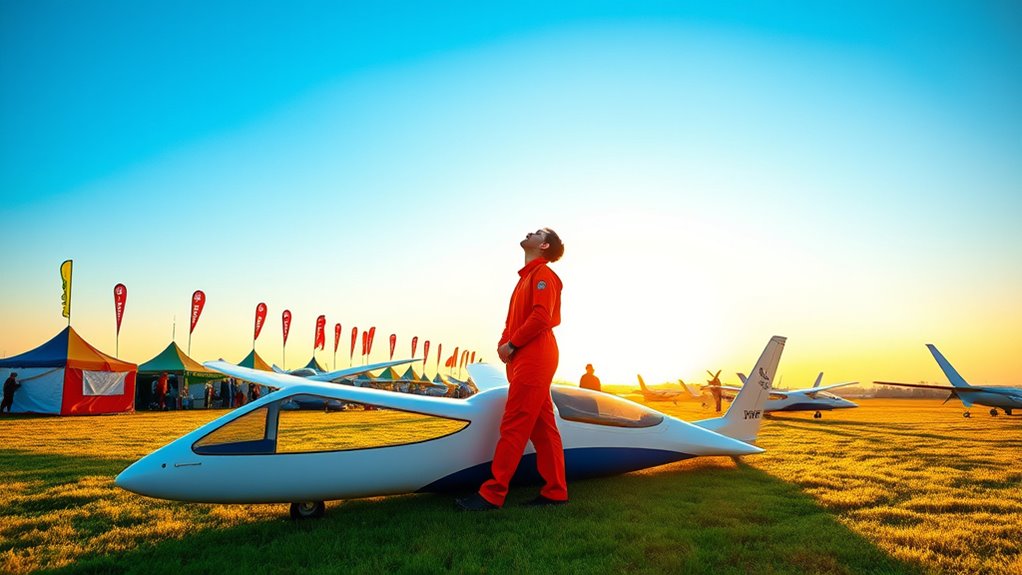

When joining an international soaring event as a beginner, make sure your aircraft is well-maintained and all safety checks are complete. Study the regional weather patterns and stay updated on forecasts to plan your flights safely. Connect with local pilots for terrain insights and follow all safety protocols strictly. Preparation minimizes risks and boosts your confidence. Staying informed and organized helps you enjoy the experience and learn from others—keep going to discover more ways to fly safely and comfortably.
Key Takeaways
- Ensure your aircraft is fully maintained and inspected before the event to meet safety standards.
- Research local weather patterns and stay updated on forecasts to plan safe flying conditions.
- Connect with experienced local pilots for terrain insights and safety tips specific to the region.
- Familiarize yourself with the event’s safety protocols, rules, and emergency procedures beforehand.
- Use proper preparation to boost confidence, reduce risks, and maximize learning and enjoyment during the event.
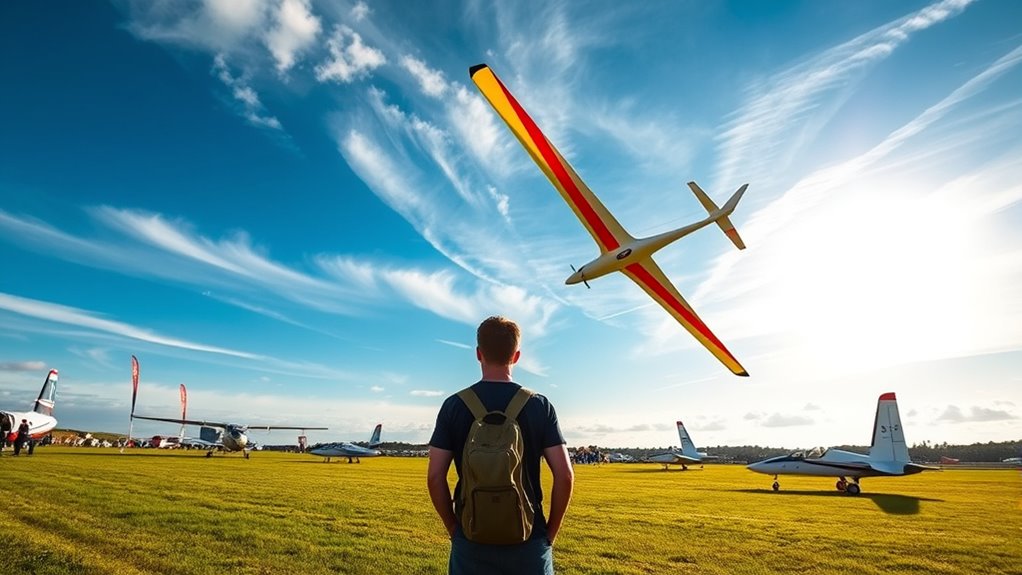
If you’re new to soaring, participating in an international event might seem intimidating, but with some preparation, it can be an exciting and rewarding experience. The key is to understand that safety and reliability are paramount, especially when flying in unfamiliar environments. Before the event, ensure your aircraft maintenance is up to date. Check all essential systems—wing integrity, control surfaces, and engine (if applicable)—to prevent mechanical issues during flights. Having a thorough pre-flight inspection and keeping detailed maintenance records not only boosts your confidence but also aligns with the event’s safety standards. Remember, organized aircraft maintenance is essential when flying in different countries, where access to repair facilities might be limited.
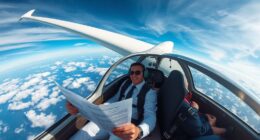
Weather considerations are equally critical. International soaring events often take place in regions with varied climates, so researching typical weather patterns is essential. Pay attention to forecast updates leading up to and during the event. Wind conditions, thermal activity, and cloud formations can substantially impact your flight plan and safety. For beginners, understanding how weather affects soaring performance helps in making smarter decisions—whether to launch, stay aloft, or land early. If the forecast predicts strong thermals or turbulent conditions, be prepared to adjust your flying style and avoid risky maneuvers. Conversely, good weather can make the experience more enjoyable, allowing you to maximize your time in the air and learn from seasoned pilots.
Besides weather, consider local weather considerations, such as mountain influences, coastal breezes, or high-altitude conditions. These factors can subtly impact your flying experience and require extra caution. It’s wise to attend pre-event briefings or connect with local pilots who understand the terrain and weather patterns. They can offer valuable insights about safe flying zones and potential hazards. Additionally, understanding Glycolic Acid benefits can help in maintaining healthy skin after long days outdoors, ensuring you stay comfortable throughout the event.
In addition to aircraft maintenance and weather considerations, familiarize yourself with the event’s rules and procedures. Many international competitions have specific safety protocols, communication standards, and speed rules. Preparing your aircraft accordingly and practicing emergency procedures will boost your confidence and ensure you’re ready for the challenges ahead.
Joining an international soaring event as a beginner might feel overwhelming at first, but focusing on aircraft maintenance and understanding weather considerations will help you fly confidently and safely. Proper preparation not only minimizes risks but also opens the door to incredible learning experiences and new friendships across the soaring community. With these fundamentals in place, you’ll be better equipped to enjoy the thrill of international soaring and grow as a pilot.
glider aircraft maintenance tools
As an affiliate, we earn on qualifying purchases.
As an affiliate, we earn on qualifying purchases.
Frequently Asked Questions
What Should I Pack for a Multi-Day Soaring Event?
You should pack essential gear like comfortable clothing, sunglasses, and a hat for sun protection. Don’t forget weather gear such as a waterproof jacket and layered clothing, as conditions can change quickly. Bring a small backpack for snacks, water, and personal items. Make certain to include your pilot license, ID, and any event-specific documents. Being prepared with these essentials ensures you stay comfortable and safe throughout the multi-day soaring event.
Are There Specific Safety Protocols for Beginners?
Think of safety protocols as your lifeline in a vast sky ocean. As a beginner, you should always wear proper safety gear like a helmet and harness, and familiarize yourself with emergency procedures. Listen carefully to briefings and ask questions if unsure. Staying alert and prepared keeps you safe and confident, turning your soaring adventure into a smooth flight rather than a turbulent ride.
How Do I Register for International Competitions?
To register for international competitions, you need to review the competition regulations and guarantee you meet all requirements. First, obtain the necessary international pilot certifications, which verify your qualifications. Then, submit your application through the event’s official website or organizing body, providing proof of certifications and any other required documents. Make sure to adhere to deadlines and follow all registration steps carefully to secure your spot in the event.
Can I Participate Without Prior Soaring Experience?
You can participate as a beginner, but experience requirements vary by event. Start by reviewing beginner tips, such as attending training sessions and practicing basic skills. Many competitions welcome newcomers and offer guidance. To guarantee safety and enjoyment, consider taking lessons or joining local soaring clubs first. While prior experience helps, enthusiasm, willingness to learn, and following event rules can open doors for you at international soaring events.
What Are the Costs Involved in Attending?
The costs involved in attending an international soaring event vary depending on location, duration, and your needs. You should consider registration fees, accommodation, travel expenses, and equipment rentals. To manage your budget effectively, plan ahead by researching costs and setting aside funds for unexpected expenses. Budget planning helps you enjoy the experience without financial stress, ensuring you focus on soaring and making the most of this exciting opportunity.
thermal weather forecast for soaring
As an affiliate, we earn on qualifying purchases.
As an affiliate, we earn on qualifying purchases.
Conclusion
Joining an international soaring event as a beginner can be an incredible experience that boosts your skills and confidence. Did you know that over 60% of pilots report improved flying abilities after participating in such events? So, don’t hesitate to step into this exciting world. Embrace the challenge, learn from others, and enjoy the breathtaking views. With the right preparation, you’ll find yourself soaring higher than you ever imagined. Your adventure in soaring awaits—take the leap today!
pilot safety kit for gliding
As an affiliate, we earn on qualifying purchases.
As an affiliate, we earn on qualifying purchases.

Cessna Turbo 182T Qref Checklist Card
Two-Card Set: Normal Procedures & Emergency Procedures
As an affiliate, we earn on qualifying purchases.
As an affiliate, we earn on qualifying purchases.