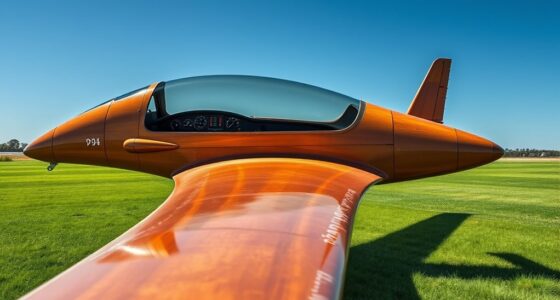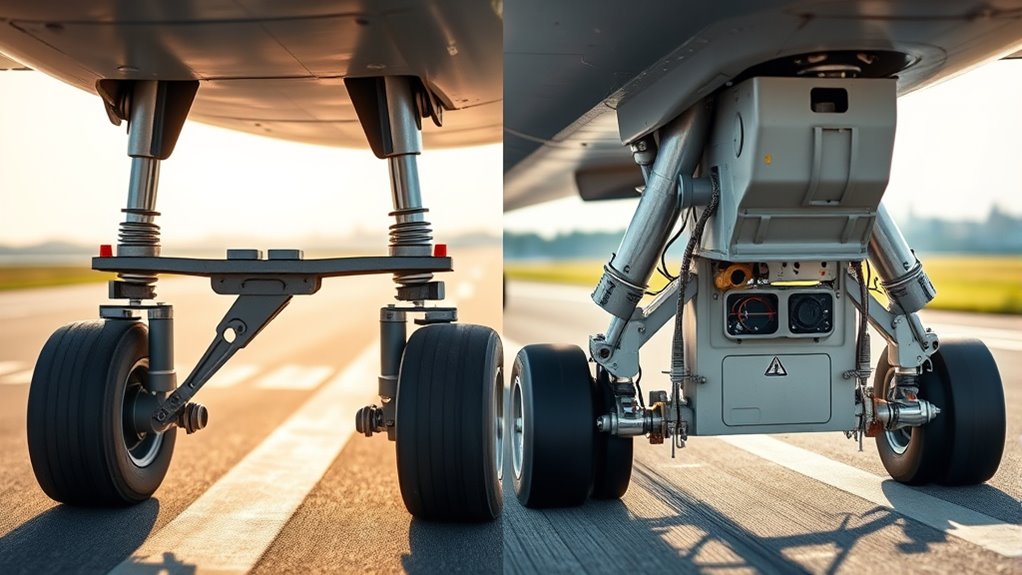

When choosing between fixed and retractable landing gear, you should consider maintenance, performance, and costs. Fixed gear is simpler, with fewer moving parts, making it easier and cheaper to maintain. Retractable gear reduces drag, improving fuel efficiency and aircraft speed, but requires more complex systems that need careful inspection and upkeep. Understanding these differences can help you optimize safety and performance—keep exploring to get into the details behind each design.]
Key Takeaways
- Fixed landing gear remains extended, offering simplicity and easier maintenance, while retractable gear reduces drag and improves aerodynamics.
- Retractable gear involves complex mechanisms like hydraulics, requiring rigorous inspections, whereas fixed gear has fewer moving parts.
- Fixed gear has lower initial and ongoing costs due to its mechanical simplicity, compared to the higher costs of retractable systems.
- Material durability and regular inspections are vital for both types to prevent fatigue, corrosion, and ensure safety.
- Proper wheel alignment enhances ground handling and reduces wear, with fixed gear alignment being simpler than retractable gear systems.

Landing gear is a critical component of aircraft that directly impacts safety and performance during takeoff, landing, and ground operations. When it comes to the design choices, understanding the differences between fixed and retractable landing gear can help you appreciate their unique advantages and maintenance requirements. Fixed landing gear remains extended at all times, making it simpler and more straightforward to maintain. Since there are no moving parts to retract or extend, you won’t need complex mechanisms or hydraulic systems, reducing the potential for mechanical failure. However, this simplicity comes with increased aerodynamic drag, which can slightly reduce fuel efficiency and overall performance.
Fixed landing gear offers simplicity and easier maintenance but increases aerodynamic drag and reduces performance.
Retractable landing gear, on the other hand, can be stowed away during flight to improve aerodynamics, boosting fuel economy and speed. But, this advantage relies heavily on precise wheel alignment and durable materials that can withstand the repeated stresses of extension and retraction. The mechanisms involved are more complex, involving hydraulics, actuators, and locking systems, all of which demand rigorous maintenance to ensure proper operation. Regular inspections are necessary to verify that these systems function smoothly, preventing issues that could jeopardize safety. You’ll also need to pay close attention to material durability, especially in the wheels and structural components, to resist fatigue and corrosion over time.
Maintaining wheel alignment is essential regardless of your landing gear type. Proper alignment ensures even load distribution across the wheels, reducing uneven wear and prolonging component life. Misalignment can cause handling issues during ground operations and increase maintenance costs due to accelerated wear. For fixed gear, keeping the wheels aligned is generally easier since there are fewer moving parts, but it still requires routine checks. In retractable gear systems, alignment becomes even more critical because the retraction and extension cycles can introduce misalignments or stresses if not properly maintained.
Material durability plays a pivotal role in the longevity of your landing gear. High-quality, durable materials like titanium, high-strength steel, or specialized composites are often used to withstand repeated impacts, vibrations, and environmental exposure. These materials help prevent corrosion and fatigue, especially in harsh conditions or humid environments. When you’re inspecting your landing gear, pay close attention to the integrity of these materials, as cracks or corrosion can compromise safety. Proper maintenance, including regular cleaning, lubrication, and timely replacement of worn parts, ensures that your landing gear remains reliable and safe throughout its service life. Additionally, understanding the effects of material fatigue can help you anticipate potential issues before they develop into safety concerns.
Top picks for "land gear design"
Open Amazon search results for this keyword.
As an affiliate, we earn on qualifying purchases.
Frequently Asked Questions
How Does Landing Gear Design Affect Aircraft Speed?
Landing gear design directly affects your aircraft’s speed through aerodynamics and gear retraction mechanisms. Retractable gear reduces drag, allowing you to fly faster, while fixed gear creates more resistance, slowing you down. The gear retraction mechanisms ensure smooth, quick retraction, minimizing speed loss during flight. By choosing a superior design, you enhance your aircraft’s aerodynamic efficiency and overall speed, making your flights more efficient and performance-oriented.
What Materials Are Commonly Used in Landing Gear Construction?
Ever wonder what keeps that heavy aircraft safely on the ground? You’ll find materials like high-strength steel and alloys, but composite materials are increasingly popular for their lightweight strength. Hydraulic systems power the operation, ensuring smooth retraction and extension. These materials help withstand the stresses of takeoff and landing, making your flight safer. Isn’t it amazing how advanced materials and hydraulic tech work together to support every journey?
How Is Landing Gear Safety Ensured During Operation?
You guarantee landing gear safety by regularly inspecting hydraulic systems for leaks or damage, as they control gear extension and retraction. Follow strict emergency procedures to handle hydraulic failures or malfunctions swiftly, preventing accidents. Conduct routine maintenance, including testing gear extension and retraction, and confirm proper functioning before every flight. Staying vigilant and prepared guarantees safe operations, minimizing risks during landing and takeoff.
What Are the Environmental Impacts of Different Landing Gear Types?
Think of your landing gear as the wings of an eco-guardian. Fixed gear often has a smaller environmental footprint due to simpler design and fewer moving parts, reducing manufacturing and maintenance impacts. Retractable gear minimizes noise pollution during flight, preserving peace for communities nearby. Your choice influences not just aircraft performance but also environmental health, making mindful decisions essential to balance efficiency and ecological responsibility.
How Do Maintenance Schedules Vary Between Fixed and Retractable Gear?
You’ll find maintenance schedules differ for fixed and retractable landing gear. With fixed gear, inspection intervals are typically longer since there are fewer moving parts, and lubrication procedures are simpler. Retractable gear requires more frequent inspections and lubrication to guarantee all moving components function smoothly and safely. Regularly checking for wear and corrosion is vital for both types, but retractable gear demands more detailed attention due to its complexity.
Conclusion
In choosing between fixed and retractable landing gears, you weigh simplicity against versatility, cost against performance, and convenience against complexity. You consider durability and maintenance, safety and efficiency, ease of operation and aerodynamic advantage. Ultimately, your decision shapes your aircraft’s functionality, reliability, and longevity. By understanding these differences, you make informed choices, optimize performance, and guarantee safety—because in landing gear design, balancing these factors is key to flying confidently and successfully.