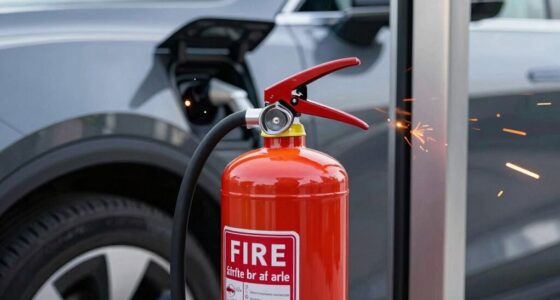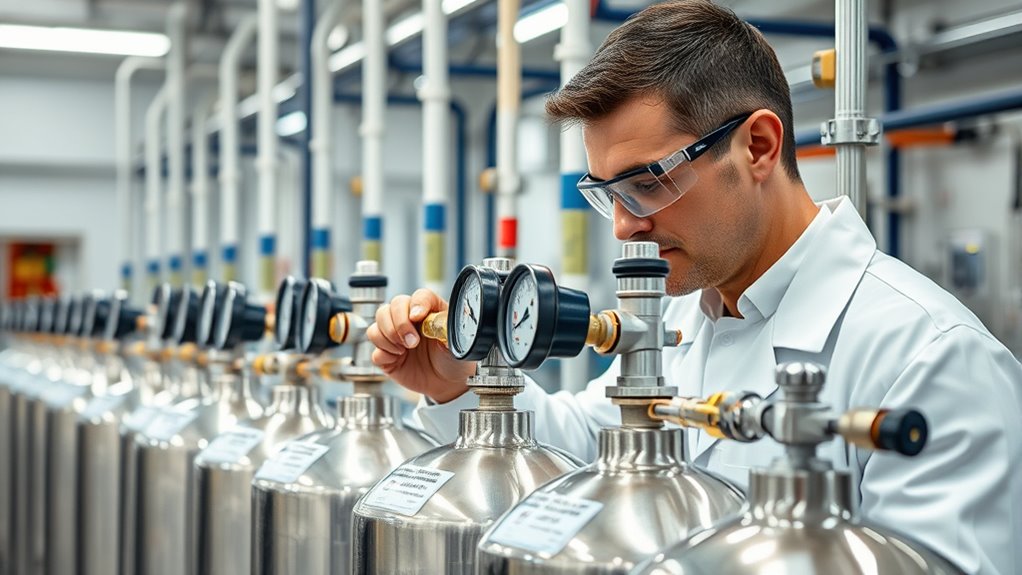

When inspecting your oxygen system, make certain you verify all components meet current safety standards and regulations. Conduct thorough visual checks for damage, corrosion, or leaks, and perform functional tests to confirm proper performance and calibration. Keep detailed records of inspections, maintenance, and certifications. Check safety devices like alarms and emergency shutoff valves for proper operation. Staying compliant and vigilant helps prevent hazards; continue exploring for in-depth steps to keep your system safe.

Get travel and outdoor gear delivered free with Prime
- Fast, free delivery on millions of items
- Prime Video, Amazon Music and more included
- Member-only deals all year
Key Takeaways
- Ensure all system components meet current certification standards and regulatory requirements before inspection.
- Perform thorough visual inspections for damage, corrosion, leaks, and proper labeling on all oxygen system parts.
- Conduct functional tests to verify gas flow rates, regulator calibration, and system response under operational conditions.
- Maintain detailed records of inspections, maintenance, certifications, and repairs for compliance and audit purposes.
- Verify safety devices, emergency shutoff valves, pressure gauges, and alarm systems function correctly and reliably.
As an affiliate, we earn on qualifying purchases.
Compliance With Applicable Standards and Regulations

Ensuring compliance with applicable standards and regulations is vital for maintaining a safe and reliable oxygen system. You must understand the liability standards that govern system safety and performance, as these set the foundation for accountability. Certification processes are essential in verifying that components and systems meet strict safety criteria before deployment. By adhering to these standards, you reduce risks and ensure your system operates within legal and safety boundaries. Regularly review updated regulations from relevant authorities, and verify that each part of your oxygen system holds the necessary certifications. This proactive approach not only safeguards users but also minimizes your liability in case of incidents. Staying compliant is a continuous process that underpins the overall safety and integrity of your oxygen system.
Visual Inspection of System Components
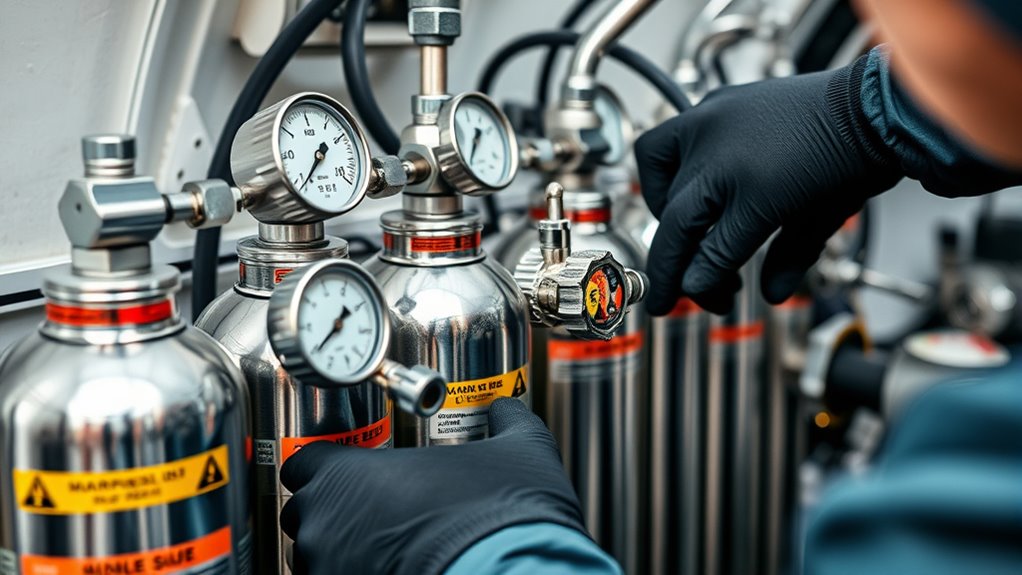
A thorough visual inspection of your oxygen system components is essential for identifying potential issues before they escalate. During this process, you examine each visual component for signs of damage, corrosion, or wear. Follow established inspection procedures to guarantee nothing is overlooked, paying close attention to hoses, connectors, gauges, and valves. Look for cracks, leaks, or discoloration that could compromise safety or performance. Verify that all labels and safety tags are legible and intact. Check for proper mounting and secure fittings. Remember, a detailed visual inspection helps catch problems early, reducing the risk of system failure. Additionally, understanding system components can enhance your ability to identify issues effectively. Consistently applying these inspection procedures ensures your oxygen system remains reliable, safe, and compliant with regulations.
Functional Testing and Performance Verification
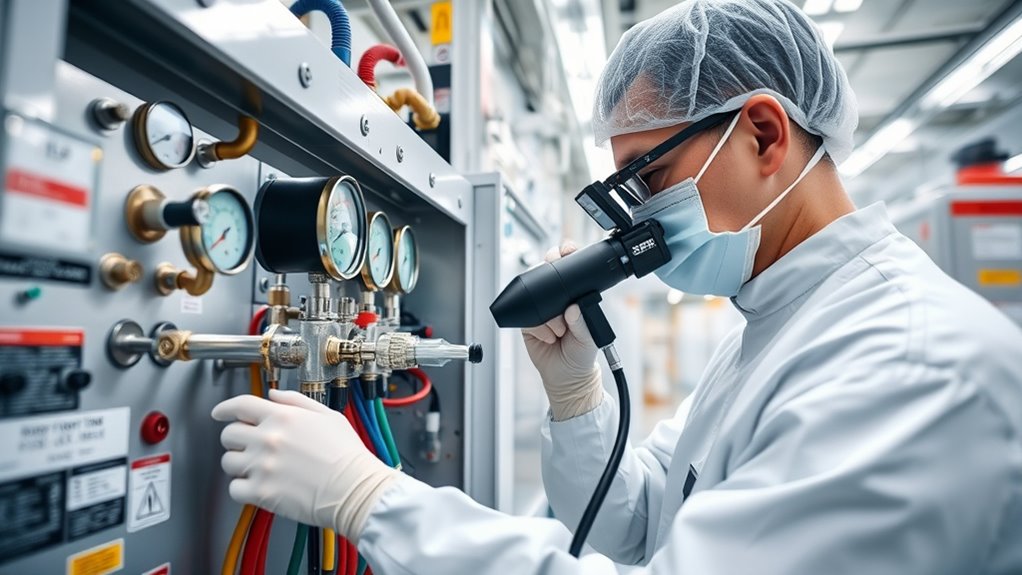
To confirm that your oxygen system functions correctly, you need to perform thorough functional testing and performance verification. This ensures the system delivers proper gas flow and remains accurately calibrated. First, check the gas flow rate at each outlet, verifying it meets specifications. Second, perform system calibration by adjusting regulators and sensors as needed to ensure accurate oxygen delivery. Third, conduct a test run to monitor the system’s response time and stability under operational conditions. These steps identify any discrepancies in gas flow or calibration issues, preventing potential failures. Regular testing maintains safety and compliance, ensuring your oxygen system performs reliably during use. Proper verification is essential for ideal performance and adherence to regulatory standards. Additionally, implementing data-driven strategies can help track system performance over time and facilitate predictive maintenance, further enhancing reliability.
Documentation and Record-Keeping Requirements
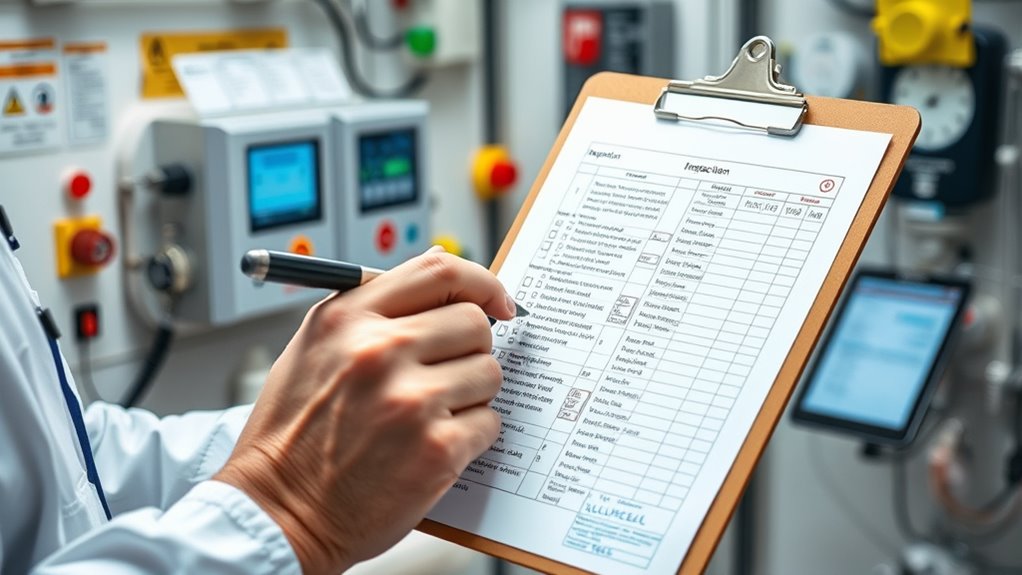
Proper documentation and record-keeping are critical for demonstrating compliance with regulatory standards and maintaining the integrity of your oxygen system. You need to keep detailed records of maintenance schedules, including dates, procedures performed, and any repairs or replacements made. This ensures you can track the system’s history and verify that inspections occur on time. Certification documentation is also essential; it confirms that inspections, tests, and maintenance meet regulatory requirements. Maintaining accurate records helps you identify potential issues early and provides evidence during audits or inspections. Make sure your records are organized, accessible, and up-to-date. Clear documentation not only supports safety and compliance but also extends the lifespan of your oxygen system by ensuring all maintenance activities are properly recorded. Additionally, record-keeping best practices can improve overall management and accountability.
Safety Devices and Emergency Systems Check
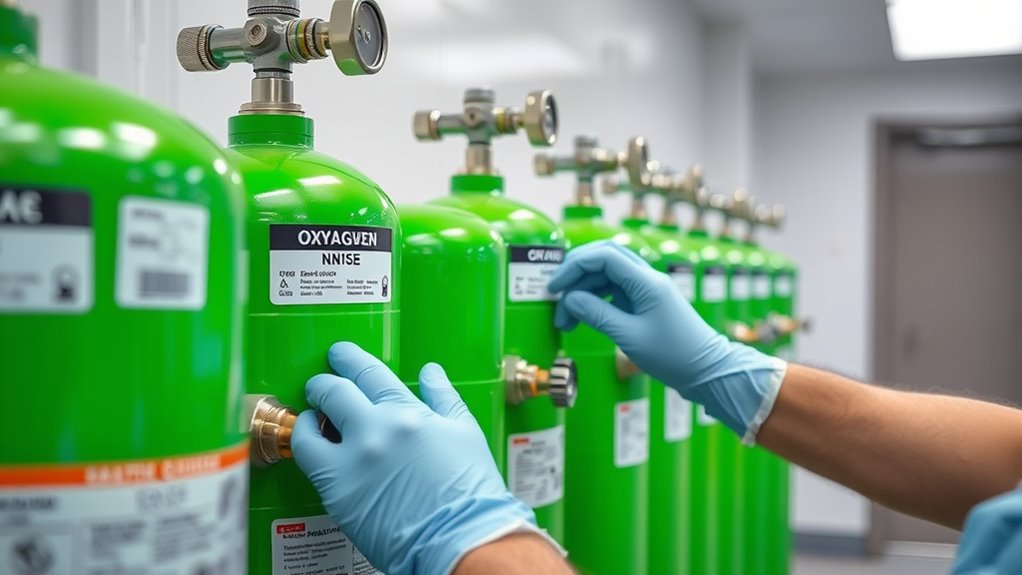
Regularly inspecting safety devices and emergency systems is essential to guarantee they function correctly when needed. You should verify that alarm systems activate promptly and reliably, ensuring immediate alerts during emergencies. Check pressure gauges for accuracy, confirming they reflect correct oxygen levels and system pressures. Also, inspect emergency shutoff valves to ensure smooth operation without leaks or obstructions. Specifically, you should:
Regular safety inspections ensure alarms, gauges, and shutoff valves operate reliably during emergencies.
- Test alarm systems regularly to confirm proper signaling.
- Calibrate and verify pressure gauges for precise readings.
- Inspect emergency shutoff valves for functionality and integrity.
Additionally, staying informed about Soul Sanctuaries and other wellness practices can promote overall safety and well-being when managing complex systems.
Staff Training and Procedural Compliance
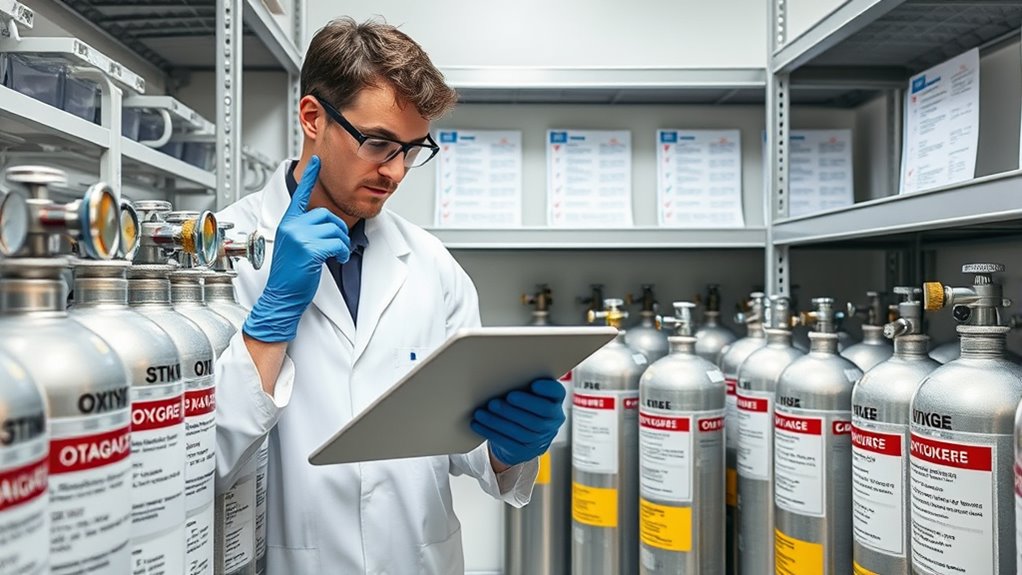
Have you guaranteed that staff members are fully trained on oxygen system procedures? Ensuring staff competency is essential for safe and effective operation. Regular training sessions reinforce procedural adherence, helping staff stay current on inspection protocols, emergency responses, and system maintenance. You should verify that all team members understand oxygen system components, safety measures, and troubleshooting steps. Consistent training reduces errors and fosters confidence during critical moments. Document training completion and assess staff skill levels periodically. By prioritizing staff training and procedural compliance, you minimize risks, meet regulatory standards, and maintain a high safety standard. Remember, well-trained staff are your first line of defense in preventing system failures and ensuring prompt, effective responses in emergencies. Additionally, understanding the role of color accuracy can help staff better interpret system indicators and alerts, ensuring timely and accurate responses.
Frequently Asked Questions
How Often Should Oxygen System Inspections Be Scheduled?
You should schedule oxygen system inspections based on recommended inspection intervals, typically every 6 to 12 months, depending on manufacturer guidelines and usage. Proper maintenance scheduling is essential to guarantee safety and system reliability. Regular inspections help identify potential issues early, preventing failures during critical moments. By adhering to these intervals, you maintain compliance and keep the oxygen system functioning at its best, protecting both personnel and equipment effectively.
What Are Common Signs of Oxygen System Deterioration?
Imagine your oxygen system giving subtle hints it’s not quite right. You might notice faint hissing sounds from leaks or a slight metallic smell indicating corrosion detection. Discoloration or corrosion on fittings and gauges can also signal deterioration. Keep an eye out for reduced airflow or unusual pressure readings. Addressing these signs early helps prevent bigger issues and ensures your system stays safe and reliable. Regular checks make these signs easier to spot.
Are There Specific Tools Required for System Inspections?
When inspecting an oxygen system, you’ll need specific inspection equipment like pressure gauges, leak detectors, and flow meters to make certain everything functions properly. Always follow safety protocols to protect yourself and the system. These tools help identify issues like leaks or pressure drops early, preventing potential hazards. Using the right inspection equipment and adhering to safety protocols ensures thorough inspections, keeping the oxygen system safe and compliant with regulations.
How Do Inspections Vary Between Different Oxygen System Types?
You see different oxygen system types, each requiring tailored inspections. For portable systems, you check for leaks, cleanliness, and proper valve operation. For fixed systems, you verify pressure gauges, regulators, and alarm functions. Medical or aviation systems demand more detailed inspections aligned with stricter standards. Your goal is to guarantee oxygen safety by following specific inspection standards, recognizing that each system’s design influences the inspection process, emphasizing safety and compliance every time.
What Are Penalties for Non-Compliance With Inspection Regulations?
If you don’t comply with inspection regulations, you face serious liability consequences and legal penalties. You could be fined, face suspension of your license, or even legal action if an incident occurs due to neglect. Non-compliance also increases your risk of liability in lawsuits, damages your reputation, and could lead to costly repairs or shutdowns. Staying current with inspections helps you avoid these penalties and guarantees safety compliance.
Conclusion
So, next time you’re tempted to skip those oxygen system inspections, remember—they’re not just bureaucratic hoops. Ignoring these checkpoints might save you a moment, but could cost lives in the end. Think of it as your way of avoiding a little inconvenience today for a big disaster tomorrow. Stay compliant, stay safe, and maybe—just maybe—your reputation will survive the next surprise audit. Because, let’s face it, nobody wants to be the hero in a tragedy.
Halloween Picks
halloween
As an affiliate, we earn on qualifying purchases.