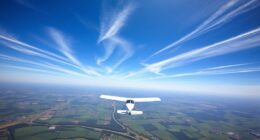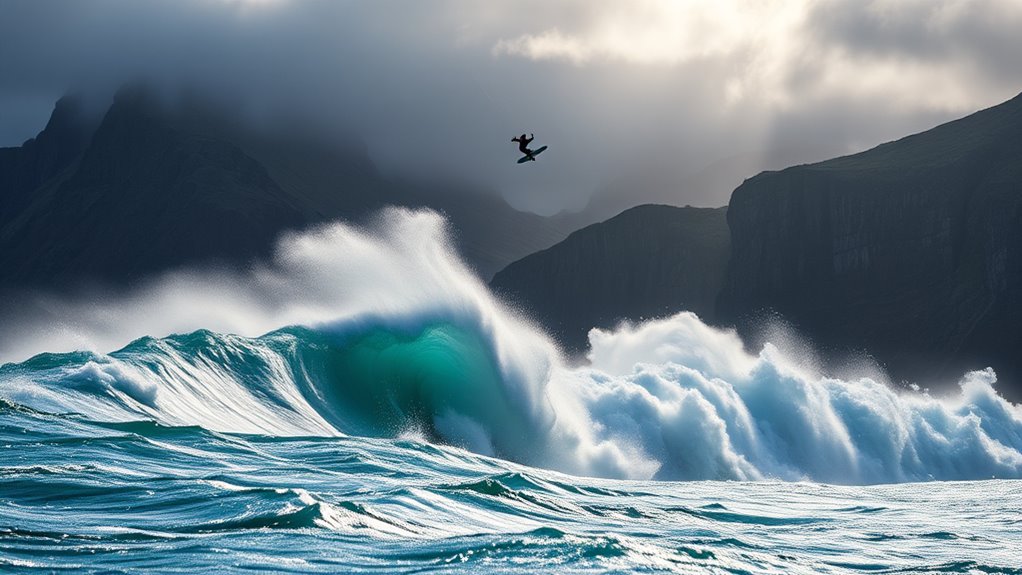
In the Scottish Highlands, wave soaring combines thermal currents, ridge lift, and atmospheric wave patterns to help you reach high altitudes and stay airborne longer. You’ll find rising warm air over varied landscapes like mountains and valleys, along with consistent uplift along ridges driven by prevailing westerly winds. By understanding how these lift sources interact, you can optimize your flight. Keep exploring, and you’ll uncover more strategies to master this dynamic soaring environment.
Key Takeaways
- The Scottish Highlands’ mountainous terrain and westerly winds create ideal conditions for mountain wave formation.
- Ridge lift from ridges and escarpments can initiate airflow that transitions into wave lift at higher altitudes.
- Clear, sunny days with strong prevailing winds enhance the development of wave patterns for soaring.
- Recognizing atmospheric signs like lenticular clouds indicates strong wave activity suitable for wave soaring.
- Combining ridge lift and thermal activity enables pilots to access and sustain high-altitude wave lift zones.
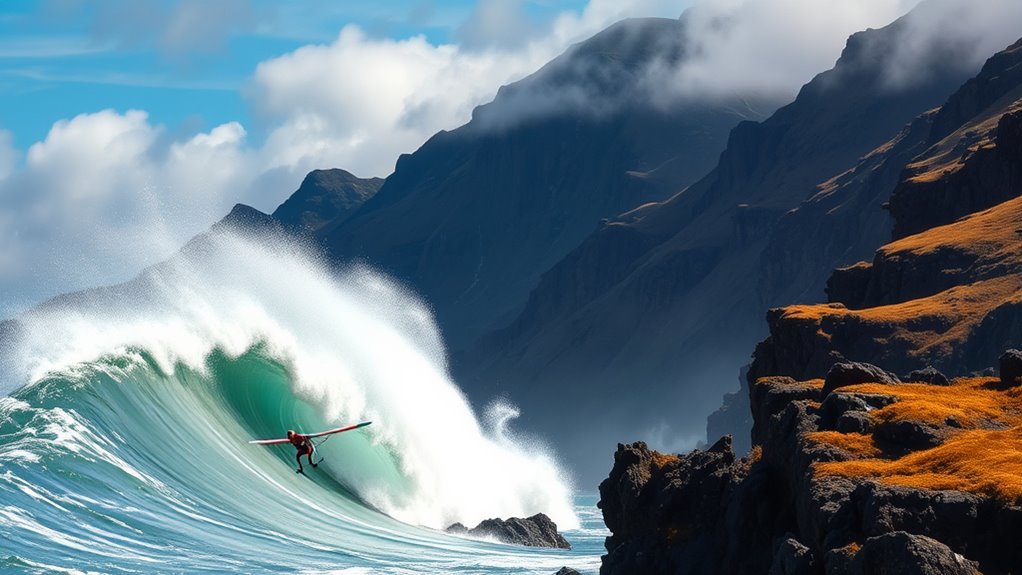
Thermal currents are rising columns of warm air that form when the sun heats the ground unevenly. In the Highlands, the landscape’s varied surface—mountains, valleys, and open moorlands—creates a complex mosaic of thermal activity. You’ll find that on sunny days, especially during mid-morning to early afternoon, these thermals provide the energy needed to climb steadily. By skillfully locating and centering these thermal bubbles, you can gain altitude without relying on engine power. It’s vital to read the sky carefully, watching for signs like cumulus clouds or dust devils that indicate thermal formation nearby. When you connect with a thermal, you’ll feel your glider lift smoothly, allowing you to extend your flight and explore higher altitudes. Recognizing the high contrast ratio of these thermal signatures can significantly improve your ability to locate and utilize them effectively.
Ridge lift, on the other hand, exploits the natural wind flow as it encounters mountain ridges and escarpments. In the Highlands, the prevailing westerly winds often generate consistent updrafts along the ridgelines. As wind hits the slopes, it’s forced upward, creating a reliable source of lift that can be sustained for miles along the terrain. You’ll want to approach ridges at the right angle and speed, positioning your glider to catch these uplift currents efficiently. Once engaged, ridge lift can carry you along the mountain range, providing a steady climb that’s invaluable in the wave soaring environment. It’s especially useful when thermal activity wanes or during periods of overcast skies, where ridge lift can be your primary lift source.
Combining an understanding of thermal currents and ridge lift is what makes wave soaring in the Highlands so remarkable. You’ll often use ridge lift to gain initial altitude before drifting into the wave zone, where powerful wave lift can carry you to extraordinary heights. This synergy allows for prolonged flights, reaching levels rarely achieved elsewhere. As you navigate this dynamic environment, your ability to read the landscape, anticipate atmospheric conditions, and adjust your flying strategy will determine your success. Mastering these lift sources unblocks the full potential of the Scottish Highlands, turning an already breathtaking landscape into a playground for advanced soaring adventures.
Glider Flying Handbook: #FAA-H-8083-13 (FAA Handbooks)
Used Book in Good Condition
As an affiliate, we earn on qualifying purchases.
As an affiliate, we earn on qualifying purchases.
Frequently Asked Questions
What Is the Best Time of Year for Wave Soaring in Scotland?
The best time of year for wave soaring in Scotland is during the late autumn to early spring, typically from October to March. During these months, seasonal wind patterns generate strong, consistent waves ideal for soaring. You’ll find the best flying months align with these seasons, as the weather tends to produce reliable conditions. Planning your trip around this period maximizes your chances of experiencing peak wave soaring in the Scottish Highlands.
Are There Specific Weather Conditions Needed for Optimal Wave Soaring?
You need strong, steady winds and specific meteorological patterns for ideal wave soaring. When the wind shear aligns correctly, it creates powerful updrafts and dynamic lift, turning the Scottish Highlands into a soaring playground. Clear skies, consistent wind direction, and a good storm system set the stage. These conditions combine to generate the perfect environment, giving you the lift, stability, and thrill you crave for an unforgettable soaring experience.
Can Beginners Safely Attempt Wave Soaring in the Scottish Highlands?
As a beginner, you should exercise caution when attempting wave soaring in the Scottish Highlands. Prioritize beginner safety by taking lessons from experienced instructors who can teach proper flight techniques. Always check weather conditions thoroughly, as they considerably impact safety. Start with guided flights and gradually build your skills before venturing into more advanced soaring. This approach ensures you enjoy the experience while minimizing risks.
What Types of Gliders Are Most Suitable for This Activity?
You should choose a high-performance glider with a sleek design, optimized for wave soaring, which makes handling easier for pilots with some experience. Look for gliders with good glide ratios and responsive controls, as these features help manage the challenging conditions in the Scottish Highlands. Remember, pilot skill is vital; make certain you’re comfortable with advanced flying techniques before tackling wave soaring in this area.
Are There Guided Tours or Lessons Available for Wave Soaring?
Yes, you can absolutely find guided tours and lessons for wave soaring! Guided instructors are keen to introduce you to this exhilarating experience, turning you into a soaring expert. Lesson availability is plentiful, with seasoned pilots ready to take you through every twist and turn of the sky. Whether you’re a beginner or looking to refine your skills, these lessons promise an unforgettable adventure high above the Scottish Highlands.
thermal and ridge lift gliding equipment
As an affiliate, we earn on qualifying purchases.
As an affiliate, we earn on qualifying purchases.
Conclusion
As you stand amidst the rugged beauty of the Scottish Highlands, you realize that those powerful waves aren’t just natural wonders—they’re a reminder that nature’s force is unstoppable. Embrace the thrill and respect its might, for as the saying goes, “You can’t control the wind, but you can learn to sail.” So next time you chase the waves, remember this adventure and let it inspire you to face life’s challenges with courage and awe.

Soaring Over Mountains Tatsu Roller Coaster at Six Flags Window Water Bottle Bumper Sticker Decal 5"
Size 5" – Premium high-quality and weatherproof bumper stickers. Crafted to withstand the elements and maintain their vibrant…
As an affiliate, we earn on qualifying purchases.
As an affiliate, we earn on qualifying purchases.
high-altitude glider accessories
As an affiliate, we earn on qualifying purchases.
As an affiliate, we earn on qualifying purchases.