
To develop situational awareness, actively rely on ATC services for real-time updates and clearances, and interpret weather data within your flight plan context. Pay close attention to ATC communications, which provide vital information about changing weather conditions, traffic, and potential hazards. Continuously monitor your instruments and environment, adjusting your navigation and decisions accordingly. Staying proactive and informed is key—continue exploring these strategies to enhance your ability to manage complex flight scenarios effectively.

Get travel and outdoor gear delivered free with Prime
- Fast, free delivery on millions of items
- Prime Video, Amazon Music and more included
- Member-only deals all year
Key Takeaways
- Continuously listen to ATC communications for real-time weather updates and instructions.
- Interpret and integrate ATC weather reports with your current flight plan to anticipate changes.
- Use ATC clearances to adjust routing or altitude proactively in response to evolving weather conditions.
- Maintain situational awareness by combining ATC guidance with visual cues and instrument data.
- Regularly consult flight information services for updated forecasts and hazard alerts to support decision-making.
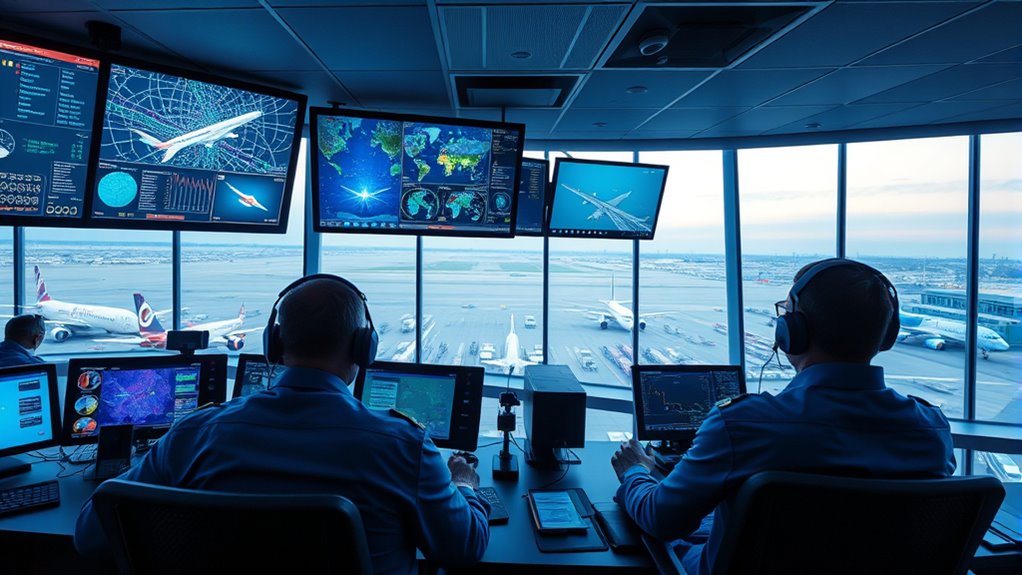
Have you ever wondered how some people seem to navigate complex environments effortlessly? It often comes down to their keen sense of situational awareness, which allows them to process a flood of information quickly and accurately. When it comes to aviation, developing this awareness means understanding how to interpret weather patterns and utilize navigation techniques effectively. These skills are essential, especially when relying on Air Traffic Control (ATC) services and flight information to stay ahead of potential hazards.
Weather patterns are constantly shifting, and being able to anticipate their impact on your flight is fundamental. You need to recognize signs of changing weather, such as cloud formations, wind shifts, or precipitation, and understand how these elements influence flight safety. ATC provides real-time updates and forecasts that help you stay informed, but it’s also your responsibility to interpret this data within the context of your flight plan. For example, if thunderstorms are approaching your route, you should be ready to adjust altitude, speed, or even reroute to avoid turbulence or dangerous conditions. Developing a mental map of typical weather patterns along your flight corridor enhances your ability to predict and respond to these changes swiftly.
Anticipate weather shifts by recognizing cloud, wind, and precipitation signs to ensure flight safety and quick response.
Navigation techniques are equally important in maintaining situational awareness. You must be proficient in using your instruments and visual cues to orient yourself accurately. This includes understanding how to read your GPS, altimeter, and heading indicators, as well as recognizing landmarks when flying visually. Proper navigation helps you maintain your intended course, especially when visibility drops or weather conditions become challenging. Relying on ATC services for clearances and updates also keeps you aligned with current traffic, reducing the risk of conflict or disorientation. Integrating weather pattern knowledge with your navigation skills enables you to make informed decisions, such as choosing a different altitude to avoid turbulence or adjusting your heading to circumvent storm cells. Additionally, maintaining awareness of cost and budgeting considerations can influence your planning and decision-making process during flights, especially when assessing options for rerouting or delaying due to weather.
To develop a strong sense of situational awareness, you need continuous practice and active observation. Constantly scan your instruments and the environment, listen carefully to ATC communications, and analyze the evolving weather conditions around you. The more you familiarize yourself with how weather patterns influence flight dynamics and how to execute effective navigation techniques, the more confident you’ll become in handling complex scenarios. This proactive approach allows you to anticipate problems before they escalate, ensuring safer, more efficient flights. Ultimately, mastering these skills transforms you from a reactive pilot into an intuitive operator who navigates uncertainty with competence and composure.
Frequently Asked Questions
How Can Pilots Improve Communication With ATC During Emergencies?
During emergencies, you can improve communication with ATC by clearly and concisely conveying your situation, using standard phraseology, and listening carefully to instructions. Focus on emergency communication, immediately informing ATC of your problem, and providing your current position and intentions. Maintain steady pilot ATC coordination, stay calm, and ask for clarification if needed. This guarantees ATC can assist effectively and coordinate rescue or support efforts promptly.
What Technological Tools Are Available for Real-Time Flight Information Updates?
Your flight’s safety hinges on real-time tracking and flight data systems, which are like having a personal meteorologist in your cockpit. These technological tools provide instant updates on weather, traffic, and airspace conditions, ensuring you’re always in the know. They offer seamless integration with ATC services, allowing you to adjust your flight path swiftly. Embracing these innovations sharpens your situational awareness, making every flight safer and more efficient.
How Does ATC Prioritize Multiple Aircraft in Congested Airspace?
In congested airspace, ATC manages traffic through priority sequencing, ensuring safety and efficiency. They assess each aircraft’s position, altitude, and urgency, then allocate routes and clearances accordingly. Traffic management helps prevent conflicts, with ATC adjusting speeds or altitudes to maintain safe separation. By continuously monitoring, they prioritize aircraft based on factors like fuel, emergencies, or scheduled arrivals, guiding you smoothly through busy environments.
What Are Common Challenges Pilots Face in Maintaining Situational Awareness?
Maintaining situational awareness is like juggling glowing balls in a dark room. You face challenges like visual perception limits, making it hard to spot changes quickly, and cognitive overload from processing too much information at once. These hurdles can cause you to miss critical cues, risking safety. Staying alert, prioritizing information, and trusting ATC help you keep all the balls in the air and your environment in focus.
How Does Weather Influence ATC Services and Flight Information Accuracy?
Weather disruptions can considerably impact ATC services and flight data reliability. When storms, turbulence, or low visibility occur, ATC may delay or reroute air traffic, making it harder to get accurate, real-time flight information. You need to stay alert to weather updates, communicate effectively with ATC, and adapt your plans accordingly. Recognizing how weather influences data helps you maintain better situational awareness during your flight.
Conclusion
By actively using ATC services and flight information, you can crucially enhance your situational awareness, making safer and more informed decisions. For example, if you notice conflicting traffic reports during a busy approach, staying alert allows you to adjust your course early, avoiding potential conflicts. Remember, continuous attention and effective communication are key. Developing this skill ensures you’re better prepared for unexpected changes, ultimately contributing to safer and more confident flying experiences.
Halloween Picks
halloween
As an affiliate, we earn on qualifying purchases.