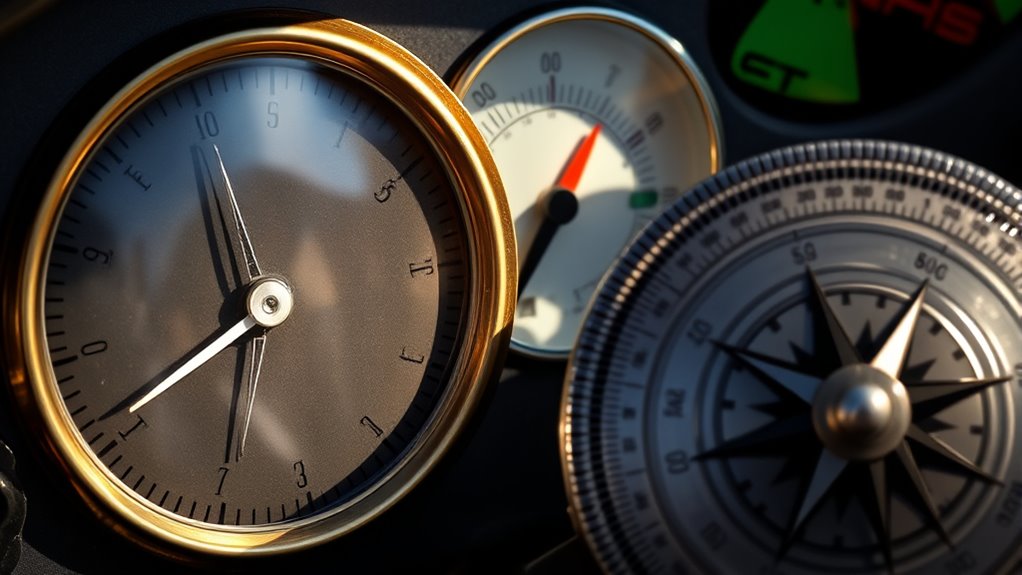
To understand soaring instruments, focus on how the altimeter, variometer, and compass work together to guide your flight. The altimeter shows your altitude, helping you find thermal updrafts and avoid obstacles, while the variometer measures your rate of climb or descent, indicating when you’re in a thermal or sinking air. The compass keeps your heading steady during circling or in poor visibility. Mastering how these tools interact boosts your flight efficiency and safety—if you keep exploring, you’ll unseal even more about their power.
Key Takeaways
- Altimeters measure altitude changes, helping pilots locate thermals and maintain safe clearance from terrain.
- Variometers indicate the rate of climb or descent, revealing thermal activity and assisting in optimizing soaring efficiency.
- Compasses provide directional orientation, ensuring pilots stay aligned with thermal sources or intended routes.
- Combining instrument data allows for precise decision-making, improving flight safety and prolonging soaring duration.
- Proper interpretation of altimeters, variometers, and compasses is essential for effective thermal exploitation and navigation.
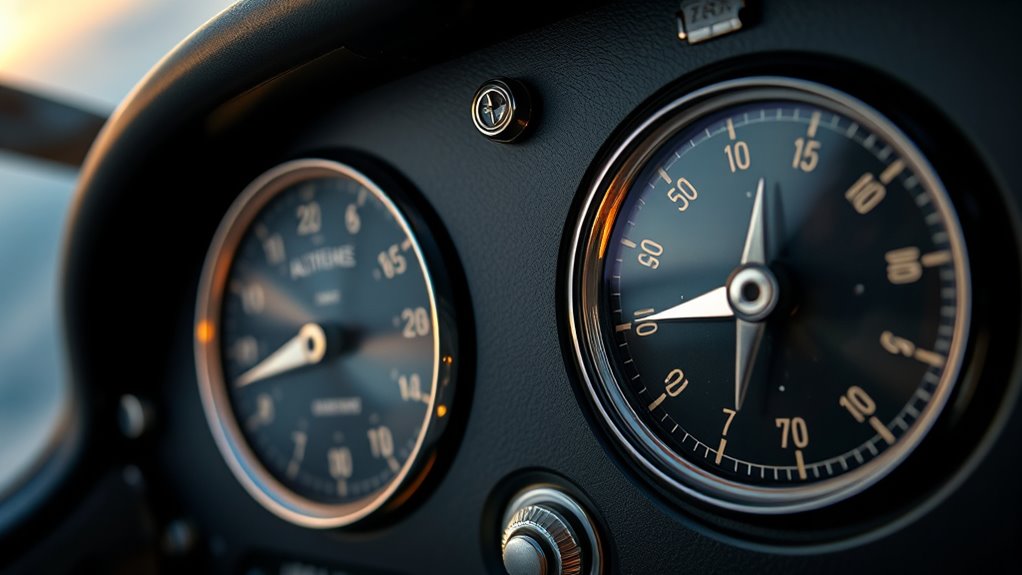
Soaring instruments are fundamental tools that help pilots navigate and maintain control during flight, especially when visual cues are limited. When you’re soaring through the sky, understanding how to interpret thermal currents and optimize your glide ratio becomes essential. Thermal currents are rising columns of warm air that gliders and soaring aircraft use to gain altitude without engine power. Recognizing these currents allows you to stay aloft longer and extend your flight, but it requires more than just intuition; it demands precise instrument readings. An altimeter, for example, provides you with altitude information, helping you track your climb or descent within these thermal updrafts. By monitoring your altitude changes, you can identify where thermals are strongest and plan your next move accordingly.
Your variometer is another crucial instrument in this context. It measures your rate of climb or descent, giving you real-time feedback on how well you’re exploiting thermal currents. When you enter a thermal, you’ll notice your variometer needle moving upward, indicating an increase in altitude. Conversely, when you exit a thermal or encounter sinking air, it moves downward. This immediate feedback allows you to adjust your circling pattern, staying within the rising air and maximizing your time in thermal currents. The better you understand these readings, the more effectively you can use thermal currents to your advantage, ultimately improving your glide ratio—the distance you can travel forward compared to altitude lost. A high glide ratio means you can cover more ground without losing much altitude, which is indispensable for efficient soaring.
The compass, while seemingly straightforward, plays a pivotal role in maintaining your heading, especially when thermal currents are uneven or the sky is overcast. It helps you stay oriented and return to known thermal sources or specific waypoints. When you’re circling in a thermal, keeping a steady heading ensures you’re not drifting away from productive updrafts, which could reduce your overall glide ratio. Combining compass data with altitude and variometer readings allows you to make smarter decisions about where to circle, when to seek out new thermals, and how to plan your route. This integrated approach maximizes your efficiency and safety, ensuring you stay in the air longer and reach your destination with minimal altitude loss. Mastering these instruments and understanding the dynamics of thermal currents and glide ratio transforms you from a novice into a skilled soaring pilot, capable of making precise adjustments and enjoying extended flights even in challenging conditions.
Frequently Asked Questions
How Do Electronic Soaring Instruments Differ From Traditional Models?
Electronic soaring instruments differ from traditional models by using digital displays, which provide clearer, more precise readings at a glance. They often feature advanced calibration procedures, making setup easier and more accurate. Unlike analog instruments, electronic ones can automatically adjust for altitude or temperature changes, improving reliability. You’ll find they offer enhanced functionality, greater integration with other flight systems, and easier data recording, helping you fly more confidently and efficiently.
What Maintenance Is Required for Altimeters and Variometers?
You should regularly calibrate your altimeters and variometers to guarantee accuracy, following the manufacturer’s calibration procedures. Check and replace batteries as needed to prevent power loss during flights, and keep battery contacts clean. Also, inspect for any physical damage or dirt that could affect readings. Performing these simple maintenance steps helps maintain proper functioning, ensuring your instruments provide reliable data during soaring activities.
How Do Weather Conditions Affect Instrument Accuracy?
Imagine clear skies giving way to turbulent storm clouds; weather pattern impacts can distort your instrument readings. Rain, humidity, and temperature fluctuations interfere with calibration, causing altimeters and variometers to drift or give inaccurate data. You must stay vigilant, regularly checking and recalibrating your instruments to guarantee reliability. Weather conditions directly influence accuracy, so understanding these impacts helps you make better decisions during your flight.
Can These Instruments Be Used for Powered Flight Navigation?
Yes, you can use these instruments for powered flight navigation, but you need proper instrument calibration and thorough pilot training. Altimeters, variometers, and compasses are essential for accurate navigation, especially in poor visibility. Make sure to regularly calibrate your instruments to guarantee accuracy. With proper training, you’ll confidently interpret these tools, enhancing your situational awareness and safety during powered flights.
What Are the Latest Technological Advancements in Soaring Instruments?
Think of soaring instruments as a high-tech orchestra, now playing in harmony. You’ll find advanced sensor integration that boosts accuracy and responsiveness, making navigation smoother. User interface innovations, like touchscreens and heads-up displays, simplify complex data, helping you focus on your flight. These advancements enhance situational awareness, making soaring safer and more efficient. Embrace these cutting-edge tools, and you’ll fly with confidence, guided by the latest in soaring technology.
Conclusion
Now that you know how altimeters, variometers, and compasses work together, flying becomes clearer—like a well-orchestrated symphony. These instruments are your trusted guides, helping you navigate the skies confidently. Mastering their functions lets you soar smoothly and safely, turning complex readings into simple decisions. Keep practicing, and you’ll find flying becomes as natural as breathing, with these tools acting as your reliable wings in every adventure.