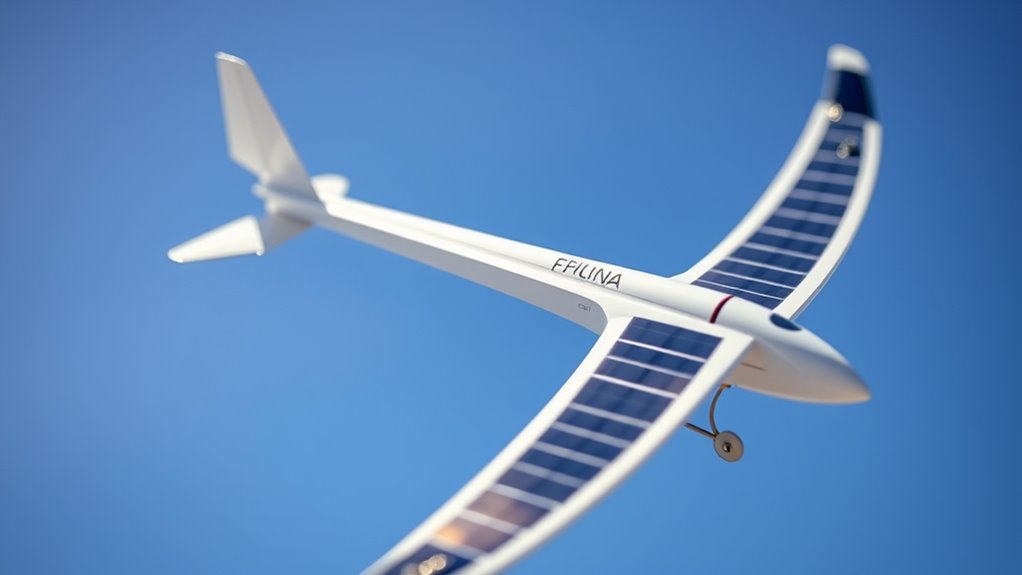
Solar cells on gliders let you harness sunlight to generate power for onboard instruments, extending flight times and supporting sustainable operations. By integrating efficient, lightweight panels into wing surfaces, you can diminish reliance on batteries and enable longer data collection sessions. Proper placement and aerodynamic design ensure you maintain high performance without sacrificing flight efficiency. If you’re curious about how this innovative energy harvesting works and what it can achieve, there’s more to discover ahead.
Key Takeaways
- Solar cells on gliders extend flight duration by sustainably powering onboard instruments and sensors.
- High-efficiency, lightweight solar panels enable effective energy harvesting without compromising aerodynamics.
- Proper integration and placement of solar cells maximize sunlight exposure and energy collection during flight.
- Renewable energy from solar cells enhances data collection, exploration, and eco-friendly flight missions.
- Advanced materials and design innovations allow seamless embedding of solar cells into wing surfaces.
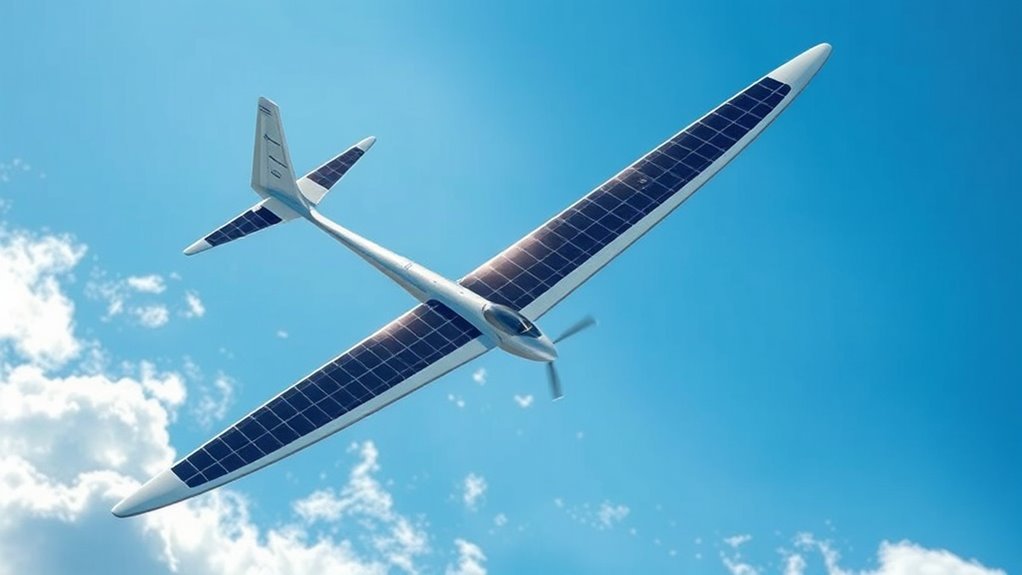
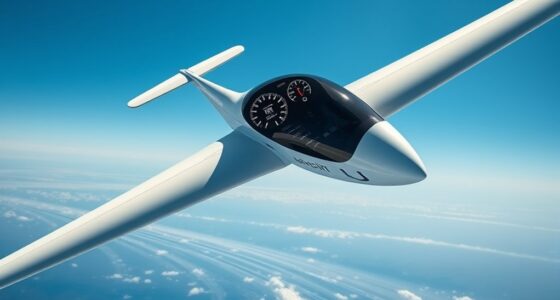
Solar cells on gliders are transforming the way we think about flight by harnessing renewable energy to power aircraft. This innovation allows gliders to extend flight times and operate more sustainably, especially when used to fuel onboard instruments or sensors. To maximize their effectiveness, you need to consider the efficiency of the solar cells and how they integrate with the glider’s aerodynamics. Solar cell efficiency refers to how well the panels convert sunlight into usable electricity. Higher efficiency means you get more power from less surface area, which is vital for gliders where space and weight are limited. Advances in photovoltaic technology have led to solar cells with efficiencies surpassing 20%, making them increasingly viable for aeronautical applications. The challenge lies in balancing efficiency with the aerodynamics of your glider; bulky or poorly integrated panels can disrupt airflow, reducing lift and increasing drag. When designing for solar-powered gliders, you should aim for sleek, low-profile solar cells that conform smoothly to the wing surfaces, minimizing aerodynamic penalties. Modern solar cells are lightweight and flexible, allowing you to optimize the shape and placement on the glider to maintain smooth airflow. The aerodynamics of your glider play a critical role in how effectively it can sustain flight powered by solar energy. A well-designed aerodynamic profile reduces drag and helps you harness as much lift as possible, making the most of the limited power generated by the solar cells. You’ll want to consider the placement of the panels—typically on the upper surfaces of wings where sunlight exposure is maximized—without compromising the glider’s stability. Incorporating solar cells into the wings demands a careful balance: too much surface coverage might boost energy collection but at the expense of aerodynamics, while too little limits power generation. Innovations in material science enable you to embed solar cells directly into the wing surfaces, preserving aerodynamic efficiency while harvesting solar energy. To guarantee your glider performs at its best, you also need to account for factors like angle of incidence and sun exposure throughout the flight. Regularly evaluating and adjusting the placement and tilt of the solar panels can maximize solar absorption. Additionally, cybersecurity measures become important when integrating onboard sensors and communication systems powered by solar energy, ensuring data protection and operational security. Ultimately, integrating high-efficiency solar cells with aerodynamically optimized designs allows your glider to achieve longer, more sustainable flights while powering instruments or sensors that enhance data collection and exploration. This synergy between solar technology and aerodynamics opens new horizons for eco-friendly flight, making solar-powered gliders an exciting frontier in aviation innovation.
Top picks for "solar cell glider"
Open Amazon search results for this keyword.
As an affiliate, we earn on qualifying purchases.
Frequently Asked Questions
How Long Do Solar Cells on Gliders Typically Last?
You can expect solar cells on gliders to last around 10 to 15 years, thanks to their durability. Proper maintenance minimizes degradation, so you should check and clean them regularly to prolong their lifespan. High-quality solar cells resist weather and environmental factors, reducing the need for frequent replacements. With good upkeep, you can ensure consistent energy harvesting, maximizing your instruments’ performance over many years.
Are Solar Cells on Gliders Affected by Weather Conditions?
Weather variability does affect the solar cells on gliders, as clouds, rain, and snow can reduce solar efficiency. When the weather is cloudy or stormy, less sunlight reaches the cells, decreasing energy production and potentially impacting instrument performance. However, many gliders are designed with efficient solar cells that can still harvest energy in low-light conditions, but consistent weather changes can challenge their overall effectiveness.
What Is the Maximum Energy Output of These Solar-Powered Instruments?
You can expect a maximum power output of around 5 to 20 watts from solar-powered glider instruments, depending on the solar cell size and weather conditions. Their energy efficiency influences how well they convert sunlight into usable energy. Clear, sunny days maximize power output, while cloudy or rainy weather reduces it. To optimize performance, verify the solar cells are clean and properly angled toward the sun.
How Do Solar Cells Impact the Glider’s Flight Performance?
Solar cells can marginally reduce your glider’s flight performance by adding aerodynamic drag and increasing weight. The extra drag may slow you down or make maneuvering less efficient, while the added weight can impact lift and glide ratio. However, if designed well, the impact remains minimal, allowing you to benefit from energy harvesting without substantially compromising flight stability or speed.
Can These Solar Cells Be Upgraded or Replaced Easily?
Replacing or upgrading your solar cells is like swapping out worn tires—possible but not always simple. You can do it, but solar cell maintenance can be tricky, especially if they’re integrated into the glider’s structure. Upgrade challenges include ensuring compatibility and maintaining aerodynamic efficiency. You’ll need to carefully plan the process to avoid affecting flight performance, making upgrades feasible but requiring some technical finesse.
Conclusion
By harnessing solar cells on gliders, you open an almost limitless power source, transforming how instruments operate in the sky. This innovative approach guarantees continuous energy, reducing reliance on traditional batteries and boosting efficiency beyond your wildest expectations. As you embrace this technology, you’ll witness a revolution in energy harvesting that’s as groundbreaking as discovering a new universe. Prepare to soar into a future where solar-powered gliders redefine the limits of aerial instrumentation.