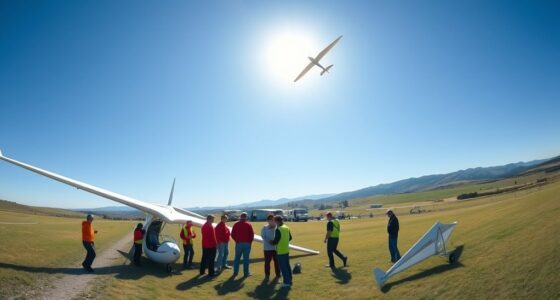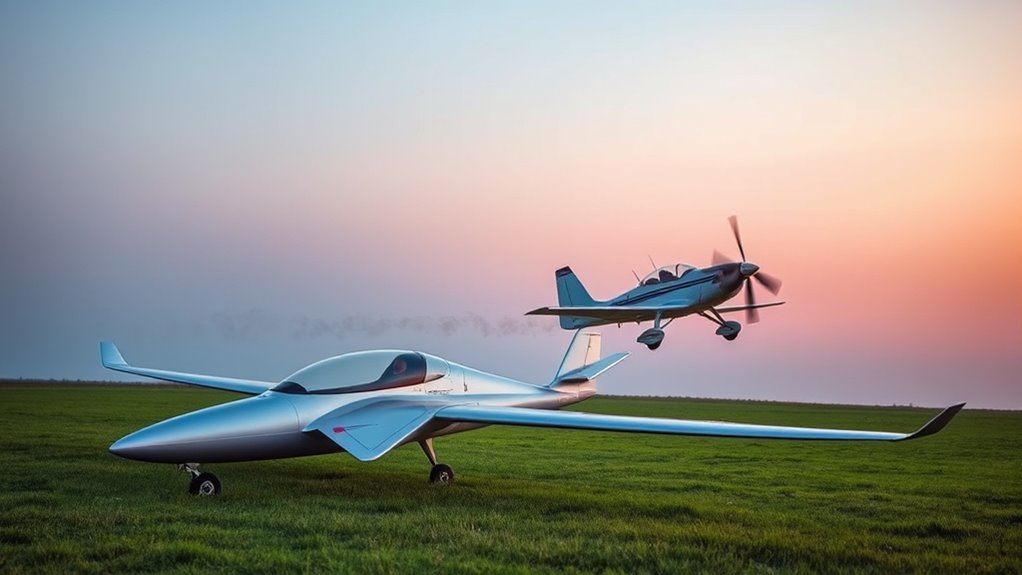

Moving from glider to powered flight shifts your focus from passive soaring to active engine management. You’ll learn to start the engine safely, interpret cockpit instruments, and control power for takeoff and climb. Unlike gliding, you need to monitor gauges closely and respond quickly to engine data. This switch enhances your piloting skills with technical understanding and mental readiness. If you continue exploring, you’ll discover how to master these essential procedures for a smooth switch to powered flying.
Key Takeaways
- Transition involves moving from silent gliding to active engine management and requires understanding cockpit instruments and engine mechanics.
- Training emphasizes mastering engine start procedures, including checklist adherence and monitoring key indicators like oil pressure and RPM.
- Pilots learn to interpret real-time instrument data to ensure safe engine operation during startup and transition to powered flight.
- The shift from glide to powered flight necessitates precise control adjustments, continuous monitoring, and quick responses to abnormal readings.
- Developing technical skills and mental readiness through practice ensures smooth transition and enhances overall piloting safety and confidence.
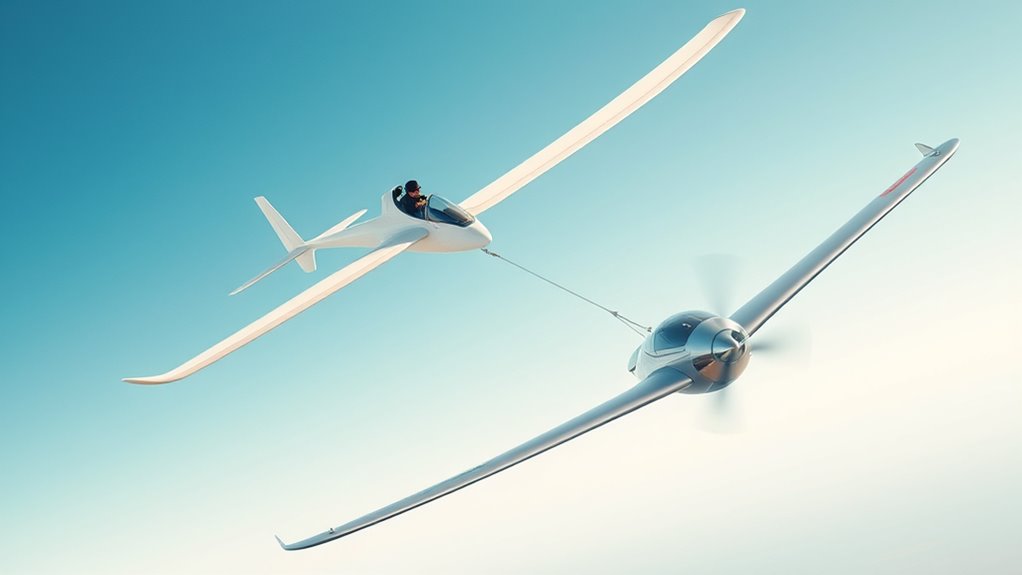
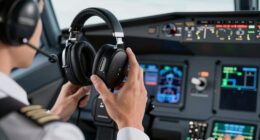
Have you ever wondered how pilots smoothly shift from gliding through the air to powered flight? It’s a progression that requires understanding not just the mechanics of starting an engine but also how to interpret and manage cockpit instrumentation. When you’re used to the silent, engine-off environment of gliding, switching to powered flight means engaging systems that are essential for safety and control. The first step involves mastering engine start procedures, which are quite different from the effortless glide you’re accustomed to. You need to familiarize yourself with the checklist that guides you through pre-start preparations—checking fuel levels, testing electrical systems, and confirming the engine is ready. Once you’re set, you’ll activate the engine using the proper sequence, carefully monitoring gauges and indicators to verify everything is functioning correctly. This process isn’t just about pressing a button; it’s about understanding the importance of each cockpit instrument and how they work together to provide real-time data. You’ll watch for oil pressure to build, the RPM gauge to climb, and the manifold pressure to stabilize. These indicators give you confidence that the engine is starting correctly, unlike the silent natural lift of a glider, where you rely solely on thermals or ridge lift. As you become more familiar with cockpit instrumentation, you’ll learn to interpret multiple displays—altimeters, airspeed indicators, engine gauges—all pivotal for a safe progression. Additionally, understanding headphone connections and how to properly set them up can be crucial when communicating with ground control or fellow pilots during critical phases of flight.
Once the engine is running smoothly, you’ll begin adjusting controls to achieve proper taxiing and takeoff configurations. This phase demands precise coordination and constant monitoring of your instruments to confirm your aircraft remains within safe operating limits. The difference from gliding is stark; instead of managing lift and sink, you’re now actively controlling power, thrust, and engine parameters. Your training emphasizes understanding these systems thoroughly so that you can respond quickly to any abnormal readings. You’ll also learn to anticipate how engine performance impacts your flight path, which is essential during critical phases like takeoff and initial climb. The progression is as much about mental preparation as it is about technical skill. With practice, you’ll become confident in managing engine start procedures and interpreting cockpit instrumentation, giving you the control and situational awareness needed for powered flight. Mastering these elements transforms your flying experience from silent, passive gliding to active, powered control—an indispensable step in advancing your piloting skills.

The Standard Engine Log: ASA-SE-2
As an affiliate, we earn on qualifying purchases.
As an affiliate, we earn on qualifying purchases.
Frequently Asked Questions
How Long Does the Transition Training Typically Take?
The progression training typically takes about 10 to 20 hours of flight time, depending on your prior experience and skill development. During this period, you’ll focus on mastering powered aircraft controls, systems, and procedures, building confidence and competence. The duration varies as you adapt to engine management and different flight dynamics, but consistent practice ensures you develop the necessary skills to fly powered aircraft safely and effectively.
Are There Specific Age Restrictions for Powered Flight Training?
Surprisingly, there aren’t strict age restrictions for powered flight training; if you’re old enough to dream, you’re probably old enough to fly. Licensing requirements focus more on your ability to meet health and skill standards than your birth date. So, whether you’re a young enthusiast or a seasoned pilot, age isn’t a barrier—just your passion and dedication. Ready to take off? The sky’s waiting!
What Are Common Challenges Faced When Transitioning From Gliders?
When shifting from gliders, you often face challenges like pilot fatigue due to longer cockpit sessions and managing aircraft maintenance responsibilities. You need to adapt to powered aircraft controls and systems, which can be more complex. Additionally, staying alert becomes essential to handle engine management and navigation. By practicing consistently and understanding aircraft systems, you’ll build confidence and reduce fatigue, making the changeover smoother.
How Do Weather Considerations Differ Between Glider and Powered Flight?
You’ll find that weather considerations differ markedly between glider and powered flight. In powered aircraft, weather variability impacts your flight more, requiring you to monitor conditions closely. You’ll need to manage turbulence more actively, especially at higher speeds and altitudes. Unlike gliders, where smooth air is preferred, powered flights demand constant awareness of changing weather patterns to ensure safety and comfort during your journey.
Is Prior Motor Experience Required Before Transitioning to Powered Flight?
You don’t need prior motor experience to shift to powered flight, ironically, since flying a powered aircraft demands sharp motor skills and careful risk assessment. Your glider experience provides a solid foundation in aerodynamics and flying principles, but you’ll still need specific training to handle engine systems and emergency procedures. Expect to learn new skills and refine your risk management, making the transition more about adaptation than starting from scratch.

Flight Instruments Aviation Cockpit Panel Gauges Airplane Pilot Aircraft Dashboard Display Magnet Reusable Car Decal – Indoor & Outdoor Use – 5 Inch
Standard Issue Size: Each magnetic decal measures 5" for maximum visibility without cluttering your vehicle's profile.
As an affiliate, we earn on qualifying purchases.
As an affiliate, we earn on qualifying purchases.
Conclusion
As you stand on the cusp of your flying journey, it’s almost poetic how the skills you’ve gained in gliding naturally prepare you for powered flight. The quiet glide, the feel for the air—these moments seem to whisper that you’re already ready for this next step. Embrace the shift, knowing that your past experiences subtly align with your future adventures. Sometimes, the most seamless progress happens when worlds unexpectedly collide.

RA200 Aviation Pilot Headset for Student Pilots Flight Schools Flight Instructors Features Clear Hear Speakers Noise Canceling Microphone Foam Ear Seals Custom Fit Headband and Free Headset Bag
COMFORTABLE AND DURABLE DESIGN – The RA200s lightweight design weighing only 16 oz paired with soft foam ear…
As an affiliate, we earn on qualifying purchases.
As an affiliate, we earn on qualifying purchases.
Aircraft Tool Supply Aviation Laboratories Engine Oil Analysis Kit
As an affiliate, we earn on qualifying purchases.
As an affiliate, we earn on qualifying purchases.