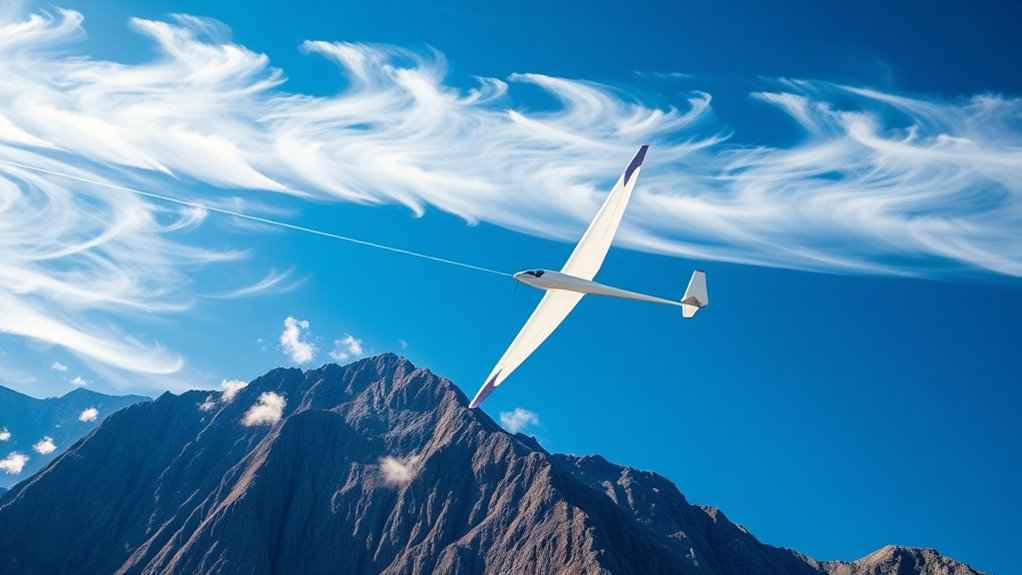

In ridge soaring, true wind is the actual air movement across the landscape that affects lift zones and turbulence, while apparent wind is what you feel on your wings, combining true wind and your aircraft’s speed. Your control depends on understanding how each influences lift and stability. Recognizing the cues for both, like cloud patterns and wind shifts, helps you react properly. Keep exploring to learn more about mastering wind interactions for safer, more efficient flights.
Key Takeaways
- True wind is the actual air movement relative to the ground; apparent wind is the combined effect of true wind and the aircraft’s motion.
- Apparent wind determines what the pilot perceives and influences control, lift, and turbulence during ridge soaring.
- True wind affects ground effect and lift zones, while apparent wind varies with aircraft speed and direction, impacting immediate flight response.
- Recognizing differences helps pilots anticipate turbulence, wind shear, and lift changes for safer, more efficient soaring.
- Visual cues like cloud formations and terrain movement assist in assessing true and apparent wind conditions during flight.

TopTes TS-301 Digital Anemometer, Wind Speed Meter with 2.26-inch Big Backlight LCD Screen, Air Flow Meter for Sailing Surfing Drone Flying RC Plane Golf Shooting HVAC
Easy to Read with 2.26-inch LCD Backlit Screen: The TopTes Anemometer features a large 2.26" LCD screen for…
As an affiliate, we earn on qualifying purchases.
As an affiliate, we earn on qualifying purchases.
Defining True Wind and Its Role in Ridge Soaring

True wind is the actual wind blowing across the landscape, independent of your movement or the glider’s motion. It’s what influences the overall conditions you encounter during ridge soaring. As you approach a ridge, true wind interacts with the terrain, creating a phenomenon called ground effect, which can boost lift near the surface. Wind shear, a sudden change in wind speed or direction with altitude, also plays an essential role; it can intensify lift or cause turbulence, making your flight more dynamic. Recognizing true wind helps you anticipate how the airflow will behave, especially near ridges. By understanding these factors, you can better position yourself to harness the lift and improve your soaring performance. True wind is the foundation for understanding how your glider interacts with the environment. Additionally, knowledge of wind conditions can help pilots optimize their approach and maximize lift efficiency during ridge soaring.
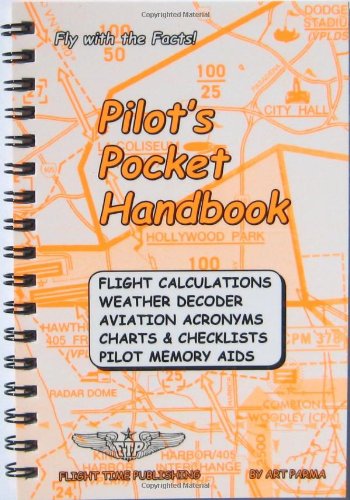
Pilot's Pocket Handbook: Flight Calculations, Weather Decoder, Aviation Acronyms, Charts and Checklists, Pilot Memory Aids
Used Book in Good Condition
As an affiliate, we earn on qualifying purchases.
As an affiliate, we earn on qualifying purchases.
Understanding Apparent Wind and Its Perception on Your Wings

While the true wind provides the actual airflow around you, your perception of wind on your wings is shaped by apparent wind, which is a combination of true wind and your own motion through the air. Understanding apparent wind is essential for effective cross country navigation and maintaining control during ridge soaring. As you turn or change speed, your wings feel different wind directions and speeds, affecting your perception. Recognizing these differences helps you interpret lift zones and avoid surprises like wind shear, which can vary suddenly with altitude or terrain. By accurately sensing apparent wind, you improve your ability to make real-time adjustments, stay safe, and optimize your soaring experience. Developing wind shear awareness and interpreting apparent wind cues are key skills for successful ridge flying. Additionally, understanding the contrast ratio of your environment can help you better gauge changes in wind conditions and improve your overall flight safety.
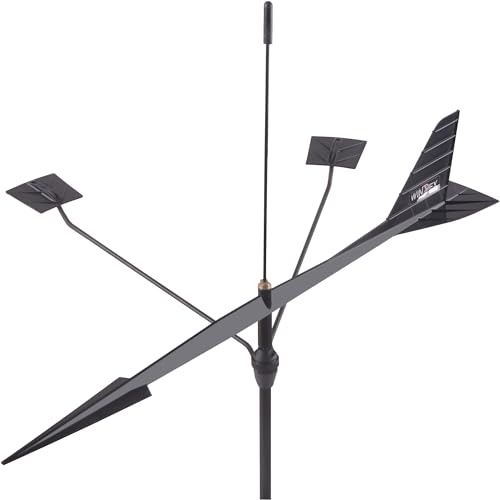
Windex 15 MK2 Birdspike Included – Wind Direction Indicator for Sailing, Sailboat Wind Indicator, Boat Accessories, 15-40 Feet Sized Boats
COMPLETE PACKAGE: Contents include sailboat wind vane unit, supporting rod, index arms, mast socket, and bird spike.
As an affiliate, we earn on qualifying purchases.
As an affiliate, we earn on qualifying purchases.
How True Wind Affects Lift and Ridge Lift Zones
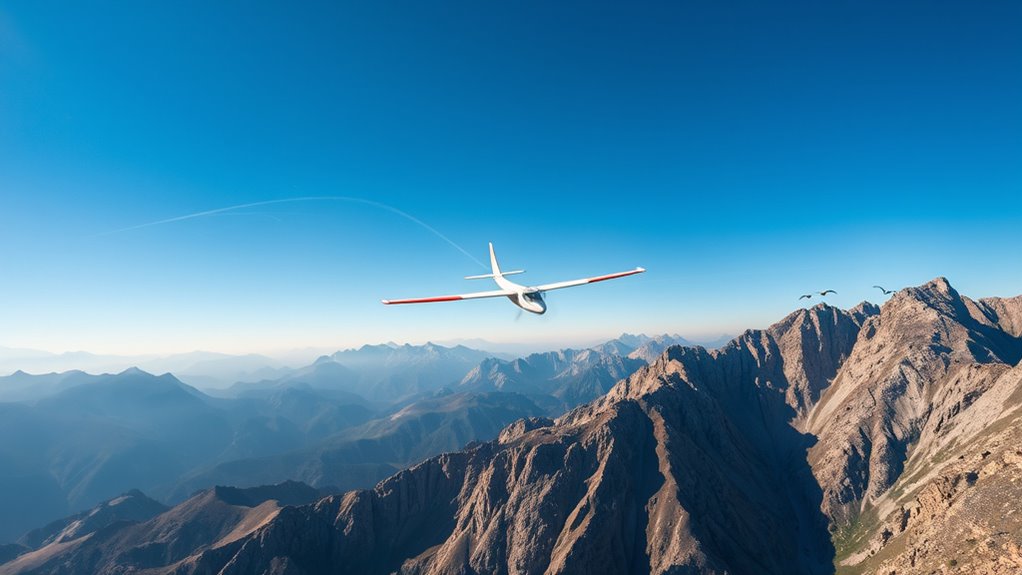
Your understanding of true wind helps you predict how lift changes along the ridge. Variations in wind speed can strengthen or weaken the lift zones you fly through. Recognizing these shifts allows you to optimize your position and stay ahead of shifting ridge lift conditions.
Wind Speed Variations
Wind speed variations play a crucial role in determining the strength and consistency of ridge lift zones. Sudden changes in wind shear can cause sharp shifts in lift strength, making the soaring experience unpredictable. When gust variability is high, lift zones become more turbulent, challenging your ability to maintain steady flight along the ridge. These fluctuations can lead to abrupt lift increases or drops, requiring quick adjustments and heightened awareness. Consistent wind speeds produce more stable lift zones, while irregular variations create turbulence and reduce overall lift efficiency. Understanding how wind speed changes impact the environment helps you anticipate lift conditions better, allowing for safer and more effective ridge soaring. Recognizing these variations is essential for optimizing your flight and enjoying a smoother glide along the ridge.
Ridge Lift Dynamics
Understanding how true wind interacts with the terrain is key to mastering ridge lift. True wind influences the aerodynamic forces acting on your glider, shaping lift zones along the ridge. Wind shear, which occurs when wind speed or direction changes sharply, intensifies lift potential but also adds turbulence. As you approach a ridge, consider how true wind directs airflow upward and over the terrain, creating zones of increased lift. Properly reading these dynamics helps you stay within the strongest lift areas. Factors like terrain shape and wind variability affect how true wind generates lift. Recognizing these interactions allows you to optimize your position, maximize lift, and maintain control in challenging conditions. Wind direction plays a crucial role in shaping the airflow pattern, directly impacting lift zones and overall ridge lift efficiency.
mountain ridge soaring equipment
As an affiliate, we earn on qualifying purchases.
As an affiliate, we earn on qualifying purchases.
The Impact of Your Aircraft’s Movement on Apparent Wind
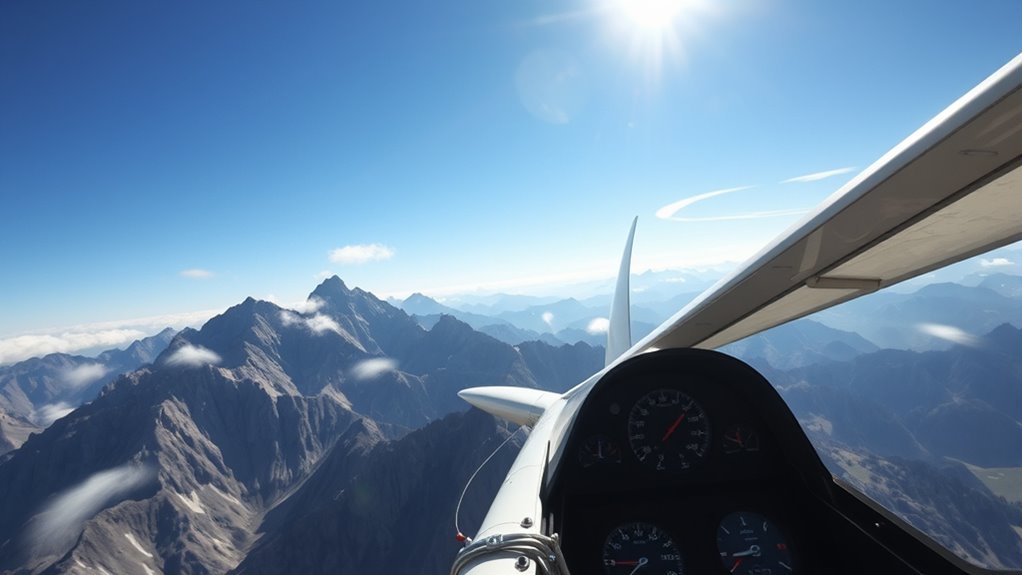
As your aircraft moves through the air, its velocity combines with the ambient wind to shape the apparent wind you experience. Your aircraft’s aerodynamics and speed considerably influence this perception, especially during ridge soaring. Faster movement increases the apparent wind speed, making it feel stronger and altering lift and control. Wind shear effects, where wind speed and direction change with altitude, further complicate the apparent wind picture. Understanding this interaction helps you anticipate how your aircraft responds. Here’s a simple comparison:
| Aircraft Speed | Apparent Wind Effect |
|---|---|
| Slow | Less noticeable, smoother experience |
| Moderate | Noticeable increase in lift and drag |
| Fast | Stronger apparent wind, more control input needed |
| Climbing | Changes with altitude, affected by wind shear |
| Descending | Apparent wind decreases, affecting lift |
Additionally, recognizing wind shear patterns can assist in maintaining control and safety during ridge soaring.
Visual Cues and Indicators for True and Apparent Wind Conditions

Visual cues and indicators are essential tools for pilots to assess true and apparent wind conditions during ridge soaring. By observing your surroundings, you can better understand wind behavior and adjust your flight accordingly. Look for specific visual cues that signal wind direction and strength:
Visual cues and indicators are vital for understanding wind conditions during ridge soaring.
- Wind-induced cloud formations, like rotor clouds or lenticulars
- Turbulence patterns on the terrain, such as rolling or rippling air
- The angle and movement of your glider’s wings or tail relative to the horizon
- Changes in vegetation or dust movement at ground level
- The behavior of wind indicators, like flags, smoke, or dust devils
Using these visual cues and wind indicators helps you gauge wind conditions accurately, improving safety and performance during ridge soaring. Paying close attention to your environment provides critical insights into true and apparent wind dynamics. Additionally, understanding visual cues can enhance your ability to interpret subtle changes in wind flow, leading to more precise adjustments in your flight.
Adjusting Flight Strategies Based on Wind Conditions
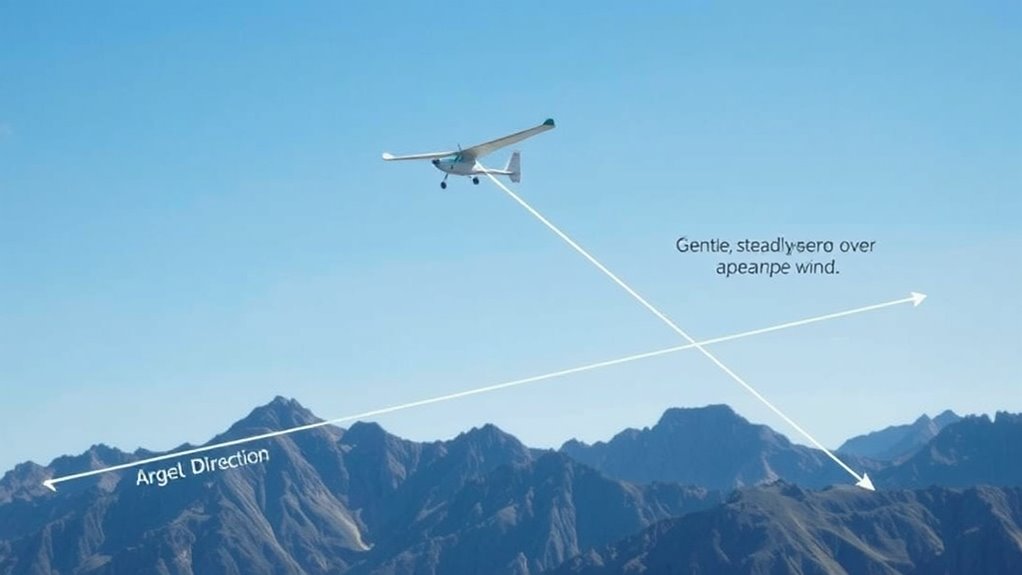
When wind conditions change, you must adapt your flight strategies to maintain control and optimize lift. Thermodynamic effects, like temperature differences creating buoyant air, influence ridge lift and should guide your approach. Recognize how seasonal wind patterns shift, affecting where and when lift is strongest. During summer, you might find more consistent thermals, allowing for more direct routes, while winter winds may be stronger and more turbulent, requiring careful adjustments. Pay attention to apparent wind shifts, which can signal changes in thermodynamic conditions or wind shear. Adjust your angle of attack, speed, and glide path accordingly, staying flexible as the environment evolves. Properly interpreting these variations guarantees you stay safe, maximize lift, and extend your flight duration. Understanding Gold IRA options can also offer long-term financial stability after your flights.
Common Mistakes in Interpreting Wind Data During Soaring

Misinterpreting wind data can lead to poor decisions during ridge soaring, causing you to miss lift opportunities or encounter turbulence unexpectedly. One common mistake is relying solely on weather forecasting without considering local wind variability. Misjudging true wind versus apparent wind can affect kite stability, making your craft more prone to unwanted spins or dives. Additionally, assuming wind direction remains constant can be misleading, especially near rugged terrain.
To avoid these pitfalls, keep in mind:
- Don’t ignore real-time observations of wind shifts
- Avoid over-relying on forecast data without field validation
- Be cautious when interpreting wind speed measurements
- Recognize the difference between true and apparent wind during flight
- Stay alert to changes in kite stability caused by wind misjudgments
Accurate interpretation is vital for safe, effective ridge soaring.
Practical Techniques for Managing Apparent Wind in Flight

Managing apparent wind effectively during ridge soaring requires you to stay actively engaged with your craft’s behavior. To improve kite stability, you need to adjust your position and control inputs based on changes in apparent wind direction and strength. Keep a close eye on wing aerodynamics, noting how shifts in wind affect lift and drag. When you sense instability, subtly shift your weight or alter your pitch to maintain smooth airflow over the wings. Staying aware of the craft’s response helps you anticipate gusts and turbulence, allowing you to make quick, precise corrections. This proactive approach ensures better control, reduces unwanted oscillations, and keeps you efficiently riding the ridge’s lift. Mastering these techniques enhances your ability to manage apparent wind dynamically during your flight. Celebrity lifestyle insights also offer useful perspectives on maintaining composure and adaptability in challenging conditions.
Enhancing Safety and Performance by Recognizing Wind Interactions

Recognizing how wind interacts with your craft is essential for both safety and performance during ridge soaring. By understanding wind direction and air pressure, you can anticipate lift and avoid turbulence. Changes in wind direction can signal shifts in the ridge lift or the presence of rotor zones. Variations in air pressure help you identify when wind speeds increase or decrease, impacting your control. To enhance safety and performance:
- Observe wind shifts to anticipate lift changes
- Monitor air pressure differences for turbulence cues
- Recognize wind direction variations to stay aligned with ideal lift zones
- Use wind interactions to avoid rotor zones or sudden downdrafts
- Adjust your flight path proactively based on wind and pressure cues
- Incorporate vertical storage solutions to organize your equipment and ensure readiness during flights
Mastering these interactions ensures safer flights and improved glide performance in ridge soaring conditions.
Frequently Asked Questions
How Does Altitude Influence the Difference Between True and Apparent Wind?
Altitude variations affect the difference between true and apparent wind because of the wind gradient, which causes wind speed to change with height. As you ascend, you encounter stronger or weaker winds, altering your apparent wind. Higher altitudes often mean a larger difference between true and apparent wind, especially near the ridge. Understanding this helps you gauge your aircraft’s response and maintain better control during ridge soaring.
Can Weather Conditions Alter the Perception of Apparent Wind?
Weather effects, like changing wind speed and direction, can definitely alter your perception of apparent wind. Sudden gusts or shifts make it feel stronger or weaker than it truly is. Proper instrument calibration helps you get accurate readings, reducing misperceptions. Always stay aware of weather conditions, as they influence how you perceive the wind around you, ensuring safer and more effective ridge soaring.
How Do Pilots Calibrate Instruments to Measure True Wind Accurately?
You calibrate your instruments by performing regular instrument calibration, guaranteeing sensor accuracy. This involves comparing your device readings against known standards or reference sources, adjusting settings as needed. Proper calibration accounts for temperature, pressure, and other environmental factors that can affect sensor accuracy. By maintaining well-calibrated instruments, you ensure your measurements of true wind are reliable, which is essential for safe and efficient flying, especially in varying weather conditions.
What Role Does Wind Shear Play in Ridge Soaring Dynamics?
When you’re ridge soaring, wind shear plays a pivotal part in performance. You’ll notice wind gradients—changes in wind speed and direction—create shear layers that influence lift and turbulence. These layers can cause sudden shifts, making your flight more challenging yet exciting. By understanding and anticipating wind shear, you can better balance your glide, optimize your altitude, and stay safe, turning tricky turbulence into a soaring advantage.
How Does Aircraft Design Impact the Perception and Measurement of Wind?
Your aircraft design affects how you perceive and measure wind through its aerodynamics and sensor calibration. A streamlined shape reduces drag and allows more accurate readings, while well-calibrated sensors ensure you get precise wind data. Variations in aircraft structure can influence airflow around sensors, impacting measurements. By maintaining ideal aerodynamics and calibration, you improve your understanding of wind conditions, ultimately enhancing your flying performance and safety.
Conclusion
Just like Icarus learned, understanding the balance between true and apparent wind keeps you soaring safely and efficiently. By recognizing how your aircraft interacts with the air around you, you harness the wind’s power rather than fighting it. Keep your eyes open for visual cues and adjust your strategies accordingly. Mastering this dance with the wind ensures you rise higher, glide farther, and avoid the pitfalls that come from misreading the air’s silent language.