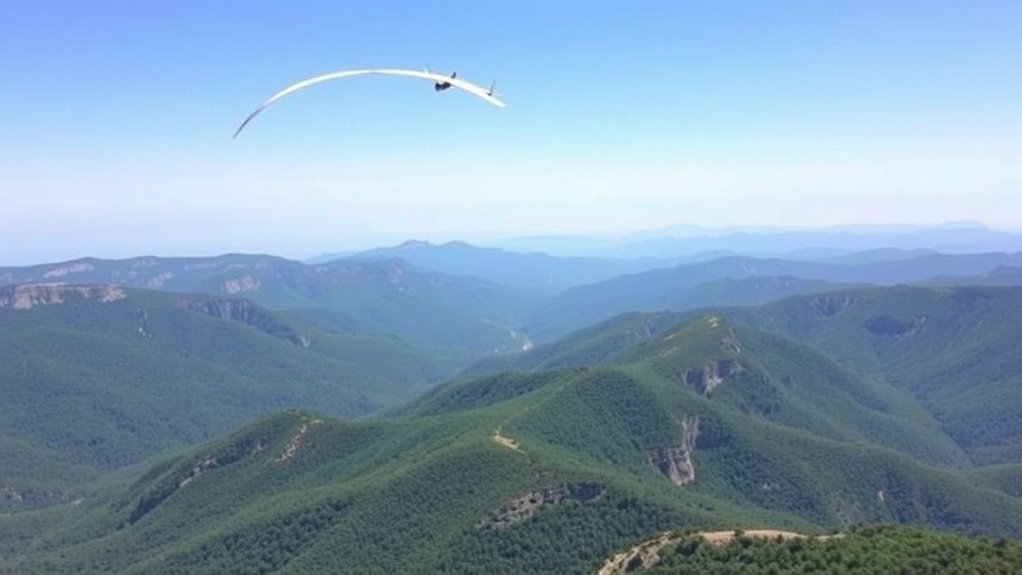

Ridge soaring in Pennsylvania’s Ridge-and-Valley Appalachians allows you to take advantage of the region’s long, parallel ridges that create ideal lift conditions. By riding the wind along these slopes, you can sustain altitude without engines, especially on sunny days when thermals also develop nearby. Pay attention to wind patterns, cloud formations, and terrain cues to optimize your flight. If you keep exploring, you’ll discover how to master these topographical and weather factors for longer, safer soaring adventures.
Listen free for 30 days with Audible
Thousands of audiobooks and originals — cancel anytime.
As an affiliate, we earn on qualifying purchases.
Key Takeaways
- Pennsylvania’s Ridge-and-Valley Appalachians offer ideal ridge soaring conditions with long, parallel ridges that generate consistent lift.
- Steady, wind-aligned flows along ridges create reliable ridge lift for sustained soaring flights.
- Thermal activity is enhanced near ridges on sunny days, providing additional lift opportunities.
- Recognizing weather cues like cloud formations and wind shifts improves safety and flight efficiency.
- Proper planning around wind speed, direction, and thermal cues optimizes ridge soaring experiences in the region.
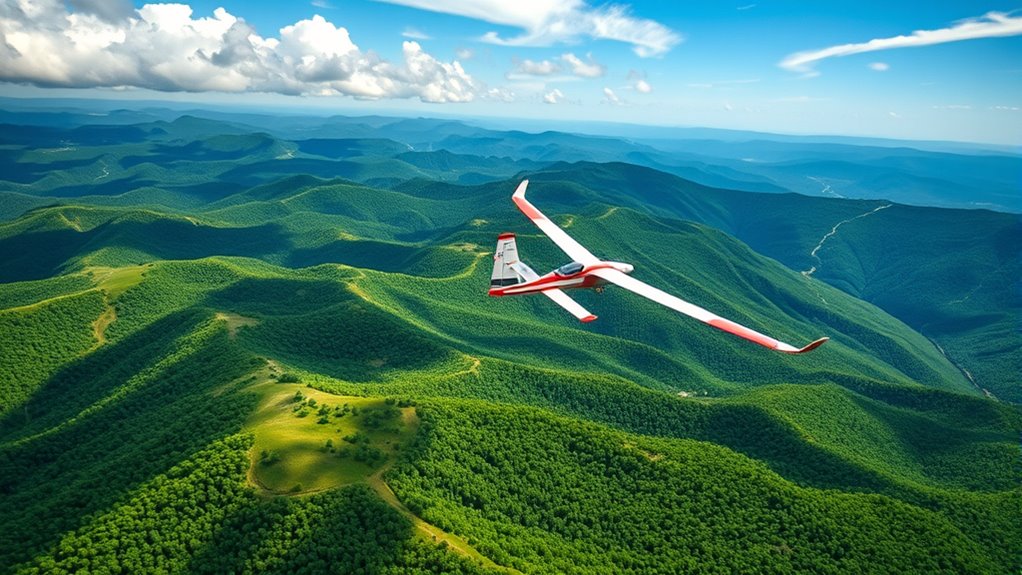
Ridge soaring in Pennsylvania’s Ridge-and-Valley Appalachians offers pilots a unique and exhilarating experience, thanks to the region’s distinctive topography. The long, parallel ridges create ideal conditions for dynamic soaring, where you can ride the wind along the slopes and enjoy the thrill of maintaining altitude without the need for engine power. To make the most of these conditions, understanding thermal patterns is essential. These rising columns of warm air often develop near the ridges, especially on sunny days, providing the lift you need to stay aloft longer. Recognizing the signs of thermal formation—such as cumulus cloud buildup or specific wind shifts—can greatly enhance your ability to find and utilize these thermals effectively.
Weather forecasting plays a vital role in ridge soaring, as it helps you anticipate the best flying conditions. Before launching, you should check detailed forecasts focusing on wind speed and direction, temperature variations, and cloud cover. Strong, steady winds aligned with the ridges are ideal for ridge lift, while turbulent or variable winds can make flying more challenging. Knowing how weather systems move through the region allows you to plan your flights strategically, avoiding sudden shifts that could compromise safety or enjoyment. Local weather stations, pilot reports, and real-time radar data are invaluable tools to refine your forecast and ensure your flight plan aligns with current conditions.
As you ascend the ridges, you’ll notice how the wind interacts with the terrain, creating a predictable pattern that you can learn to read over time. When the wind blows consistently along the length of the ridges, you’ll find yourself riding a steady, predictable lift that can carry you for miles. Conversely, if the wind shifts or diminishes, the thermal activity might increase, offering short bursts of lift that require quick adjustments. The key is to stay alert to changing weather cues and to continuously interpret thermal patterns—such as the formation of lenticular clouds or the movement of dust and leaves—to optimize your soaring experience.
paragliding thermal detection equipment
As an affiliate, we earn on qualifying purchases.
As an affiliate, we earn on qualifying purchases.
Frequently Asked Questions
What Is the Best Time of Year for Ridge Soaring in Pennsylvania?
The best time for ridge soaring in Pennsylvania is during spring and fall. During these seasons, you’ll experience increased thermal activity and seasonal migration, which create ideal soaring conditions. As warm air rises along the ridges, you can stay aloft longer and enjoy smoother flights. Plan your trips around these periods for peak soaring experiences, taking advantage of the natural uplift provided by the changing weather patterns.
Are There Any Beginner-Friendly Ridge Soaring Sites in the Region?
You’ll find several beginner-friendly ridge soaring sites in Pennsylvania, making it easier to start your thermal training. Nearly 60% of pilots report success at these locations with minimal experience. Focus on essential equipment like a lightweight glider and reliable vario, and learn to read wind patterns and ridge lift. These sites offer gentle slopes and steady air, perfect for building confidence while mastering basic skills for more advanced soaring adventures.
What Safety Precautions Should Pilots Take During Ridge Soaring?
When ridge soaring, you should always prioritize safety by maintaining clear pilot communication with your team and other pilots. Keep an eye on weather conditions, watch for turbulence, and avoid strong or shifting winds. Prepare for emergencies by carrying necessary safety gear and knowing emergency procedures. Staying alert and aware of your surroundings helps prevent accidents and guarantees a safe, enjoyable soaring experience.
How Do Weather Conditions Specifically Affect Ridge Soaring Performance?
Weather conditions are the heartbeat of your ridge soaring adventure. Strong thermal activity can lift you effortlessly, but weak thermals might leave you stranded like a leaf in the wind. Wind shear, the sudden change in wind speed and direction, can throw off your glide and cause turbulence. Keep a keen eye on these factors, adjusting your approach to harness the wind’s dance and soar smoothly along the ridge.
Are There Guided Tours or Lessons Available for New Ridge Soarers?
Yes, you can find guided instruction and soaring mentorship programs designed for new ridge soarers. Many flight schools and clubs offer lessons that focus on safety, technique, and how to read weather conditions for ideal soaring. These programs provide personalized guidance, helping you build confidence and skills. Look for local soaring clubs or experienced instructors who specialize in ridge lift flying, and you’ll gain valuable hands-on experience in a supportive environment.
Conclusion
As you stand atop Pennsylvania’s Ridge-and-Valley Appalachians, you realize soaring here is like riding a wave of wind through a mountain sea. Just last summer, I watched a glider catch a perfect thermal, lifting effortlessly above the ridges—reminding me how nature’s currents can turn a simple flight into a dance with the sky. With every gust, you’re part of a timeless adventure, feeling the thrill of riding the wind’s invisible currents.
College move-in / dorm season Picks
dorm essentials
As an affiliate, we earn on qualifying purchases.