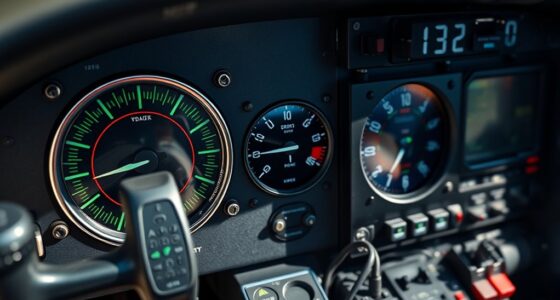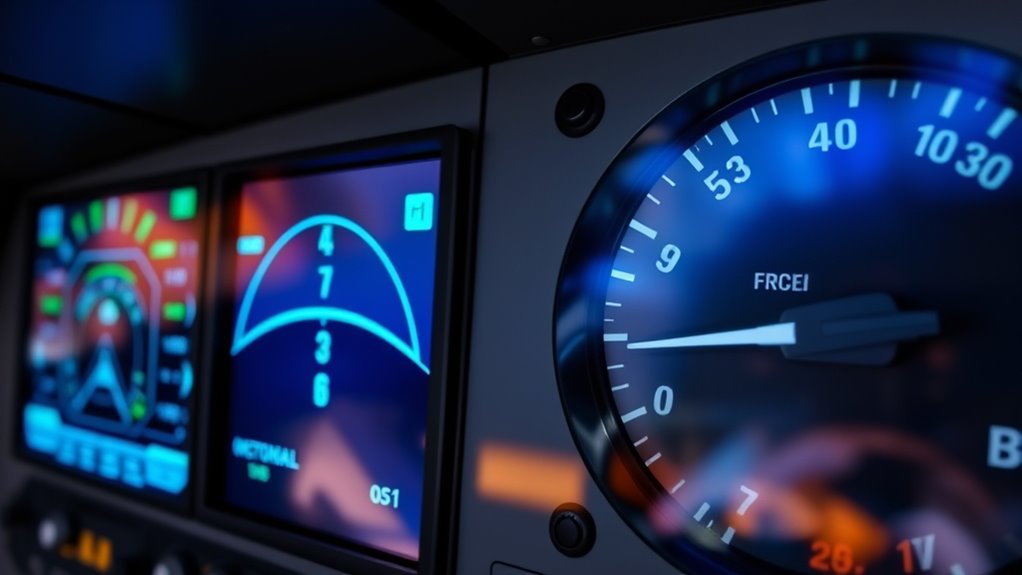

Digital flight instruments offer customizable, integrated displays that improve your situational awareness by syncing flight data like altitude, airspeed, and attitude in real time. They simplify system management, reducing your workload and helping you interpret complex data quickly, especially in challenging conditions. Compared to traditional analog gauges, digital systems provide greater accuracy, flexibility, and clearer visuals. To discover how these tools can enhance your flying experience further, keep exploring the key differences and benefits.

Get travel and outdoor gear delivered free with Prime
- Fast, free delivery on millions of items
- Prime Video, Amazon Music and more included
- Member-only deals all year
Key Takeaways
- Digital instruments provide customizable displays with adjustable brightness, enhancing visibility compared to fixed analog gauges.
- They enable real-time data synchronization from multiple sensors, ensuring accurate and up-to-date flight information.
- Digital systems consolidate various data sources into a single interface, reducing pilot workload and improving situational awareness.
- Unlike analog gauges, digital displays can be tailored to pilot preferences, offering quick interpretation and reducing clutter.
- Digital instruments evolve with technology, offering better precision, integration, and safety features over traditional analog flight instruments.
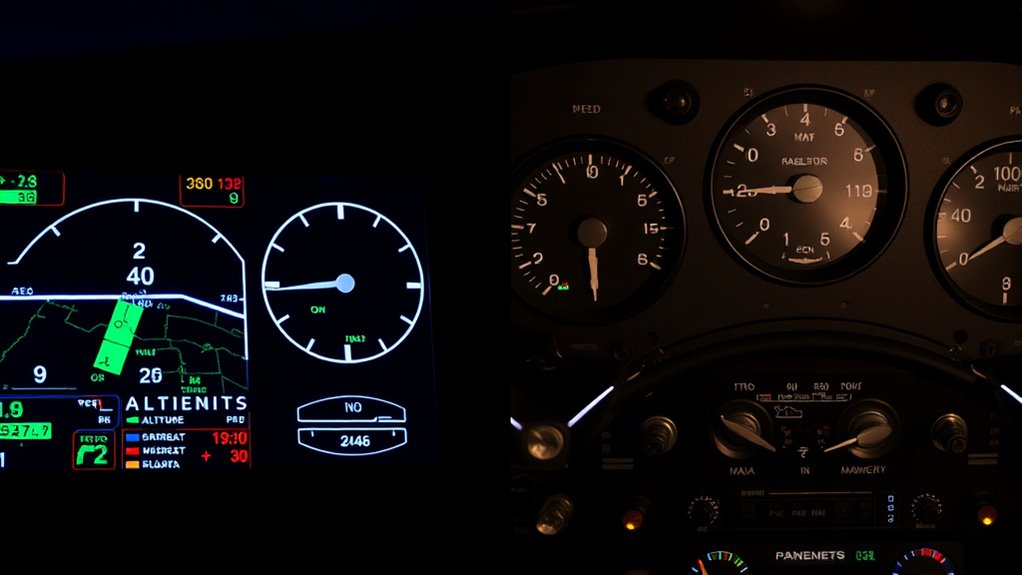
When choosing between digital and analog flight instruments, pilots often weigh the advantages of each system. Digital instruments, equipped with synthetic displays, offer a modern approach to cockpit information. These displays present flight data through computer-generated visuals that mimic traditional gauges but with added flexibility. The clarity of synthetic displays enables pilots to interpret data quickly, especially in complex scenarios, by presenting information in customizable formats. Unlike analog gauges, which are fixed and sometimes difficult to read under certain lighting conditions, digital displays can adapt brightness and contrast to ensure visibility at all times. Additionally, synthetic displays can integrate multiple data sources into a single screen, reducing clutter and streamlining information flow.
Data synchronization is another notable benefit of digital systems. In a digital cockpit, various instruments and sensors are interconnected, allowing for seamless data exchange. This synchronization ensures that all displayed information is consistent and current, minimizing errors caused by manual updates or outdated readings. For instance, altitude, airspeed, and attitude data are synchronized in real-time, giving pilots a holistic and accurate picture of the aircraft’s status. This continuous data flow enhances situational awareness, especially during critical phases of flight like navigation or approach. In contrast, analog instruments operate independently, relying on mechanical linkages or separate sensors, which can sometimes result in slight discrepancies or delays. While some pilots appreciate the tactile feedback of analog gauges, they must manually cross-check multiple instruments to confirm data consistency, which can be time-consuming.
Furthermore, digital flight instruments simplify the integration of various systems, providing a unified interface that consolidates information from different sources. This integration reduces the cognitive workload, allowing pilots to focus more on decision-making rather than scanning multiple gauges. When data from different sensors is combined into one synthetic display, you gain a well-rounded view that’s easier to interpret, especially during turbulence or visual distractions. This seamless data synchronization not only improves safety but also increases efficiency, making flights smoother and more predictable. Although analog instruments have a proven track record of reliability, the modern advantages of synthetic displays and synchronized data make digital systems increasingly appealing. As technology advances, digital flight instruments continue to evolve, offering better customization, more precise data, and integrated information management that can substantially enhance your flying experience.
Frequently Asked Questions
How Do Digital and Analog Instruments Perform in Extreme Weather Conditions?
Digital instruments generally perform well in extreme weather, thanks to their weather resilience and ability to display clear data even in harsh conditions. However, they can be affected by signal interference, which may cause inaccuracies or delays. Analog instruments are less vulnerable to signal interference and can provide reliable readings during severe weather. Your choice depends on balancing digital’s advanced features with analog’s robustness in challenging weather scenarios.
What Are the Maintenance Differences Between Digital and Analog Flight Instruments?
Think of digital instruments as high-tech symphonies and analog as classic melodies. Digital flight instruments often require regular software updates and precise calibration to maintain accuracy, making repair procedures more complex. Analog instruments, on the other hand, need physical checks, like cleaning and recalibration for gauges. Overall, digital systems demand more technical maintenance, while analog instruments are simpler but may need more frequent manual adjustments.
Can Pilots Easily Switch Between Digital and Analog Systems During a Flight?
Yes, you can switch between digital and analog systems during a flight, but it’s not always seamless. Shift challenges can arise, especially if you’re not well-trained in both. Proper pilot training helps you adapt quickly, minimizing errors. Familiarity with both systems allows you to switch smoothly when needed, but it’s essential to stay alert and attentive during the changeover to guarantee safety and maintain situational awareness.
How Do Digital Instruments Impact Pilot Workload and Situational Awareness?
Digital instruments reduce pilot workload by streamlining cockpit ergonomics, allowing for quicker data access and fewer manual inputs. Studies show pilots experience a 20% decrease in cognitive load when using digital displays, enhancing situational awareness. This means you can process information faster and make better decisions during flight. By minimizing distractions and optimizing interface design, digital systems help you stay focused and maintain control, even in complex or high-stress situations.
Are Digital Flight Instruments More Prone to Cybersecurity Threats Than Analog?
Digital flight instruments are more prone to cybersecurity vulnerabilities than analog because they rely on electronic systems that can be targeted by hacking. You should know that data encryption helps protect these systems, but vulnerabilities still exist if encryption isn’t strong or properly implemented. Unlike analog instruments, digital ones require ongoing cybersecurity measures to prevent unauthorized access, ensuring your aircraft’s data and systems stay secure during operations.
Conclusion
Ultimately, choosing between digital and analog flight instruments depends on your needs. Digital systems, like the integrated glass cockpit in modern aircraft, offer real-time data and easier updates—boosting safety and efficiency. For instance, a pilot steering through turbulent weather benefits from digital alerts that analog gauges might miss. By understanding their strengths, you can make smarter decisions, ensuring a safer, more streamlined flying experience tailored to your skills and flight environment.
Halloween Picks
halloween
As an affiliate, we earn on qualifying purchases.