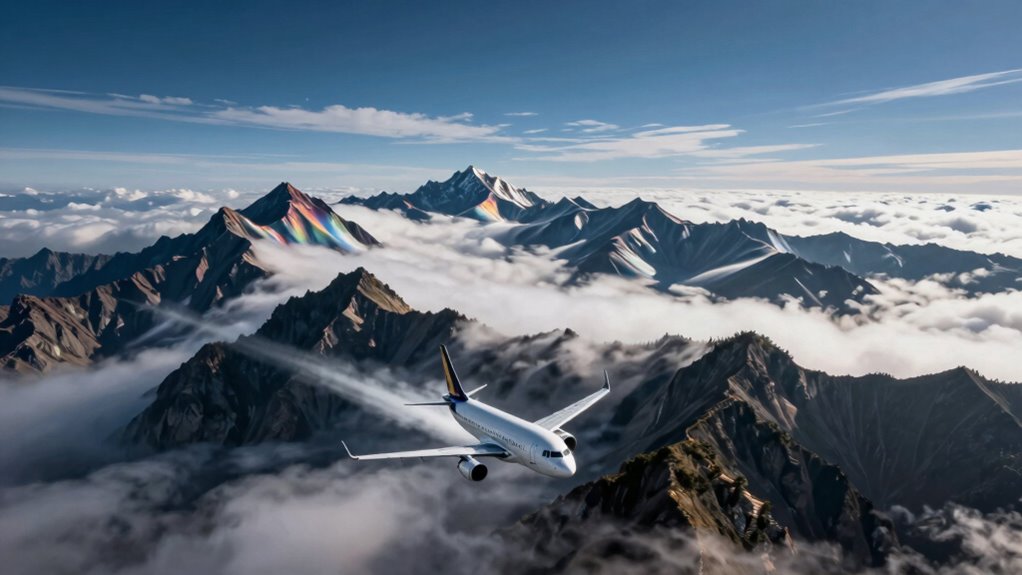
Mountain waves profoundly alter your long-distance flights by creating turbulence and affecting your altitude choices. When you understand these atmospheric patterns, you can navigate more safely and efficiently over rugged terrain. These waves can help you climb with less engine power or challenge your route with unpredictable updrafts and downdrafts. By recognizing how mountain waves impact your flight planning and safety, you’ll make smarter decisions. Keep exploring to discover how mastering these patterns can improve your flying experience.

Get travel and outdoor gear delivered free — and shop member deals
- Fast, free delivery on millions of items
- Access to Prime Big Deal Days deals on October 6–7
- Prime Video, Amazon Music and more included
Key Takeaways
- Mountain waves enable efficient navigation over rugged terrain, reducing fuel consumption and flight time.
- They cause turbulence that can impact safety, requiring pilots to interpret atmospheric data and adjust altitude proactively.
- Understanding wave patterns helps pilots exploit updrafts for altitude gain, improving fuel efficiency and flight performance.
- Accurate weather forecasts of mountain waves are crucial for planning safe routes and avoiding dangerous turbulence.
- Experience and training in recognizing wave behavior enhance pilots’ ability to respond effectively and ensure smoother flights.
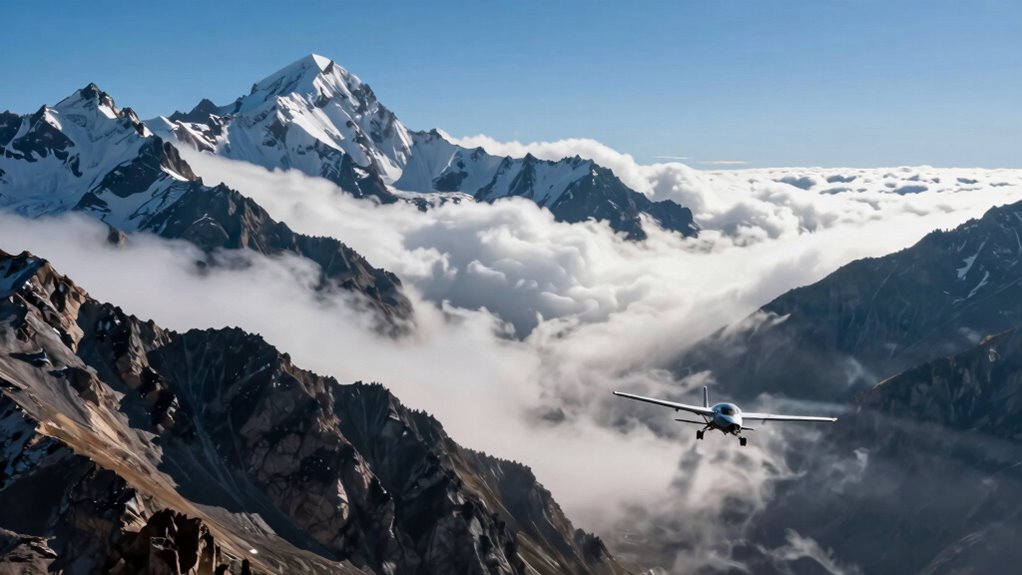
Mountain wave phenomena play an essential role in enabling long-distance pilots to navigate challenging terrains efficiently. When flying over mountain ranges, understanding how these atmospheric oscillations form can be the difference between a smooth journey and a dangerous ordeal. Mountain waves create powerful updrafts and downdrafts that, if anticipated correctly, can be harnessed or avoided to maintain safety and fuel efficiency. As a pilot, staying ahead of these weather patterns requires precise weather forecasting, which provides critical insights into the likelihood and strength of mountain waves along your route. Modern meteorological tools, combined with real-time data, allow you to predict where these waves are most likely to develop, giving you an edge in planning your flight path.
Understanding mountain waves is crucial for safe, efficient long-distance flying over rugged terrain.
Your navigation techniques become indispensable when dealing with mountain waves. Instead of relying solely on visual cues, you learn to interpret data from onboard instruments and weather reports to identify areas where turbulence might occur. For example, understanding the typical wind flow over mountain ridges helps you adjust your altitude proactively, avoiding the most turbulent zones. This strategic maneuvering minimizes passenger discomfort and reduces stress on your aircraft’s structure. It also conserves fuel by steering clear of unnecessary detours or altitude changes caused by unforeseen turbulence. Additionally, familiarity with mountain wave patterns allows pilots to recognize early signs of turbulence and respond effectively. Developing a deep understanding of atmospheric dynamics is crucial for predicting how mountain waves will behave under different weather conditions. Furthermore, continuous learning about weather forecasting models enhances a pilot’s ability to anticipate and adapt to these phenomena during flight planning and execution. Gaining hands-on experience through simulations can also significantly improve a pilot’s ability to navigate these conditions confidently. In particular, understanding how various atmospheric conditions influence wave formation can help pilots better anticipate turbulence severity and duration.
Long-distance pilots find that mountain waves can markedly extend or shorten their flight times depending on how well they leverage this phenomenon. When properly anticipated, mountain waves can assist you in gaining altitude faster with less engine power, especially when riding the updrafts. Conversely, if you ignore warning signs or fail to interpret weather forecasts accurately, you risk encountering severe turbulence that could jeopardize safety or force you into emergency maneuvers. Knowing how to read weather patterns and employing effective navigation techniques ensures you can exploit mountain waves to your advantage rather than fall victim to their unpredictability.
Furthermore, training and experience play an indispensable role in mastering mountain wave navigation. Pilots who regularly study weather forecasting models and conduct pre-flight assessments develop a keen sense of how mountain waves behave in different conditions. This expertise allows you to plan routes that maximize the benefits of favorable wave conditions while avoiding the dangers. Ultimately, understanding mountain wave phenomena transforms how you approach long-distance flying over rugged terrain, making your flights safer, more efficient, and more predictable even in challenging environments. Building situational awareness related to atmospheric conditions is key to leveraging mountain waves effectively.
aviation weather forecasting tools
As an affiliate, we earn on qualifying purchases.
As an affiliate, we earn on qualifying purchases.
Frequently Asked Questions
How Do Pilots Predict Mountain Wave Behavior Before Flying?
Imagine you’re preparing for a long flight over mountain ranges. You rely on weather forecasting and pilot training to predict mountain wave behavior. You check detailed weather models, wind patterns, and turbulence reports. Experienced pilots analyze these forecasts, recognizing signs of mountain waves. This preparation helps you avoid dangerous turbulence, ensuring a safer, smoother flight. Good training and accurate weather data make all the difference in anticipating mountain wave conditions.
What Specific Safety Measures Are Used During Mountain Wave Encounters?
During mountain wave encounters, you should implement turbulence management by adjusting your altitude and speed to minimize effects. Always stay alert for sudden turbulence and maintain smooth control. Follow emergency procedures promptly if you experience severe turbulence or unexpected turbulence escalation, such as securing cabin and communicating with air traffic control. Using these safety measures helps you navigate mountain waves safely, reducing risks and ensuring passenger safety during challenging flight conditions.
Can Mountain Waves Cause Structural Damage to Aircraft?
Mountain waves can cause structural damage to aircraft if you’re not prepared. You might imagine the aircraft as a fragile leaf buffeted by powerful, unseen forces. To prevent this, you should perform thorough aircraft inspections before flights through mountainous areas and confirm structural reinforcement where needed. Recognizing these risks helps you avoid potential damage, keeping your aircraft safe and your journey smooth despite the turbulent mountain winds.
How Does Mountain Wave Influence Fuel Consumption on Long Flights?
Mountain waves can greatly impact your fuel efficiency during long flights. The turbulence impact from these waves often forces you to adjust your altitude or speed, leading to increased fuel consumption. When encountering turbulence, you might descend or ascend to smoother air, which can require extra engine power and burn more fuel. Managing these conditions carefully helps optimize fuel efficiency and ensures a safer, smoother journey through mountainous regions.
Are There Training Programs Dedicated to Mountain Wave Navigation?
Like a seasoned surfer riding waves, you can master mountain wave navigation through specialized pilot training techniques. Yes, there are dedicated training programs that focus on understanding mountain wave misconceptions and proper techniques. These programs equip you with skills to recognize, interpret, and safely utilize mountain waves, ensuring smoother flights and enhanced safety. Embracing these courses helps you stay confident and prepared when tackling challenging mountain flying conditions.
Conclusion
Imagine soaring above majestic peaks, riding invisible waves like a surfer catching the perfect swell. Mountain waves can be your secret ally or your greatest challenge, shaping your flight path and safety. Just like a seasoned pilot who trusts these winds to save fuel and time, understanding their power transforms long-distance flying into a dance with nature. Mastering mountain wave knowledge turns unpredictable skies into a smooth journey—your ultimate tool for conquering the mountain’s silent, mighty force.
Halloween Picks
halloween
As an affiliate, we earn on qualifying purchases.