
To pick better lines between thermals, observe environmental cues like wind drift and cloud shadows. Notice how wind shifts at different altitudes, and adjust your heading slightly into the wind to stay connected to thermals. Watch for shadows moving across the ground, indicating areas of sinking air or stronger thermals nearby. By continuously interpreting these subtle signs, you can choose more efficient glide paths. Keep paying close attention, and you’ll discover more ways to refine your route between lift sources.
Listen free for 30 days with Audible
Thousands of audiobooks and originals — cancel anytime.
As an affiliate, we earn on qualifying purchases.
Key Takeaways
- Observe wind drift and cloud shadows to identify optimal glide paths and avoid sinking areas.
- Adjust your heading slightly into the wind to connect thermals more efficiently.
- Use changes in cloud shadow movement to anticipate stronger thermals and plan your route accordingly.
- Recognize vertical wind shear to select routes with better thermal availability.
- Continuously scan the sky for subtle cues to refine your line between thermals and maximize glide efficiency.
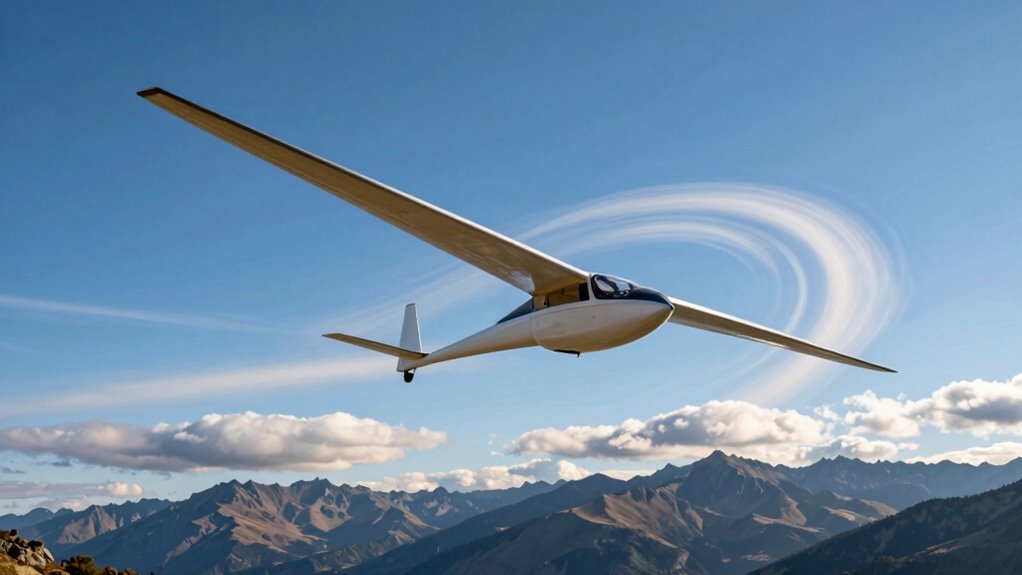
Have you ever wondered how experienced glider pilots find the most efficient path between thermals? It’s not just about guessing or following the crowd; they read the sky with precision, paying close attention to subtle cues that reveal the best route. Two critical elements in this process are wind drift and cloud shadows. Understanding how these factors influence your flight can make a huge difference in how smoothly and efficiently you navigate between lift sources.
Wind drift is one of the most important clues pilots use to determine the direction of the wind at different altitudes. As you soar, watch how your glider drifts relative to the ground. If you notice your lift source, like a cloud or a patch of blue sky, drifting to one side, it indicates the wind’s direction and speed. Experienced pilots use this information to plan their line between thermals by heading slightly into the wind or adjusting their trajectory to account for drift. Doing so helps you connect thermals more directly and reduces the distance you need to cover to find the next lift. Keep in mind that wind can vary with altitude, so observing how drift changes as you climb or descend provides valuable insights into the wind profile, allowing you to fine-tune your route. Recognizing wind shear and how it impacts drift at different heights can further enhance route planning. Paying attention to wind patterns can help you anticipate changes in drift and adapt your flight path accordingly. Being aware of these vertical wind variations can give you an edge in managing your glide efficiently. Incorporating thermal triggers—like changes in wind or cloud formations—can also help you identify optimal lift zones more quickly. Additionally, understanding the boundary layer dynamics can improve your ability to predict thermal locations along your route.
Observe glider drift and cloud shadows to read wind and optimize your thermal route efficiently.
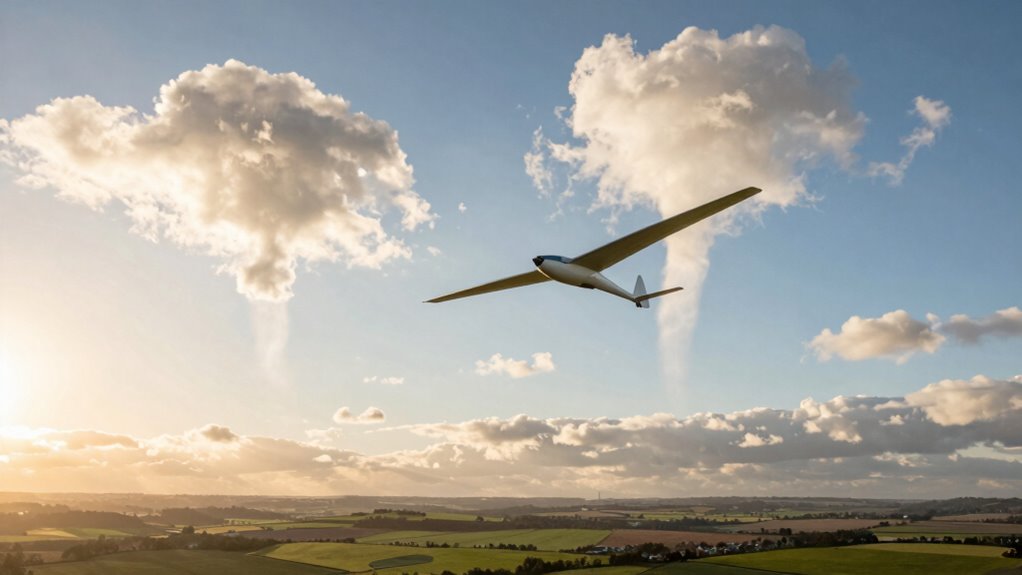
Cloud shadows are another powerful visual cue. As the sun moves across the sky, shadows cast by clouds can signal areas of sinking air nearby. When you see a shadow sweeping across the landscape, it usually indicates the presence of a cloud overhead or nearby, which can influence thermal activity. Pilots often look for the absence of thermal activity in shadowed areas, because the shade can suppress thermals or make them weaker. Conversely, emerging from a cloud shadow into full sunlight can lead to stronger, more reliable thermals. By observing how cloud shadows shift and where they fall, you can better anticipate where thermals are likely to be and plan your route to stay within lift-rich zones. This strategic use of cloud shadows helps you avoid sinking air and extend your glide.
Putting it all together, the key to picking better lines between thermals lies in your ability to interpret wind drift and cloud shadows accurately. By paying close attention to how your glider drifts relative to the ground, and how shadows move across the landscape, you develop a mental map that guides you from lift to lift. Over time, this keen observation improves your efficiency, reduces unneeded glide, and keeps you soaring higher and longer. The sky becomes less about guesswork and more about reading the subtle signs that nature offers, allowing you to craft the most effective route between thermals every time you fly.
glider pilot thermal detection tools
As an affiliate, we earn on qualifying purchases.
As an affiliate, we earn on qualifying purchases.
Frequently Asked Questions
How Do Wind Conditions Affect Thermal Line Selection?
Wind conditions greatly influence your thermal line selection by creating wind drift and turbulence patterns. Strong winds can push the thermal’s edge, making it harder to stay connected. You should look for smooth, less turbulent areas where wind drift is minimal, and avoid turbulent patches caused by shifting wind directions. By reading these patterns, you can choose lines that stay consistent, helping you stay connected to the lift longer and climb more efficiently.
What Equipment Is Best for Optimizing Thermal Navigation?
You should invest in reliable thermal equipment and navigation tools to optimize thermal navigation. A variometer helps you detect rising air, while a GPS or altimeter confirms your position and altitude changes. Combining these tools allows you to stay centered in thermals and identify lift sources efficiently. Always guarantee your equipment’s accuracy and durability, especially in varying weather conditions. Proper gear enhances your ability to find and stay within the best thermals, improving your flight performance.
How Does Pilot Experience Influence Line Choice?
Your pilot experience greatly influences your line choice, as it sharpens your thermal awareness and intuition. With more experience, you naturally recognize the best thermal sources and anticipate their movement, allowing you to select lines that maximize lift and minimize energy expenditure. This heightened awareness helps you make quicker, more confident decisions, ensuring smoother passages between thermals and ultimately improving your flight efficiency and comfort.
Can Weather Forecasts Improve Thermal Line Strategies?
A stitch in time saves nine, especially when weather forecasts help you refine thermal strategies. You can certainly improve your line choice by considering solar variability and cloud cover predictions. Accurate forecasts reveal where thermals are likely to form or weaken, letting you plan your route more effectively. Paying attention to changing weather conditions guarantees you stay in the best lift, making your flight smoother and more successful.
What Are Common Mistakes in Choosing Thermal Lines?
A common mistake is ignoring thermal hotspots, which can lead you off course or cause unnecessary altitude loss. You might also overlook the need for altitude adjustments; sticking to a line without adapting to changing thermal strength or position can reduce your lift efficiency. Always scan for thermal hotspots ahead and be ready to make altitude adjustments, ensuring you stay within the best lift zones for a smoother, more efficient glide.
Conclusion
By choosing smarter lines between thermals, you can substantially boost your soaring efficiency and extend your flight time. Remember, pilots who optimize their routes report up to 30% more lift utilization, saving energy and reducing fatigue. So, stay observant, analyze your surroundings, and trust your instincts. Mastering the art of picking better lines isn’t just about flying smarter—it’s about flying longer and farther with confidence and skill.
Pool season Picks
robotic pool cleaners
As an affiliate, we earn on qualifying purchases.