As you soar over the Blue Ridge Mountains, you’ll notice how their shapes create unique microclimates and influence weather patterns. Moist air from the Gulf of Mexico is forced upward, causing heavy rain and lush forests, especially on windward slopes. Expect quick weather changes, like foggy mornings turning into thunderstorms or snow at higher elevations. Understanding these dynamic mountain effects helps you appreciate the region’s climate—keep exploring and you’ll uncover even more fascinating details.
Key Takeaways
- The Appalachian Mountains create microclimates that vary from valleys to summits, affecting local weather conditions.
- Orographic lift causes moist Gulf air to rise, leading to increased precipitation and snowfall at higher elevations.
- Weather can change rapidly within a single day, with sunny mornings often giving way to fog and rain.
- The rain shadow effect on leeward slopes results in drier conditions, influencing ecosystems and vegetation.
- Seasonal patterns include wetter springs and summers, cooler falls, and snow or ice at higher elevations in winter.
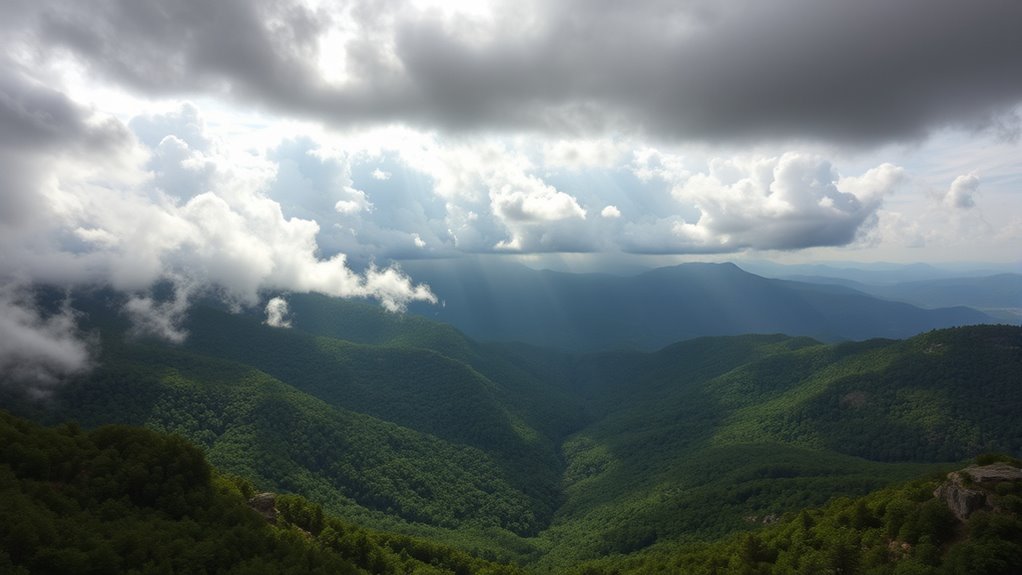
Have you ever wondered how the Appalachian Mountains influence the weather in the eastern United States? These towering peaks markedly shape local climate patterns, creating unique mountain microclimates that vary from valley to summit. As you traverse the range, you’ll notice that weather can change abruptly, often within just a few miles. This variation is largely due to the mountains’ impact on airflow and moisture movement. When moist air from the Gulf of Mexico approaches the Appalachians, it’s forced upward by the terrain, leading to cooling and condensation. This process results in increased seasonal precipitation on the windward side, fueling lush forests and vibrant ecosystems. In winter, this orographic lift often brings heavy snowfall to the higher elevations, making the mountains a winter wonderland. Conversely, the leeward side of the range experiences a rain shadow effect, where descending air warms and dries, leading to drier conditions and less precipitation.
Your experience of weather in the Appalachians will vary depending on the season and location. During spring and summer, the mountains tend to be wetter, with frequent rain showers that contribute to the rich greenery. These seasons see higher overall precipitation, especially in the form of thunderstorms that develop in the afternoon due to the intense heating of the land. Fall, however, often brings a shift in weather patterns. Cooler temperatures and changing air masses can lead to a decrease in rainfall, but the mountains may still see bursts of seasonal precipitation, especially in the form of early snow or late-season storms. Winter’s cold air interacts with moist air from the south or the Atlantic, producing snow and ice that can stay for days, especially at higher elevations. The presence of mountain microclimates further influences local weather, with distinct conditions developing even within short distances.
The mountain microclimates also mean that, even within a single day, weather can vary dramatically. A sunny morning in the valleys might give way to fog and rain as you ascend into the higher elevations. These microclimates are especially influential on local flora and fauna, which adapt to the specific conditions of their surroundings. Understanding these patterns helps you appreciate the complexity of Appalachian weather, which is driven by the mountains’ influence on moisture and air flow. Whether you’re hiking, camping, or simply exploring, recognizing how seasonal precipitation and microclimates change with elevation will deepen your connection to this rugged landscape. The Appalachian Mountains aren’t just a stunning backdrop—they’re a dynamic force shaping the climate and weather patterns that define this remarkable region.
Frequently Asked Questions
How Do Appalachian Weather Patterns Affect Local Wildlife?
Appalachian weather patterns profoundly influence your local wildlife by shaping their migratory patterns and supporting flora diversity. You’ll notice animals adjusting their movements to seasonal changes, ensuring survival amid temperature swings and precipitation. These patterns promote a rich variety of plants, which in turn sustain diverse habitats. As weather shifts, wildlife adapts, maintaining ecological balance and fostering vibrant biodiversity throughout the mountains.
What Is the Best Time of Year to Visit for Good Weather?
The best visiting season for good weather in the Blue Ridge Mountains is spring or fall. During these ideal weather months, you’ll enjoy mild temperatures, clear skies, and vibrant scenery. Spring offers blooming wildflowers, while fall treats you to colorful foliage. Avoid winter’s chill and summer’s humidity for a more comfortable experience. Planning your trip during these seasons guarantees you make the most of your adventure in this stunning region.
How Do Mountain Heights Influence Weather Changes?
Your mountain heights considerably influence weather changes through altitude effects and wind patterns. As you ascend, temperatures drop, leading to cooler, often wetter conditions. Wind patterns shift around the peaks, causing increased precipitation and gustier weather. Higher elevations can also create microclimates, making weather unpredictable. So, when you’re exploring the Blue Ridge Mountains, expect these altitude effects and wind pattern influences to shape your experience, especially at the highest points.
Are There Any Unique Weather Phenomena Specific to the Blue Ridge?
Ever wondered if the Blue Ridge Mountains have unique weather phenomena? You’ll notice weather anomalies like sudden gusts and rapid cloud formations that can surprise you. These mountains create microclimates, causing fog to form quickly and altering cloud patterns unexpectedly. Do you realize how these distinctive features add to the mountain’s charm? It’s fascinating how the Blue Ridge’s elevation and terrain influence these one-of-a-kind weather events, making each visit an adventure.
How Do Appalachian Weather Patterns Impact Outdoor Activities?
Appalachian weather patterns considerably impact your outdoor activities. Seasonal rainfall can make trails muddy and slippery, while temperature fluctuations require you to dress in layers. Sudden storms are common, so you should always check the forecast before heading out. These patterns can enhance your experience with crisp mornings and colorful falls, but they also demand preparation and flexibility to enjoy activities like hiking, camping, or sightseeing safely and comfortably.
Conclusion
As you journey through the Blue Ridge Mountains, remember that their weather is like a living artist, constantly shifting and painting new skies. By understanding these patterns, you can better navigate their unpredictable moods. Embrace the mountain’s changing temperament, for it reminds us that nature’s beauty lies in its ever-changing dance. Just as the clouds shape the peaks, your awareness shapes your adventure—turning every weather shift into a chapter in your mountain story.