Junior gliding programs offer a safe, structured way for young pilots to develop their skills and passion for soaring. You’ll start with ground school lessons covering aerodynamics, weather, and safety protocols, then progress to supervised flights where you’ll learn handling, turns, and emergency procedures. As you gain experience, you’ll take on more advanced maneuvers and cross-country flying under supervision. If you want to discover how these programs build confidence and responsibility, stay with us for more details.
Key Takeaways
- Junior gliding programs offer safe, supervised flight training tailored for young pilots to develop skills and passion for soaring.
- Ground school covers aerodynamics, weather, safety protocols, and pre-flight checks to build a strong theoretical foundation.
- Initial flights are supervised, focusing on control, turns, and descent, ensuring safety and confidence building.
- Programs progressively introduce cross-country flying and complex maneuvers, emphasizing safety and responsible decision-making.
- Safety standards are integral to structured curricula, fostering responsible flying habits and a lifelong aviation interest.
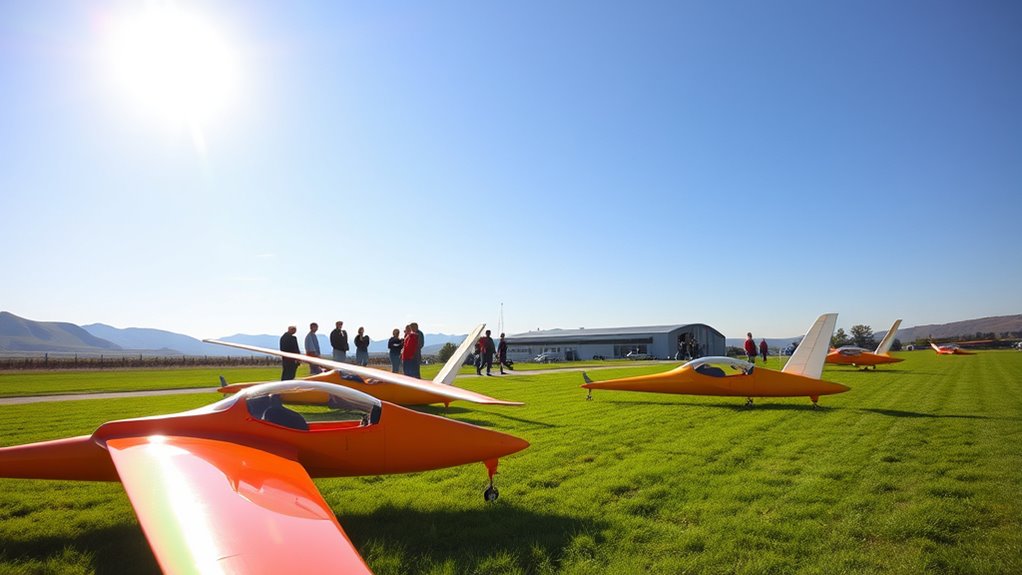
Are you interested in soaring through the skies and learning to pilot a glider? If so, there are exciting opportunities designed specifically for young pilots like you to get started in this thrilling activity. Junior gliding programs focus on providing a safe, educational environment where you can develop your skills and passion for flight. One of the key aspects of these programs is strict adherence to safety regulations to ensure that every flight is secure and enjoyable. Before you take to the skies, you’ll undergo *extensive* pilot training that covers essential safety procedures, aerodynamics, and handling techniques. This training is tailored to your age and experience level, giving you confidence and competence as you progress.
Join junior gliding programs for safe, exciting flight training tailored for young pilots.
When you join a junior gliding program, you’ll typically start with ground school lessons. These sessions teach you the fundamentals of flight, including how gliders work, the importance of weather conditions, and the proper use of controls. Emphasis is placed on understanding safety regulations—knowing what to do in various situations helps prevent accidents and keeps everyone safe. Your instructors will guide you through pre-flight checks, emergency procedures, and communication protocols, ensuring you’re well-prepared before your first solo flight. The pilot training process combines classroom learning with practical experience, gradually building your skills from basic controls to more advanced maneuvers.
Once you’ve mastered the basics, you’ll move on to supervised flights where an experienced instructor is present in the glider. During these sessions, you’ll learn to handle the aircraft, make smooth turns, and control your descent. The focus remains on safety regulations, so you’ll always be aware of your limits and the importance of following established procedures. As your confidence grows, you’ll be introduced to cross-country flying and more complex maneuvers under close supervision, always prioritizing safety. The goal is to develop a solid foundation of pilot training that can serve as a stepping stone if you choose to pursue a full pilot’s license later on.
Throughout your journey in a junior gliding program, you’ll find that safety regulations are not just rules—they’re a *crucial* part of the learning process designed to protect you and others. With dedicated instructors and a structured curriculum, you’ll gain the skills needed to fly confidently while understanding the importance of responsible flying. These programs aim to foster a lifelong passion for aviation, all while *guaranteeing* your safety at every stage. If you’re *enthusiastic* to experience the thrill of flight and want a safe, supportive environment to learn, junior gliding opportunities offer the perfect starting point for your flying adventures. Additionally, many programs incorporate vetted safety standards and procedures, ensuring a trusted and reliable training experience.
Frequently Asked Questions
What Are the Age Requirements for Junior Gliding Programmes?
You need to be at least 12 years old to meet the age restrictions for junior gliding programmes. Typically, pilot eligibility requires participants to be between 12 and 18 years old, depending on the specific programme. These age requirements guarantee young pilots are prepared for the responsibilities involved. Always check the individual programme’s rules, as some may have different age restrictions, but generally, you must fall within this age range to participate.
How Much Does It Cost to Participate in Junior Gliding Activities?
Worried about costs? Junior gliding activities typically range from $50 to $150 per session, but cost considerations vary by club and location. Many programs offer funding options like scholarships or discounts for members. Remember, investing in your child’s aviation passion can be affordable with these resources. Check with local clubs early, as funding opportunities and fees may change, helping you make the best decision for your young pilot.
Are There Any Safety Certifications Needed Before Joining?
Yes, you need to meet safety certification standards before joining. You’ll be required to complete safety protocols training, which covers essential procedures and emergency responses. This guarantees you understand and can follow safety guidelines during flight. Certification standards might vary depending on the program, but completing the necessary safety training is mandatory for your safety and to comply with regulations. Always check with your program for specific certification requirements.
What Skills or Prerequisites Are Necessary for Beginners?
Think of starting gliding like learning to ride a bike—basic skills and safety training are your first pedals. You need no prior flying experience, just a willingness to learn and follow safety protocols. Most beginner programmes require you to pass a simple health check and attend safety training sessions. With dedication, you’ll quickly grasp basic flying skills, gaining confidence and soaring higher every lesson, just like riding downhill with the wind in your hair.
How Can I Find Local Junior Gliding Clubs or Organizations?
You can find local junior gliding clubs or organizations by checking local club directories or using online search tools. Start by searching for gliding clubs in your area with keywords like “junior gliding clubs” or “youth gliding programs.” Visit their websites or contact them directly to learn about upcoming events and membership opportunities. Many clubs also have social media pages where they post updates and connect with young aspiring pilots.
Conclusion
As a young pilot, these gliding opportunities offer you a chance to soar high and chase your dreams. Yet, while you enjoy the thrill of flight, remember that dedication and practice ground your ambitions. Just like the serenity of a glide contrasts with the adrenaline of takeoff, your journey combines patience with passion. Embrace each experience, knowing that your perseverance today will help you conquer the skies tomorrow.