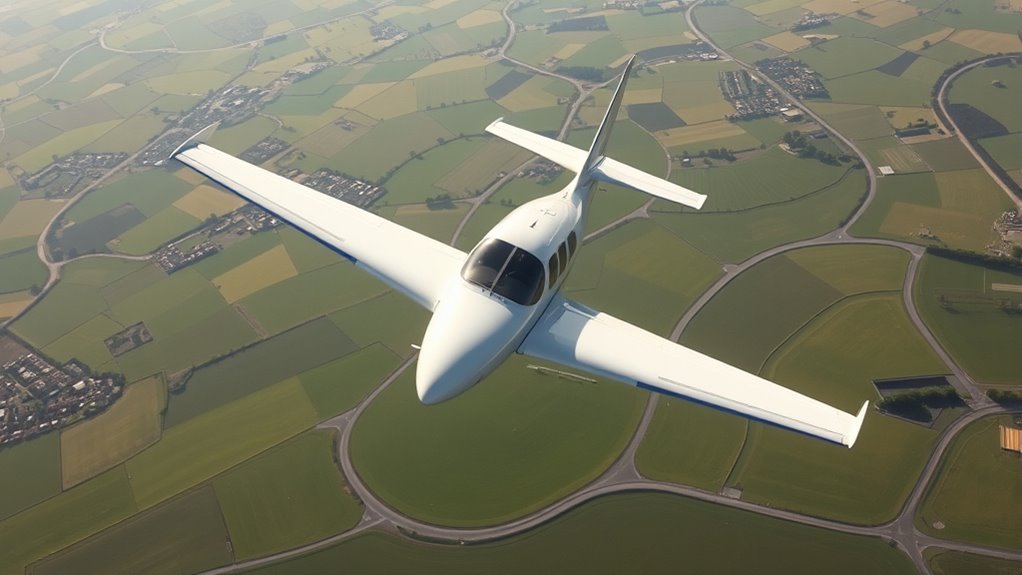

To prevent wingtip drops and spins during low-speed handling, you should use smooth, deliberate control inputs, avoiding abrupt movements that can destabilize the aircraft. Focus on gentle aileron and rudder corrections, maintaining coordinated turns to keep airflow smooth over the wings. Be mindful of aerodynamic changes as speed decreases, and practice gradual adjustments to stay balanced and stable. Continuing with proper technique will help you master safer low-speed control and avoid common pitfalls.
Key Takeaways
- Use smooth, deliberate control inputs to avoid sudden airflow disruptions that can cause wingtip drops or spins.
- Maintain coordinated rudder and aileron use during low-speed maneuvers for stable, balanced turns.
- Practice gradual adjustments at low speeds to prevent over-controlling and aerodynamic instability.
- Avoid abrupt or aggressive control movements, especially when approaching stall speeds.
- Develop proficiency through training, emphasizing gentle handling to maintain airflow and prevent spins or wing dips.

Have you ever struggled to control your vehicle at low speeds? If so, you’re not alone. Low-speed handling can be tricky, especially when it comes to preventing wingtip drops and spins. One of the key factors influencing this is aerodynamic effects, which change markedly at slower speeds. When your aircraft slows down, the airflow over the wings and control surfaces shifts, reducing lift and increasing the risk of the aircraft tipping or rolling unexpectedly. To counteract this, your pilot technique becomes essential. Proper control inputs and smooth, deliberate movements help maintain stability and prevent sudden wing dips or spins.
Understanding how aerodynamic effects impact control at low speeds can help you anticipate and react appropriately. As speed decreases, the aerodynamic forces that help keep the aircraft stable diminish, making it easier for the aircraft to yaw or roll unexpectedly. This is why over-controlling or abrupt movements can lead to wingtip drops or even spins. Instead, focus on a balanced, gentle application of the rudder and ailerons. For example, if you notice the wing beginning to dip, instead of overcorrecting with aggressive inputs, make small, precise adjustments to bring the aircraft back to level flight. This approach minimizes the risk of exacerbating the instability caused by aerodynamic effects.
At low speeds, gentle, balanced control inputs prevent wingtip drops and spins by maintaining aerodynamic stability.
Your pilot technique must also emphasize coordinated control inputs. The key is to use the rudder and ailerons together, maintaining a smooth, coordinated movement that keeps the aircraft aligned with your intended flight path. When turning at low speeds, avoid sharp or sudden control inputs, which can induce a spin or cause the aircraft to drop a wing. Instead, employ gradual movements, always anticipating how the aircraft responds. This technique reduces the chances of wingtip drops, which often occur when the aircraft’s lift distribution becomes uneven, or spins, which can happen if the aircraft yaws excessively while losing lift on one wing.
Practicing these techniques in a safe environment, such as during training flights or with an instructor, will help you develop a feel for how your aircraft responds at low speeds. Remember, your goal is to keep the airflow as smooth as possible over the wings and control surfaces, avoiding sudden movements that upset the delicate aerodynamic balance. Additionally, understanding the broader scope of ethical hacking can provide insights into how to better anticipate and manage unexpected situations in flight. With patience and proper pilot technique, you can master low-speed handling, preventing wingtip drops and spins, and ensuring a safer, more controlled flight experience even when flying slowly.
Frequently Asked Questions
How Do Different Aircraft Types Affect Wingtip Drop Risks?
Different aircraft types influence wingtip drop risks based on their wing configuration and flight control systems. For example, high-wing aircraft tend to be more stable, reducing wingtip drop chances, while low-wing planes may be more susceptible. Advanced flight control systems can help prevent spins and wingtip drops by automatically adjusting ailerons and rudders. Your awareness of these factors helps you manage low-speed handling safely across various aircraft.
What Are the Best Emergency Procedures for Unexpected Spins?
Think of a spin as a sudden twist in your flight; your priority is stall recovery and spin avoidance. Immediately reduce power, level the wings, and gently apply opposite rudder to counteract the spin. Avoid aggressive control inputs. Keep the aircraft coordinated and focus on stabilizing. Trust your training, maintain situational awareness, and recover promptly to prevent further altitude loss or potential danger.
How Does Pilot Experience Influence Low-Speed Handling Safety?
Your pilot awareness greatly influences low-speed handling safety. Experienced pilots recognize cockpit alerts early and respond appropriately to prevent wingtip drops and spins. With more flight hours, you develop better judgment and muscle memory, allowing quicker reactions during critical moments. This heightened awareness helps you maintain control, avoid stalls, and execute proper recovery procedures, ultimately reducing the risk of dangerous low-speed situations.
What Role Does Weather Play in Wingtip Drop Occurrences?
They say weather can be a double-edged sword, and it’s true for wingtip drops. Poor weather conditions, especially gusty winds and wind shear, increase the risk by creating unpredictable airflow around your wings. When flying in these conditions, stay alert and adjust your control inputs carefully. Recognizing how weather impacts your aircraft helps you prevent wingtip drops and maintain safe, controlled low-speed handling.
Are There Specific Training Programs Focused on Spin Prevention?
Yes, there are specific training programs focused on spin prevention. You’ll learn to recognize yaw instability early and practice effective stall recovery techniques. These programs emphasize controlling the aircraft’s attitude and power, helping you prevent wingtip drops and spins. By mastering these skills, you build confidence in handling low-speed situations safely, reducing the risk of unintended spins and enhancing your overall flying proficiency.
Conclusion
So, next time you’re drifting toward a wingtip drop or spin, remember: the key isn’t just pushing the throttle or pulling the stick. It’s knowing when to be gentle, cautious, and patient. Ironically, in the world of low-speed flying, going fast isn’t the answer — control is. Master that balance, and you’ll keep your wings level and your spins at bay. Because sometimes, the fastest way to stay safe is simply flying slow and smart.