
To manage pre-flight jitters and build confidence, try combining deep breathing with visualization exercises. Practice slow, controlled breaths to relax your body and then imagine smooth takeoffs, comfortable seating, and arriving relaxed. Repeating these quick routines strengthens your mindset, making flying feel more manageable over time. Consistent practice helps reduce anxiety and boosts confidence, turning pre-flight worries into calm anticipation. Keep exploring techniques that can transform your flying experience into a more confident journey.
Key Takeaways
- Practice slow, deep breathing to activate relaxation and reduce flight-related anxiety.
- Use visualization to imagine a smooth, comfortable flight experience, reinforcing positive feelings.
- Combine breathing and visualization routines regularly to build mental resilience and confidence.
- Find quiet moments before departure to settle your mind and reinforce feelings of control.
- Consistent practice helps diminish pre-flight jitters and transforms flying into a manageable activity.

Feeling nervous before a flight is completely normal, but managing those pre-flight jitters can make your travel experience much smoother. One of the most effective ways to calm your nerves is by practicing breathing techniques. When anxiety starts to creep in, take slow, deep breaths. Inhale deeply through your nose for a count of four, allowing your lungs to fill completely. Hold that breath for a count of four, then exhale slowly through your mouth for another four counts. Repeat this process several times, focusing solely on your breath. This simple exercise helps activate your parasympathetic nervous system, which relaxes your body and reduces feelings of panic. It also diverts your attention away from worries, grounding you in the present moment. Incorporating calming techniques can further enhance your pre-flight routine and help ease your mind.
Alongside breathing techniques, visualization exercises can considerably ease pre-flight anxiety. Close your eyes and picture yourself on the plane, feeling confident and at ease. Imagine the smooth takeoff, the comfortable seat, and the friendly flight attendants. Visualize yourself arriving at your destination relaxed and happy. The key is to create vivid mental images that evoke positive feelings. When you repeatedly practice this, your mind begins associating flying with calmness and safety, which gradually diminishes your fears. To enhance this practice, you can add sensory details—imagine the sound of the engine humming softly, the feel of the armrest beneath your hand, or the smell of fresh coffee in the cabin. This multisensory approach helps reinforce the mental image and boost your confidence. Additionally, understanding the projector technology used in home cinemas can help you feel more prepared and in control of your environment.
Incorporating these techniques into your pre-flight routine takes just a few minutes but can have a lasting impact. Before heading to the airport, find a quiet space where you can sit comfortably. Start with a few rounds of breathing exercises to settle your body. Then, shift into visualization, imagining everything going smoothly and your arrival being joyful. Repeating this combination regularly can create a mental shift, transforming your mindset from apprehensive to composed. Remember, you’re in control of your thoughts and reactions, and these tools are designed to empower you. Over time, you’ll notice your anxiety diminishes, and flying becomes a more manageable, even enjoyable, experience. With patience and practice, you’ll build the confidence needed to take to the skies without fear holding you back.
Frequently Asked Questions
How Can I Tell if My Nerves Are Normal or Excessive?
Your nerves are normal if your nervousness assessment shows mild anxiety that motivates you to prepare without overwhelming you. If your flight anxiety causes persistent physical symptoms like rapid heartbeat, sweating, or intense worry that interfere with your daily life, it’s excessive. Trust your instincts, but consider speaking with a professional if your nervousness feels unmanageable. Remember, some nerves are natural, but excessive anxiety may need extra support.
Are There Specific Breathing Techniques to Reduce Pre-Flight Anxiety?
Remember, “a calm mind is a clear mind.” You can reduce pre-flight anxiety with specific breathing techniques like mindfulness meditation, where you focus on your breath, and progressive muscle relaxation, tensing and relaxing muscles gradually. These methods help calm your nerves, improve focus, and keep you grounded. Practice them regularly before flying to build confidence, making your soaring experience smoother and more enjoyable.
Can Pre-Flight Jitters Affect My Physical Health or Safety?
Pre-flight jitters can cause physical symptoms like increased heart rate, sweating, or dizziness, which might temporarily affect your focus and decision-making. While these symptoms generally don’t threaten flight safety, they can distract you or lead to misjudgments if not managed. Staying calm and practicing breathing techniques can help control these symptoms, ensuring you stay alert and safe throughout your flight. Your awareness and preparation directly support overall flight safety.
What Should I Do if Anxiety Worsens Closer to the Flight?
Imagine your anxiety is a storm brewing—what do you do? You can calm it with relaxation exercises like deep breathing or progressive muscle relaxation. Try mental reframing by focusing on positive outcomes rather than worries. If anxiety worsens closer to the flight, pause, breathe deeply, and remind yourself of your preparation. These techniques help steady your mind and boost confidence, turning the storm into a manageable breeze.
Are There Psychological Strategies to Boost My Confidence Before Flying?
Yes, you can boost your confidence before flying by using visualization techniques to imagine a smooth, successful flight, which helps reduce anxiety. Additionally, practice cognitive reframing by challenging negative thoughts and replacing them with positive, realistic ones. These strategies empower you to feel more in control, calm your mind, and build trust in your abilities, making your flying experience more comfortable and enjoyable.
Conclusion
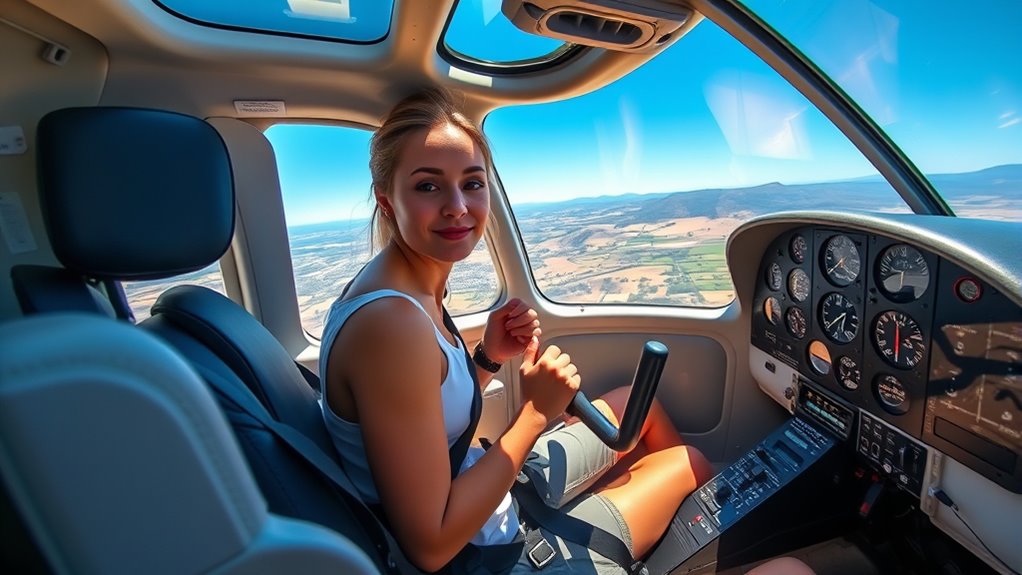
As you step into the cockpit, remember that your jitters are just clouds clearing to reveal the clear blue sky beneath. Trust in your preparation and skills, letting confidence be your steady compass. With each breath, you’re carving a path through the storm of nerves, soaring higher with every heartbeat. Embrace the adventure ahead, knowing that your courage will turn those pre-flight butterflies into a symphony of triumphant flight.