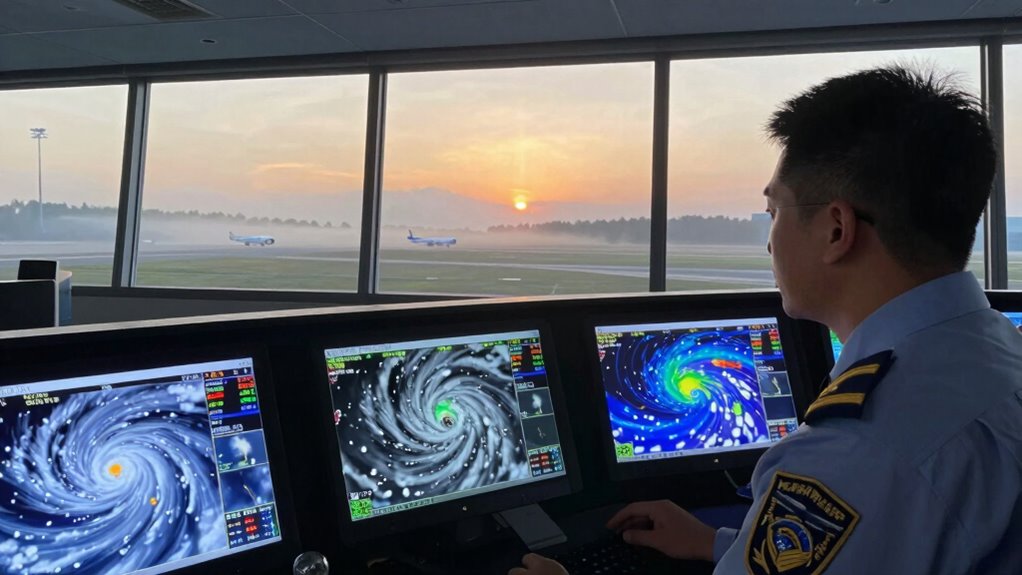
Morning weather briefings are more essential than you might realize because they set the foundation for safe and efficient flights. They provide critical, up-to-date info on current and forecasted conditions, helping you anticipate hazards and make informed decisions before takeoff. Accurate briefings can prevent surprises that threaten safety and streamline operations. If you want to understand how these briefings truly impact your flight safety and planning, there’s more to discover below.
Key Takeaways
- Morning briefings provide critical, up-to-date weather information essential for safe flight planning and hazard avoidance.
- They enable pilots to anticipate rapid weather changes that online data may not reflect in real-time.
- Accurate briefings improve decision-making, reducing risks related to turbulence, wind shear, and icing conditions.
- Well-informed briefings optimize operational efficiency by supporting fuel management and schedule adherence.
- They establish a safety foundation, ensuring pilots are better prepared for in-flight weather challenges.
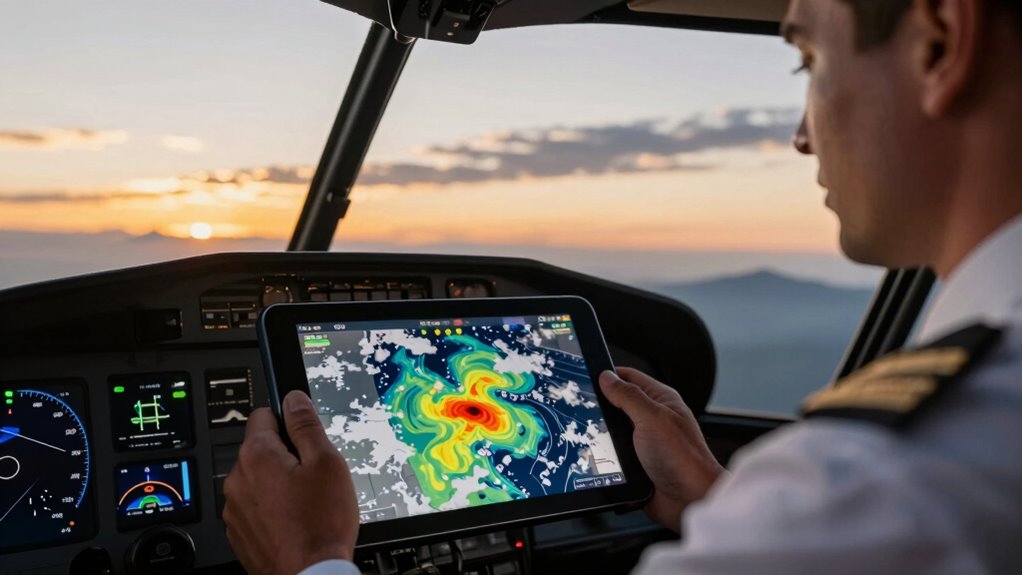
Morning weather briefings are more critical to flight safety and efficiency than many pilots realize. When you start your day with a thorough briefing, you set the tone for a smooth, safe flight. These briefings provide essential information about current and forecasted weather conditions, helping you anticipate potential hazards before you even reach the runway. In aviation safety, accurate weather data isn’t just helpful—it’s crucial. Relying on outdated or inaccurate weather reports can lead to misjudgments, putting your aircraft and passengers at risk. That’s why the quality and weather accuracy of your briefing matter so much; they influence every decision you make from pre-flight planning to in-flight adjustments.
Thorough morning weather briefings are vital for safe, efficient flights and informed decision-making.
You might think that weather applications or online data are enough, but a briefing from a dedicated weather service offers more detailed, context-specific insights. These briefings include updates on wind shear, turbulence, thunderstorms, or icing conditions that could develop during your flight. When you understand the latest weather patterns, you can plan alternative routes, adjust altitudes, or delay departure if conditions are unfavorable. This proactive approach is key to maintaining aviation safety and avoiding unexpected weather surprises that could compromise your aircraft’s stability. Remember, weather changes rapidly, and even minor inaccuracies can have major consequences. Weather accuracy is especially vital because it directly affects your ability to make informed decisions in real time. A comprehensive weather briefing enhances your situational awareness, allowing you to respond appropriately to evolving conditions. Utilizing up-to-date weather data ensures you’re operating with the most reliable information available, reducing the risk of surprises.
The importance of weather accuracy extends beyond just avoiding danger—it directly impacts your operational efficiency. Precise weather information allows you to optimize fuel consumption, choose the best departure and arrival times, and reduce delays. When you have a clear picture of the weather, you can make confident decisions, which keep your schedule on track and minimize stress. Conversely, relying on vague or outdated data might lead to last-minute reroutes or cancellations, wasting time and resources. Weather updates are essential to maintaining a comprehensive understanding of current conditions. Morning briefings help you identify potential issues early, giving you the chance to adapt your plans accordingly.
Ultimately, your safety and efficiency depend heavily on the quality of your weather information. It’s easy to underestimate the significance of a thorough morning briefing, but in reality, it forms the foundation for every decision you’ll make during your flight. Accurate weather data enhances your situational awareness, helps you avoid hazards, and ensures that you operate within safe margins. By prioritizing detailed, reliable morning weather briefings, you reinforce your commitment to aviation safety and make smarter, more informed choices throughout your journey.

Aviation Weather Services Handbook: FAA AC 00-45H
As an affiliate, we earn on qualifying purchases.
As an affiliate, we earn on qualifying purchases.
Frequently Asked Questions
How Early Are Weather Briefings Typically Prepared?
Weather briefings are typically prepared a few hours before your flight, often early in the morning. This allows your flight planning team to incorporate the latest weather forecasting data, ensuring accurate and up-to-date information. By doing so, you can make informed decisions about routes, fuel, and safety measures. Early weather briefings are essential because weather conditions can change rapidly, impacting your flight and overall safety.
Do Briefings Include Real-Time Weather Updates During Flights?
Think of satellite data as your real-time weather radar, constantly updating pilots during flights. Yes, briefings include real-time weather updates, with pilot alerts triggered by changing conditions. I once knew a pilot who relied on these updates to avoid a sudden storm, saving everyone onboard. These briefings are vital, providing critical information to adapt quickly and guarantee safety, especially when weather shifts unexpectedly.
How Do Briefings Address Unexpected Weather Changes?
Morning weather briefings prepare you for unexpected weather changes by highlighting potential adverse conditions and turbulence forecasts. You’re advised to stay alert for updates, as real-time information can signal sudden shifts. Briefings emphasize the importance of monitoring weather during flight, enabling you to adjust altitude or route if necessary. This proactive approach helps guarantee safety when encountering unexpected weather, making briefings a crucial part of your flight planning process.
Are Weather Briefings Standardized Across Airlines?
Did you know that about 80% of airlines follow standardized weather briefing procedures? Weather data and briefing consistency are vital for safety, yet not all airlines adopt the same protocols. Some tailor briefings to specific aircraft or routes, while others stick to industry standards. As a pilot, understanding these variations helps you prepare better, but overall, standardization guarantees you get reliable, accurate information every time, no matter the airline.
What Technologies Enhance the Accuracy of Morning Weather Reports?
You can boost the accuracy of morning weather reports through advanced technologies like satellite imagery, which provides real-time, detailed views of atmospheric conditions. Data integration also plays a vital role by combining data from various sources—radar, weather stations, and satellites—giving you an all-encompassing picture. These tools help pilots make informed decisions, ensuring safer flights and better preparedness for changing weather patterns.

IFR for VFR Pilots: An Exercise in Survival (General Aviation Reading series)
Used Book in Good Condition
As an affiliate, we earn on qualifying purchases.
As an affiliate, we earn on qualifying purchases.
Conclusion
Remember, each morning weather briefing is like a lighthouse guiding your flight through fog and storms. It’s not just information—it’s your beacon of safety, clarity, and confidence. Skipping or rushing it risks sailing into hidden reefs and unseen currents. Embrace these briefings as your steady lighthouse in the sky, illuminating the path ahead. When you value them, you’re not just flying—you’re steering with purpose, steering clear of danger and toward a safer, smoother journey.

Jeppesen Aviation Weather
Used Book in Good Condition
As an affiliate, we earn on qualifying purchases.
As an affiliate, we earn on qualifying purchases.

Aviation Weather Handbook (2024): FAA-H-8083-28
As an affiliate, we earn on qualifying purchases.
As an affiliate, we earn on qualifying purchases.