
Before flying solo, you should confidently master a thorough pre-solo checklist that covers aircraft inspection, familiarization with flight instruments, weather assessment, clear communication with air traffic control, emergency procedures, and your own mental readiness. Verify all aircraft systems are functional, plan your route carefully, and stay alert for any surprises. Focusing on these key steps builds your safety and confidence. Keep going for a detailed guide to help you prepare flawlessly for your first solo flight.
Key Takeaways
- Master aircraft inspection, control familiarity, and safety equipment checks before flight.
- Develop proficiency in interpreting flight instruments and operating controls smoothly.
- Assess weather conditions, plan routes, and communicate clearly with air traffic control.
- Review emergency procedures, safety protocols, and ensure mental and physical readiness.
- Conduct final equipment checks, confirm all procedures, and maintain focus on safety and situational awareness.
Aircraft Inspection and Pre-Flight Checks
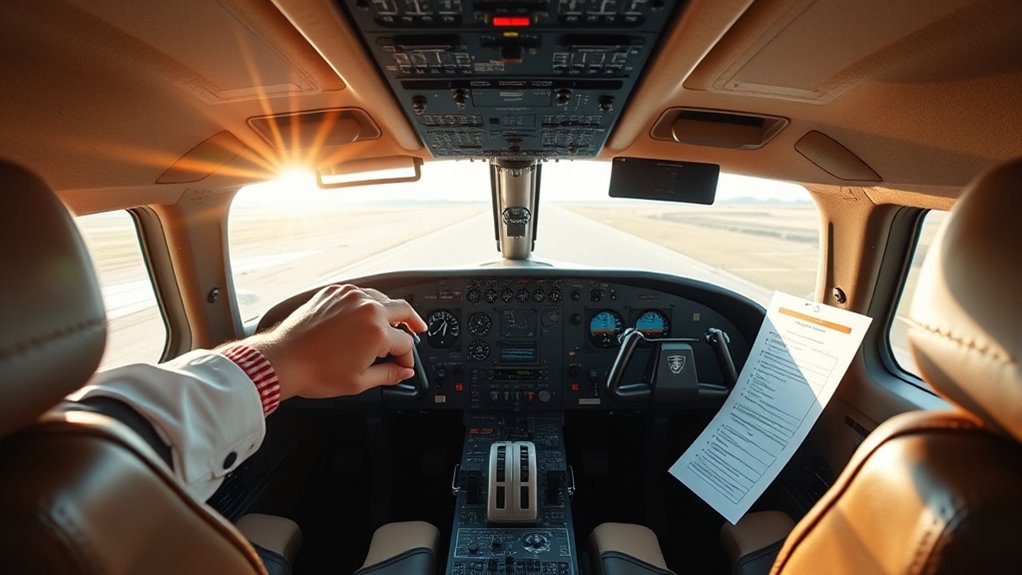
Before taking the aircraft for a flight, you need to perform a thorough inspection and pre-flight check to guarantee everything is in proper working order. Start by confirming the aircraft’s weight is within limits for your planned flight, ensuring it’s balanced and safe. Next, check cockpit ergonomics—verify that all controls, switches, and displays are accessible and functioning correctly. Adjust seats and harnesses so they fit comfortably and securely, giving you clear access to essential instruments and controls. Examine the exterior for any damage, leaks, or loose parts. Inside, inspect the instrument panel, ensuring no discrepancies or obstructions. This careful review helps you identify issues early, allowing for corrections before flight, and guarantees your cockpit setup promotes safe, efficient operation throughout your journey. Additionally, reviewing flight safety protocols ensures comprehensive preparedness for all possible scenarios.
Familiarity With Flight Instruments and Controls

Understanding your aircraft’s flight instruments and controls is vital for safe and confident flying. You need to quickly interpret instrument readings like airspeed, altitude, and heading to maintain proper flight attitude. Developing strong instrument interpretation skills ensures you can respond accurately to changes and unfamiliar situations. Control familiarity involves knowing the function and feel of each control—throttle, yoke, pedals, and switches—so you can operate them smoothly without hesitation. Practicing instrument checks and control movements during your pre-flight and in-flight routines helps build muscle memory. This familiarity reduces errors and increases your confidence, especially when flying in less-than-ideal conditions. Additionally, recognizing the importance of contrast ratio in your cockpit display can improve visibility of critical instruments in varying lighting conditions. Mastering these skills is a key step toward becoming a competent pilot and handling your aircraft safely in all phases of flight.
Weather Assessment and Flight Planning

Effective weather assessment and flight planning are essential steps in ensuring a safe and successful flight. You need to study weather patterns ahead of time, checking forecasts for wind, visibility, and potential storms. Understanding how weather changes throughout the day helps you decide if conditions are suitable for solo flying. When planning your flight, consider factors like terrain, airspace restrictions, and wind direction to choose the safest route. Always review up-to-date weather information before departure, and be prepared to adjust your plans if conditions worsen. Proper flight planning minimizes surprises and helps you stay within safe operating limits. Mastering this process builds confidence and ensures you’re prepared for the weather you might encounter during your solo flight. Incorporating knowledge of current seasonal trends can further enhance your planning accuracy.
Communication Procedures With Air Traffic Control
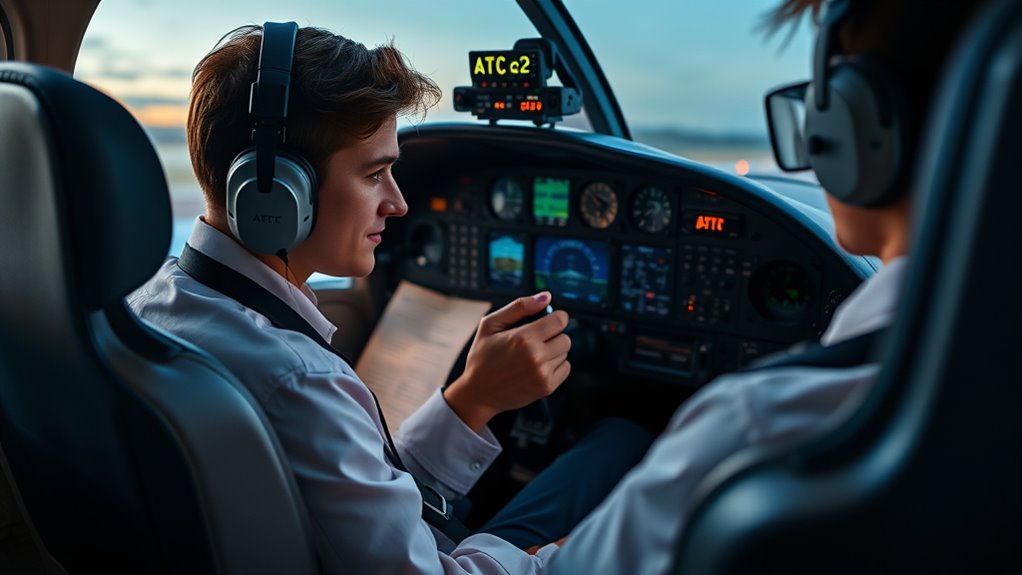
When communicating with air traffic control, clear radio procedures are essential for safety and efficiency. Use proper phraseology to guarantee your messages are understood quickly and accurately. Mastering these skills helps you maintain smooth and professional interactions during your flight. To enhance your communication, familiarize yourself with best practices for clarity, ensuring your transmissions are concise and unambiguous.
Clear Radio Communication
Clear radio communication with air traffic control is essential for a safe and smooth flight. You must follow proper radio etiquette, including speaking clearly, using standard phraseology, and listening carefully before responding. Practice communication drills regularly to build confidence and ensure you can handle radio calls efficiently. Always identify yourself with your aircraft’s call sign and listen for instructions before transmitting. Keep your messages concise and relevant, avoiding unnecessary details. If you’re unsure or miss a message, don’t hesitate to politely request clarification. Remember, air traffic controllers are there to help, and clear communication helps prevent misunderstandings and conflicts. Mastering these skills now makes your solo flights safer and more confident, setting a strong foundation for your flying journey. Developing a good understanding of Fokos procedures can also improve your overall communication effectiveness during flight operations.
Proper Phraseology Usage
Using proper phraseology is crucial for effective communication with air traffic control, as it helps guarantee your messages are understood quickly and accurately. Mastering radio phraseology ensures your cockpit communication is clear and professional, reducing misunderstandings. Always speak calmly, use standard terminology, and pronounce your callsign precisely. Remember to listen carefully and confirm instructions when needed. Proper phraseology also involves minimizing unnecessary words, staying concise, and avoiding slang. This disciplined approach enhances safety and efficiency during your solo flight. Developing these habits early prepares you for real-world scenarios, where precise communication can prevent errors. Confidence in radio phraseology and cockpit communication not only ensures compliance but also fosters trust with controllers. Additionally, practicing communication procedures regularly helps reinforce these habits for safer flights. Practice consistently, and always aim for clarity and professionalism in every transmission.
Emergency Procedures and Safety Protocols
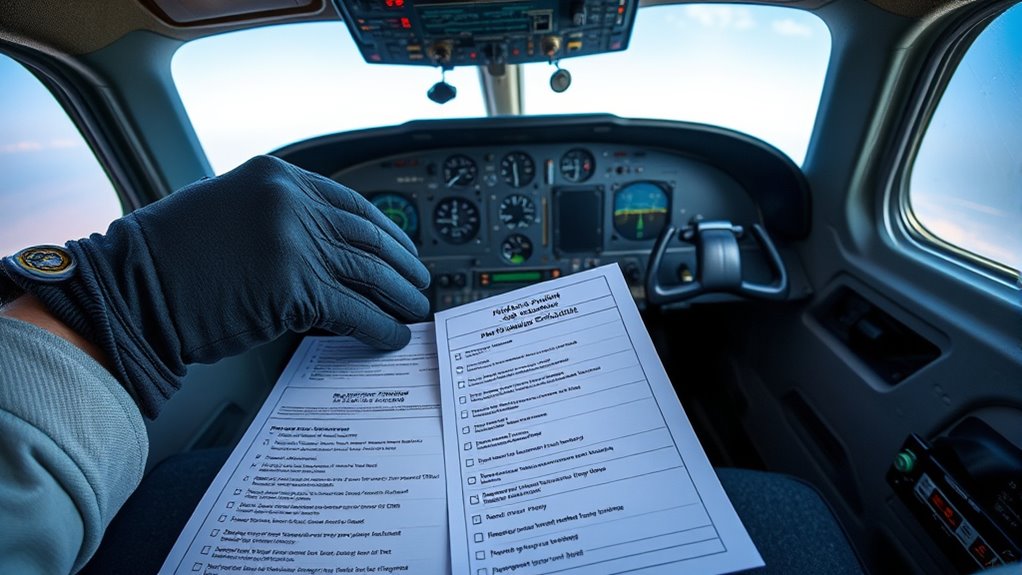
Understanding emergency procedures and safety protocols is essential before your solo flight. You must know how to execute an emergency landing safely if engine failure or other issues occur. Practice proper communication with air traffic control, using clear phraseology to declare emergencies. In addition, familiarize yourself with fire suppression techniques to handle onboard fires effectively. Always keep safety equipment, like fire extinguishers, accessible and know how to use them quickly. Review your aircraft’s emergency checklist regularly, ensuring you understand each step. Staying calm and following established protocols can prevent panic and reduce risks during unexpected situations. Mastering these procedures not only keeps you safe but also demonstrates your readiness to handle emergencies confidently. Understanding the importance of emergency preparedness can significantly improve your response effectiveness in critical moments.
Final Personal Readiness and Mental Preparation

Before taking to the skies, you need to make certain you’re mentally prepared and personally ready for the responsibilities of flying solo. Your mental resilience and confidence building are critical to handle unexpected situations calmly. Check if you feel focused, relaxed, and free of distractions. Trust your training and instincts, knowing you’ve prepared thoroughly. Visualize the flight, reinforcing your confidence and readiness to respond effectively. Guarantee you’re mentally alert and confident in your abilities.
- Remind yourself of your training and skills
- Visualize a successful flight and handling challenges
- Recognize and manage any nervousness or doubts
- Confirm you’re physically and mentally prepared to stay focused
Frequently Asked Questions
How Often Should I Review My Pre-Solo Checklist?
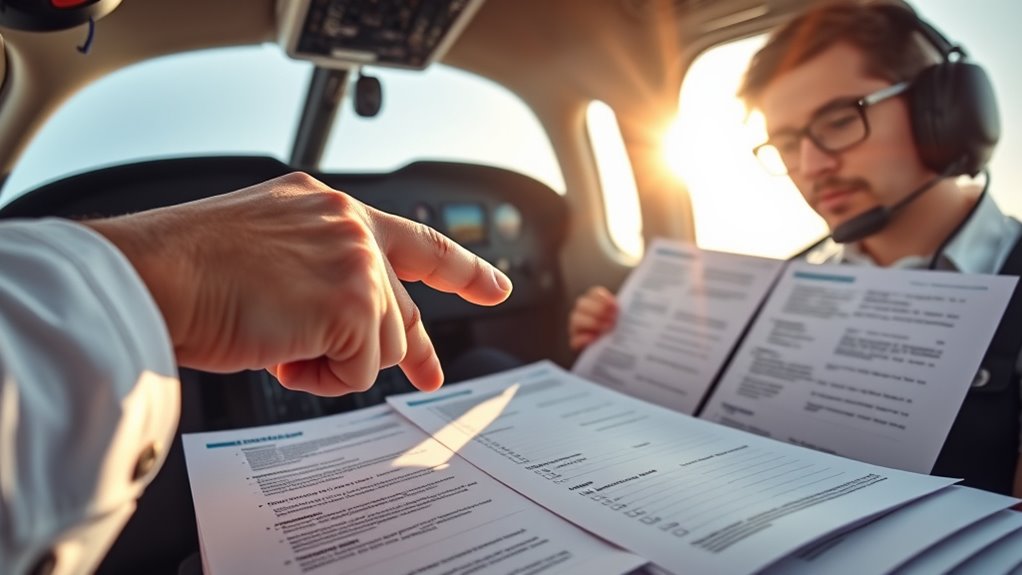
You should review your pre-flight routine and checklist accuracy before every flight. This guarantees you’re fully prepared and confident, reducing mistakes and increasing safety. Regularly revisiting your checklist helps reinforce procedures and keeps your skills sharp. Don’t just do it once; make it a habit to go over your checklist each time. Consistent review keeps your pre-solo routine fresh in your mind, making each flight safer and smoother.
What Common Mistakes Should I Avoid During Pre-Flight Preparations?
Ever heard the phrase, “Don’t let small details become big problems“? During pre-flight preparations, you should avoid neglecting pilot communication and aircraft documentation. Double-check that all paperwork is current and clear, and confirm radio procedures with your instructor. Overlooking these steps can lead to confusion or delays. Stay vigilant, communicate clearly, and guarantee your aircraft documentation is complete to fly confidently and safely.
How Can I Improve My Situational Awareness Before Flying Solo?
To improve your situational awareness before flying solo, focus on actively monitoring your surroundings and aircraft systems. Practice aeronautical decision-making by evaluating potential risks and making informed choices. Use risk management techniques to identify hazards early, allowing you to adapt quickly. Continuously scan the environment, communicate effectively, and stay vigilant to avoid surprises. This proactive approach helps ensure a safer flight and builds your confidence as a pilot.
What Are Signs of Fatigue Affecting My Flying Readiness?
Fatigue can profoundly impact your flying readiness, so watch for signs like drowsiness, slow reactions, or difficulty concentrating. To manage fatigue, practice alertness techniques such as deep breathing, stretching, and staying hydrated. Prioritize good sleep and avoid alcohol before flying. If you notice these signs, it’s best to rest before your flight. Maintaining fatigue management and alertness techniques ensures you’re sharp and prepared for safe flying.
How Do I Handle Unexpected Changes in Weather During Flight Planning?
When unexpected weather changes occur during flight planning, you should first review your weather planning resources to assess the situation. If conditions worsen, follow your emergency procedures, such as rerouting or delaying the flight. Stay flexible and keep communication open with your instructor or flight operations. Always prioritize safety by making well-informed decisions based on current weather updates, ensuring you’re prepared for any unforeseen changes during your flight.
Conclusion
Now that you’ve mastered the pre-solo checklist, you’re basically ready to conquer the skies—just don’t forget to double-check everything, or you might end up playing hide-and-seek with the ground. Remember, a thorough inspection and mental prep are your secret weapons, turning what could be chaos into a smooth takeoff. So, go ahead, confidently strut to that aircraft, and pretend you’re the king or queen of the clouds—just don’t forget your crown (or checklist).