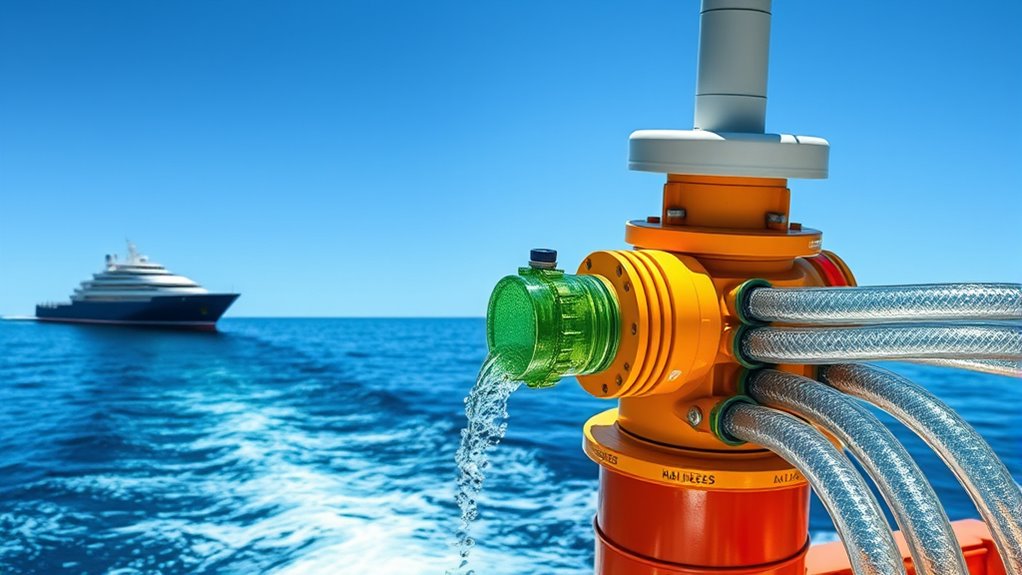

To use and dump ballast water safely, you should operate approved treatment systems to eliminate invasive species before discharge. Always discharge ballast water in designated ports or mid-ocean, avoiding ecologically sensitive areas. Verify that the treatment was successful and keep detailed records of volumes, locations, and procedures. Follow regulations and best practices to minimize environmental impacts. Continuing with these steps helps protect ecosystems and guarantees compliance—learn more about proper ballast management techniques.
Key Takeaways
- Use approved ballast water treatment systems to effectively kill invasive species before discharge.
- Discharge ballast water only in designated ports with proper reception facilities to prevent environmental contamination.
- Minimize ballast water intake in sensitive or high-risk areas, especially during ecological or invasive species concerns.
- Follow best practices like mid-ocean flushing to reduce the load of invasive organisms before reaching port.
- Maintain detailed records of treatment, volumes, and discharge locations to ensure compliance and facilitate inspections.

Water ballast management is indispensable for maintaining vessel stability, safety, and environmental compliance. Proper handling of ballast water ensures your vessel remains balanced during voyages while also minimizing the risk of introducing invasive species into new ecosystems. As regulations around ballast water tighten, understanding how to manage, treat, and dispose of ballast water responsibly becomes increasingly important. Ballast water regulations are designed to prevent the transfer of invasive species, which can cause significant ecological and economic damage. When you take on ballast water in one region and discharge it in another, you might unintentionally introduce non-native organisms into local waters, disrupting native marine life. To prevent this, international standards such as the IMO Ballast Water Management Convention require ships to treat ballast water using approved systems before discharge. These systems are specifically designed for invasive species control, removing or killing potential hitchhikers that could otherwise survive and establish themselves in new environments.
Adhering to ballast water regulations involves regular testing, treatment, and documentation. You need to guarantee your ballast water treatment systems are operational and compliant with the latest standards. This often means investing in specialized equipment that can treat large volumes of water efficiently. Before discharging ballast water, you should verify that it has been properly treated to meet regulatory standards. Maintaining detailed records of ballast water management practices is indispensable, especially during inspections or audits. Proper documentation demonstrates your commitment to environmental compliance and helps avoid penalties. Environmental compliance is a key aspect of responsible ballast water management.
Handling ballast water safely also involves understanding the best practices for dumping. You should discharge ballast water in designated areas, typically at specific ports that have suitable reception facilities. When possible, you should reduce the volume of ballast water taken on in high-risk areas or during voyages through ecologically sensitive zones. This minimizes the potential impact if treatment fails or if inadvertent contamination occurs. Always follow recommended procedures for ballast water exchange, such as mid-ocean flushing, which helps reduce the load of invasive species before reaching port. This exchange process, combined with effective treatment systems, forms a fundamental part of invasive species control efforts.
ballast water treatment system
As an affiliate, we earn on qualifying purchases.
As an affiliate, we earn on qualifying purchases.
Frequently Asked Questions
How Often Should Water Ballast Be Checked for Contamination?
You should check your ballast water for contamination regularly, ideally before each ballast transfer or at least every few weeks. Conduct ballast water testing to detect contamination early and prevent environmental harm. Frequent contamination detection helps you identify issues promptly, ensuring safe ballast water management. By staying vigilant and testing regularly, you reduce the risk of spreading invasive species and protect marine ecosystems effectively.
Are There Environmental Regulations Specific to Ballast Water Disposal?
You must follow environmental regulations specific to ballast water disposal to minimize environmental impact and guarantee regulatory compliance. These regulations often mandate procedures for safe dumping, treatment standards, and reporting requirements. By adhering to these rules, you protect marine ecosystems, prevent invasive species spread, and demonstrate responsible stewardship of the environment. Staying informed and compliant helps you avoid penalties, supports sustainability, and promotes a healthier, safer maritime environment for everyone.
What Are the Best Practices for Preventing Invasive Species Transfer?
To prevent invasive species transfer, you should implement ballast water treatment before discharge, ensuring harmful organisms are eliminated. Regularly inspect and clean ballast tanks to remove any residual biofouling. Follow best practices for invasive species prevention by complying with international regulations, such as the Ballast Water Management Convention. Properly documenting treatment procedures also helps demonstrate your commitment to environmental protection and reduces the risk of spreading invasive species.
Can Ballast Water Management Impact Vessel Stability?
Did you know that improper ballast water management can cause stability issues in up to 20% of vessels? Yes, it can! When you perform ballast water monitoring and maintain your ballast system properly, you make certain your vessel stays stable. Incorrect ballast procedures can lead to list or trim problems, affecting safety and efficiency. So, stay vigilant with regular maintenance, and always follow best practices to keep your vessel balanced and secure.
What Equipment Is Necessary for Safe Ballast Water Dumping?
You need reliable equipment like certified ballast water pumps and hoses to guarantee safe dumping. Regular ballast tank inspections help identify corrosion or damage, preventing leaks. Maintain your pumping system diligently to avoid failures during operation. Use proper valves and controls to manage water flow safely, and always follow established procedures. Proper equipment and maintenance ensure environmentally responsible dumping, protecting marine life and maintaining vessel stability.
marine ballast water management kit
As an affiliate, we earn on qualifying purchases.
As an affiliate, we earn on qualifying purchases.
Conclusion
By mastering water ballast management, you become the captain steering a ship through calm and stormy seas alike. Handle ballast with care, like tending a delicate garden, ensuring your vessel stays balanced and safe. Properly using and dumping ballast is your steady compass, guiding you away from trouble and toward smooth sailing. Remember, each careful step you take keeps your journey steady and your vessel’s voyage safe, no matter how turbulent the waters may get.
approved ballast water treatment device
As an affiliate, we earn on qualifying purchases.
As an affiliate, we earn on qualifying purchases.
ballast water record keeping software
As an affiliate, we earn on qualifying purchases.
As an affiliate, we earn on qualifying purchases.