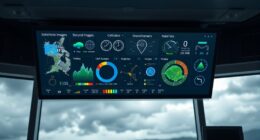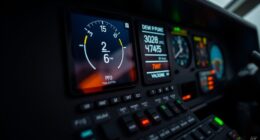
Flight data analysis is essential for your post-flight learning, as it helps you review flight performance, identify errors or risky behaviors, and understand the impacts of your decisions. By examining visual representations like graphs and timelines, you can easily spot trends and anomalies that need attention. These insights support continuous improvement, safety, and operational efficiency. Keep exploring how this technology can refine your skills and enhance your flight safety journey.
Key Takeaways
- Flight data analysis provides real-world insights that enhance pilot understanding and reinforce training through actual flight scenarios.
- Visualizing flight data helps identify errors, operational patterns, and areas for improvement during post-flight reviews.
- Analyzing cockpit and sensor data supports targeted training by highlighting specific maneuvers or decisions needing refinement.
- Post-flight data review enables pilots and crews to learn from anomalies or deviations, promoting continuous safety improvements.
- Using data visualization tools simplifies complex information, facilitating effective learning and informed decision-making after flights.

Have you ever wondered how airlines guarantee safety, efficiency, and performance? One of the key tools they use is flight data analysis, which helps airlines learn from each flight and improve constantly. After a flight, the data collected from various systems—such as cockpit instruments, engine sensors, and navigation logs—is analyzed to identify what went well and where there’s room for improvement. This process isn’t just about fixing issues; it’s about gaining insights that drive better decision-making, enhance safety, and optimize operations.
Flight data analysis helps airlines improve safety, efficiency, and decision-making after each flight.
A crucial aspect of post-flight learning is pilot training. Flight data analysis provides real-world examples that pilots can study to refine their skills. Instead of relying solely on theoretical training or simulations, pilots review actual flight data to understand how their decisions impacted the flight, what maneuvers worked, and where mistakes occurred. This feedback loop makes training more relevant and effective. It also highlights patterns—like common pilot errors or operational bottlenecks—that can be addressed through targeted instruction. Using data visualization, complex data sets are transformed into clear, visual formats such as graphs, heat maps, and timelines. These visuals make it easier to spot trends, anomalies, and correlations that might otherwise go unnoticed. For example, a heat map might show frequent altitude deviations during specific phases of flight, prompting focused training or procedural adjustments.
Data visualization also aids in understanding how different variables interact during a flight. When you see a visual representation of engine performance alongside weather conditions or air traffic patterns, it becomes easier to identify causative factors or recurring issues. This insight can inform both pilot training and operational policies, leading to more proactive safety measures. Furthermore, visual data makes post-flight reviews more accessible, ensuring that crew members, technical teams, and management are all aligned in their understanding. They can quickly grasp complex information without wading through endless spreadsheets or raw logs.
Ultimately, flight data analysis with an emphasis on data visualization transforms raw numbers into actionable knowledge. It bridges the gap between raw data and practical learning, empowering pilots and airlines to make smarter, more informed decisions. When you leverage these tools for post-flight analysis, you’re not just fixing problems as they happen—you’re building a foundation of continuous improvement that enhances safety, reliability, and operational excellence. Additionally, advancements in projector technology have enabled clearer and more detailed visualizations, making data interpretation even more effective. This cycle of learning and adaptation keeps the skies safer for everyone and helps airlines maintain peak performance in an increasingly competitive industry.
Frequently Asked Questions
How Does Flight Data Analysis Improve Pilot Decision-Making?
Flight data analysis improves your decision-making by highlighting patterns in pilot behavior and cockpit ergonomics that may need adjustment. It provides real insights into how you respond in different situations, helping you identify areas for improvement. By understanding these factors, you become more aware of your actions, leading to better choices in future flights, ultimately enhancing safety, efficiency, and your overall flying skills.
What Are the Privacy Concerns Related to Flight Data Collection?
Your flight data collection raises serious privacy concerns, like exposing your personal information to potential breaches. You worry about data privacy and data security because sensitive flight details could be misused or leaked, risking your reputation or safety. It’s essential that airlines implement robust safeguards to protect your data. You should always be aware of how your information is stored, shared, and protected to guarantee your privacy remains intact amidst the benefits of flight data analysis.
Can Flight Data Analysis Predict Future Aircraft Maintenance Issues?
Yes, flight data analysis can predict future aircraft maintenance issues through predictive maintenance. By analyzing data-driven insights, you can identify patterns indicating potential problems before they become serious. This proactive approach helps you schedule repairs efficiently, reduce downtime, and improve safety. Leveraging real-time flight data allows you to stay ahead of maintenance needs, ensuring smoother operations and extending aircraft lifespan.
How Accessible Is Flight Data Analysis Technology for Small Airlines?
You might think flight data analysis is out of reach for small airlines, but it’s becoming more accessible. Many modern solutions offer cost reduction and safety enhancement, tailored for smaller fleets. Cloud-based platforms and affordable analytics tools are streamlining data access and usability. This means you can leverage flight data to improve operations, prevent issues, and boost safety without huge investments, making advanced analytics a realistic option for your airline.
What Training Is Required for Effective Post-Flight Data Interpretation?
You need targeted training programs to master data interpretation effectively. Focus on understanding flight data metrics, identifying patterns, and recognizing anomalies. Participating in specialized courses or workshops, whether online or in-person, will enhance your skills. Practical exercises and case studies help solidify your knowledge. Continuously updating your training guarantees you stay current with new tools and techniques, making your post-flight analysis more insightful and valuable for operational improvements.
Conclusion
As you analyze flight data, remember it’s more than numbers; it’s your wings guiding you through lessons learned. Each data point symbolizes a fragment of your journey, revealing where you soared and where you stumbled. Embrace these insights like a compass, steering you toward safer skies and smarter decisions. In this dance of data and discovery, you become the pilot of your growth, steering future flights with wisdom born from the echoes of your past.